
Ossining superintendent previews 2025–26 budget plan; administration projects tax‑levy limit under 2%
Get AI-powered insights, summaries, and transcripts
Sign Up Free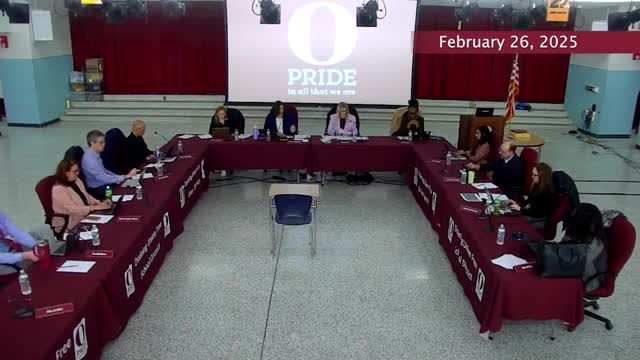
Summary
Superintendent Mary Fox Alter and Assistant Superintendent Alita McCoy on Feb. 26 presented a preliminary framework for the 2025–26 school budget, citing favorable state aid, lower‑than‑expected NYSHIP costs this year and an estimated $6.6 million use of unallocated fund balance to help keep the tax‑levy limit at or below 2 percent under the state formula.
Superintendent Mary Fox Alter and Assistant Superintendent Alita McCoy presented a budget preview Feb. 26 that set the district’s broad fiscal approach for the 2025–26 school year and outlined next steps in the board’s March review schedule.
Fox Alter said the annual budget is an "educational plan" that must balance staffing, programs, facilities and fiscal responsibility. The administration said it will hold a Saturday budget workshop on March 15, an additional meeting on March 19 and the regularly scheduled March 12 meeting to finalize details before the legally required deadlines.
Assistant Superintendent Alita McCoy reviewed key revenue and expense drivers the district is using in its preliminary forecast. On health insurance, McCoy reported that New York State Health Insurance Program (NYSHIP) premiums for the coming cycle are generally lower than the district had anticipated for the current year, producing an unanticipated surplus in 2024–25. McCoy cited sample premium changes presented at the meeting: the individual tier premium up about 2.27 percent, family tier up about 2 percent, and mixed changes for Medicare tiers; the overall effect was described as modest and, in aggregate, favorable to the district’s current fiscal year position.
Pension contribution guidance was described as modestly favorable for certified staff: the Teacher Retirement System (TRS) employer contribution was expected to decline from 10.11 percent to approximately 10 percent of payroll; the Employees' Retirement System (ERS) employer rate for non‑certificated staff was projected to rise from 15.24 percent to 16.5 percent.
On revenues McCoy listed four principal buckets: local property tax levy (subject to New York State’s maximum allowable tax‑levy formula), state aid (finalized in late March), use of reserves or fund balance, and other revenues such as sales tax and investment interest. The administration said it expects increased state aid runs received Jan. 21 produced an approximately $4.1 million increase in state aid compared with prior estimates and that building aid increases also reduce local levy pressure. McCoy told the board the administration estimates the district’s tax‑levy limit under the formula will be “no more than 2 percent,” assuming the capital scope remains as currently proposed and without additional use of reserves.
On fund balance and reserves, McCoy said the district plans to allocate approximately $6.6 million of unallocated fund balance toward the 2025–26 budget and does not anticipate using the district’s pension or capital reserves this year. She said the 2024–25 fiscal year should show a surplus driven in part by lower NYSHIP costs and favorable interest income on investments (the administration noted recent investment returns near 5 percent). McCoy and the superintendent also flagged planned capital work that is anticipated to fit within the proposed budget, including upgrades described as air‑conditioning projects and security camera improvements; the administration said the scope is designed to avoid exhausting capital reserves and referenced a prior $12 million bond in planning discussions.
The superintendent and assistant superintendent emphasized that salary increases remain the district’s largest expense and that contracts and staffing assumptions will be carried forward into the draft budget. Board members asked clarifying questions about the tax‑levy formula, the role of building aid, federal grant continuity and possible alternative health‑insurance arrangements; administrators said staff are exploring options and will bring proposals to the board as available.
The board will receive detailed budget books and line‑by‑line projections in early March, ahead of the scheduled public workshops and formal adoption timeline.