Get Full Government Meeting Transcripts, Videos, & Alerts Forever!
Get email alerts on the Wildfire Tax Relief topic
No spam. Unsubscribe anytime.
State senators, county assessor outline tax relief, outreach and legislation after Los Angeles wildfires
Summary
Officials described existing assessor programs and a package of proposed state bills that would extend filing and rebuilding deadlines, preserve exemptions for damaged nonprofits and let assessors adjust reassessment dates; county staff described outreach and automated valuation plans for about 21,000 affected parcels.
Los Angeles-area officials and state senators on Thursday outlined property tax relief steps and proposed legislation aimed at helping homeowners, businesses and nonprofits harmed by the January wildfires.
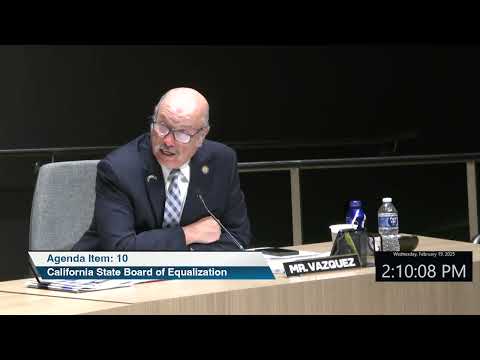
At a Board of Equalization informational hearing, Jerry House, director at the Los Angeles County Assessor’s Office, said the office is using a “misfortune and calamity” reassessment program to lower tax baselines for damaged properties and is doing proactive parcel-by-parcel reviews in the burn perimeter. "Through our misfortune and calamity program, homeowners can have their properties reassessed at lower value while their homes are being rebuilt," House said.
The nut of the discussion was twofold: immediate relief tools the assessor can apply under current law and a proposed legislative package that would give counties and property owners more time and flexibility. Senator Ben Allen, a principal author on the senate package, told the board the measures under consideration would "extend the deadline for victims to file misfortune and calamity claims from 12 months to 24 months," lengthen the rebuilding window for transfer-of-base-value rules to as long as eight years, and extend special exemptions for damaged religious, charitable and hospital properties.
Why it matters: County officials described about 21,000 parcels inside the fire perimeters that received inspections, with a combined assessed value of roughly $33 billion. Many property owners face both physical loss and a second set of administrative and financial hurdles — tax bills, insurance claims and, in some cases, unclear title. Board members and state lawmakers said the combination of immediate county action and statutory fixes is intended to prevent owners from being penalized while they secure temporary housing and rebuild.
Most important details
- Scope and valuation: House said county staff identified roughly 21,000 parcels in the burn area and estimated a combined assessed value of approximately $33,000,000,000 (about $22.5 billion in land value and $11 billion in improvement value). The assessor will remove improvement value for destroyed structures and may reduce land value where warranted.
- Eligibility and filing: To apply for a misfortune and calamity reassessment under current county practice, property owners must show at least $10,000 in damage and file within 12 months. County staff said they are proposing — and coordinating with state legislators — to extend that filing period.
- Deferral and billing: Lawrence Lou, special assistant to Assessor Jeff Prang, said the county Treasurer and Tax Collector is coordinating to defer penalties and interest for taxpayers who file calamity claims. "Our Treasurer tax collector is currently deferring any, penalties, on property tax collections for taxpayers that have filed their misfortune and calamity claims," Lou said.
- Automation and timing: House described plans to begin an automated valuation tranche in early April covering an initial 8,000–9,000 parcels and said the office expects to automate roughly 60–70% of evaluations, with the remainder handled by staff. He said the county is using Cal Fire parcel-level damage data, including photos, to support automation.
- State legislative proposals: Senators Sasha Renee Perez and Ben Allen discussed coordinated bills. Proposals mentioned in testimony include extending the misfortune-and-calamity filing deadline from 12 to 24 months, allowing up to eight years for rebuilding without automatic restoration of a pre-disaster tax base, extending exemption continuity for religious/charitable properties, lengthening heir-claim filing windows, and authorizing assessors greater discretion to select a date of damage when the disaster is ongoing.
- Non-tax issues tied to recovery: Witnesses and officials also discussed insurance, permitting speed, temporary housing and small-business impacts. Mayor Negret of Santa Monica described business losses from road closures and beach closures, efforts to repurpose office space for displaced schools and plans for town halls with FEMA and the SBA to explain assistance options.
Public outreach and assistance
House said the assessor’s office is staffing FEMA local assistance and disaster recovery centers and other community resource centers and has added an online misfortune-and-calamity claim form compatible with smartphones. He said property owners may register online to receive claim-status updates or schedule appointments with Proposition ownership specialists via Microsoft Bookings. "We are proactively evaluating every property in the disaster zone, whether or not an application has been received," House said.
Remaining limits and open questions
County staff and senators repeatedly noted limits under current law. For example, decline-in-value reviews are tied to the lien date (January 1) and generally can’t be applied retroactively under existing statute for disasters that occur after the lien date, unless the legislature authorizes a different assessment date. House and senators asked for legislative language to allow assessors to determine an appropriate date of damage in multi-day or ongoing events.
What officials directed or asked for
Board members asked the assessor’s office and state lawmakers to prioritize quick permitting, expanded outreach (especially to elderly and multi-generational households that may not have updated title), and additional funding and program detail to help local governments remain fiscally solvent while tax bases are reduced. Senator Allen and Senator Perez invited BOE staff to provide input on bill drafts and said they welcome local board feedback before finalizing language.
Ending
Officials said they will continue outreach at resource centers and refine bills in Sacramento. No formal board votes were taken at the hearing.