Get Full Government Meeting Transcripts, Videos, & Alerts Forever!
Get email alerts on the Stormwater Infrastructure topic
No spam. Unsubscribe anytime.
St. Albans mayor outlines stormwater projects, FEMA funding push and multi-year utility plan
Summary
Mayor Scott James described a set of stormwater and utilities projects — including a planned reroute of the Ramshorn storm drain, a city water-tank project and an 8–10 year infrastructure plan — and said the city is seeking federal assistance to cover part of the work.
Mayor Scott James said St. Albans is moving ahead with multiple stormwater and water-system projects and is seeking federal funds to cover part of the cost.
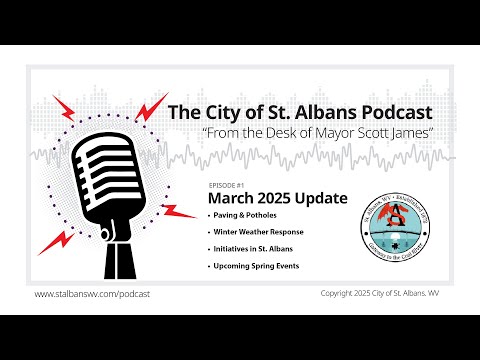
“We're trying to meet all the criteria that FEMA has for the $2,843,000 congressionally direct spending ... from Senator [Shelley Moore] Capito's office for the rerouting of the Ramshorn storm drain,” Mayor James said on the city podcast. He described the work as substantial and warned it would cause detours and delays during construction.
The mayor said the Ramshorn work would fill an existing line beneath City National and reroute the drain down Sixth Avenue to reconnect with the larger channel after passing under other infrastructure. James described that earmarked federal amount as “maybe a little more than a third of the project,” and separately gave an overall multi-year estimate for utilities work.
“We have come up with an 8 to 10 year plan on infrastructure projects and an estimated cost over that period of time of $57,000,863,” James said. He listed that total as including the sewer plant, the water plant and water lines throughout the city.
James also said a separate water-tank project at City Park is slated to start soon, with scheduling dependent on weather. He attributed the availability of the federal funding request to work with the senator’s office and said the city is preparing bids once funding is secured.
City officials told listeners they are working with the U.S. Army Corps of Engineers on preliminary options to slow runoff — such as small retention ponds on creeks — but that such measures would require study and funding decisions after the study is complete.
Why it matters: Several items discussed — the Ramshorn reroute, the water-tank project and the 8–10 year utility estimate — affect city streets, traffic and long-term utility reliability and carry significant cost implications that will shape the city’s capital work and requests for outside funding.
What remains open: Mayor James supplied two different figures during the episode for the specific federal amount and its share of the project cost; the podcast transcript lists both $2,843,000 and $2,848,430 in separate passages. The timing of construction and the total funding gap depend on outcomes of FEMA and Corps of Engineers reviews and the city’s budgeting process.