Get Full Government Meeting Transcripts, Videos, & Alerts Forever!
Get email alerts on the Homelessness Encampments topic
No spam. Unsubscribe anytime.
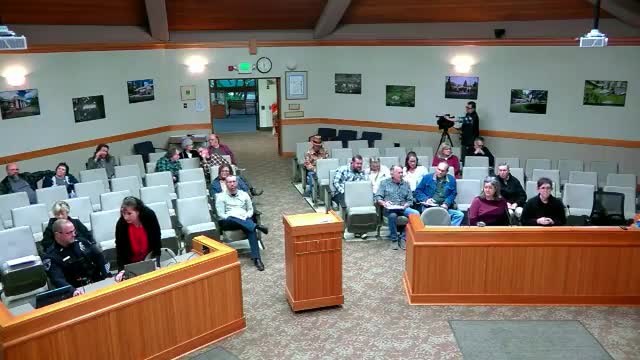
Police chief outlines camp-cleanup process, legal limits and recent case law affecting enforcement
Summary
Chief Klappenstein described the city's camp-cleanup procedures, legal constraints from federal and state rulings, and enforcement results: more than 1,400 camps posted and cleaned in 2024, roughly 450,000 pounds of trash removed, and 77 convictions for prohibited camping since September 2024.
Chief Klappenstein gave a detailed account of the city's camp-cleanup procedures and the legal constraints governing enforcement, saying federal and state court rulings limited traditional criminal enforcement and required the city to adopt time, place and manner rules.
"The Boise decision" from 2019 and later Grants Pass rulings changed how cities handle prohibited camping, Klappenstein said, and subsequent state legislation required posting, storage of personal property and objective reasonableness in restrictions.
He told the commission that in 2024 the city identified, posted and cleaned over 1,400 encampments at 55 locations and collected more than 450,000 pounds of trash. Officers now provide laminated bilingual notices with at least a 72-hour posting window before a cleanup, photograph campsites, notify UCAN and log reports.
The chief described the logistics of cleanups: using contracted county work crews, Roseburg Disposal dumpsters, and city equipment; collecting "items of utility" (tents, functioning bicycles, sealed food, medications) and holding them as evidence for 30 days; and discarding wet, soiled or biohazardous items. He said property retrieval rates are highest within two weeks: by day 14 about 71% of people who reclaim items have done so.
Klappenstein also reviewed recent enforcement results. Since September 2024 the city recorded 77 first convictions for prohibited camping, 55 second convictions, 14 third convictions and several individuals with fourth or fifth convictions; some third convictions have included short jail sentences. He said the city tried civil penalties and outreach before moving to more punitive measures for repeat offenders.
The chief cautioned that moving people from concentrated camps often disperses encampments into creek beds and other areas, increasing visual congestion while making outreach more difficult. "When we push them out of that area by enforcement, they just go down into the creek beds and other spots," he said.
Klappenstein cited state legislative changes including what he referenced as "House Bill 3,115" and the Oregon Revised Statute he quoted as "195 5 0 5," which he said codified post-2019 requirements for notice and storage but did not define "objective reasonableness," leaving cities open to lawsuits challenging enforcement choices.