Get Full Government Meeting Transcripts, Videos, & Alerts Forever!
Get email alerts on the Veterans Programs topic
No spam. Unsubscribe anytime.
Boston hearing advances planning for expanded Hero Squares and a new hometown military banner program
Summary
A City Council committee hearing on veterans issues heard detailed planning and community testimony Tuesday as officials discussed two related proposals: reaffirming the long‑running Hero Square program and studying a new “hometown military hero” banner program that would place commemorative banners for local service members on city streetlights.
A City Council committee hearing on veterans issues heard detailed planning and community testimony Tuesday as officials discussed two related proposals: reaffirming the long‑running Hero Square program and studying a new “hometown military hero” banner program that would place commemorative banners for local service members on city streetlights.
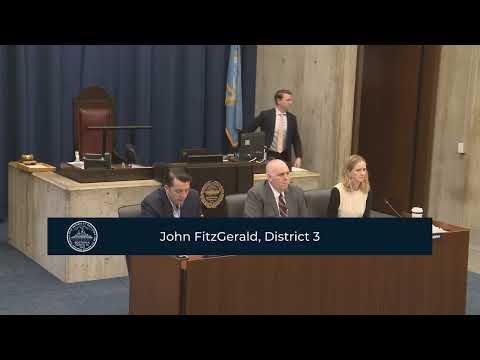
The hearing, convened by City Councilor Ed Flynn, chair of the Committee on Veterans, Military Families and Military Affairs, brought Boston Veterans Services Commissioner Rob Santiago, Public Works and Streets Cabinet staff, neighborhood organizers from West Roxbury, and veterans and veterans’ organizations to describe how the programs work and what implementing a citywide banner program would require. Flynn opened the hearing noting it covered two dockets: one on the city’s Hero Squares program and one to consider establishing a hometown military hero banner program.
The matters discussed matter to thousands of local veterans and Gold Star families, committee members said, because both programs publicly recognize service and can be structured to educate neighborhoods about local veterans’ histories. Committee members and witnesses emphasized that the two efforts overlap in purpose but require different operational support: transportation and permitting for banners, and database, plaque and dedication logistics for Hero Squares.
Boston’s Hero Square program dates back more than a century and recognizes service members from the city who were killed in action, with a marked sign (the “gold star” design) and, increasingly, a biography plaque linked by QR code to the city’s veterans website. Commissioner Rob Santiago said the department currently identifies about 1,300 Hero Squares citywide and has installed about 200 biography plaques; the office also places wreaths yearly for Memorial Day and Veterans Day and maintains a database of honored service members. “We do follow [the Department of Defense] definition, but our definition of killed in action is a little broader,” Santiago said, noting the city’s approach can include service members who died in medical facilities of wounds sustained in action or who died as prisoners of war.
Committee members urged the city to continue expanding biography plaques so passersby can learn the stories behind the signs. Santiago described a multi‑step intake process: an application from the family or community, review by Veterans Services, a transportation inspection at the requested location, installation of the Hero Square, and — where available — a biography plaque and a dedication ceremony with an honor guard. “When it is approved, we then go ahead and work with the city council for a resolution,” he said.
Separately, witnesses and city staff described the logistics of a proposed hometown military banner program that would place banners for veterans and active service members on City of Boston streetlight poles. Omar Khoshafa, director of budget and finance for the Streets Cabinet, described the existing banner permit program the Public Works Department administers for non‑profits: “We permit banners on city streetlights,” he said, adding the department focuses on safety and message content and charges $50 per poll per month under the current process for temporary banners.
Kathy Garcia, manager of the Permits Division in Public Works, summarized permit logistics: the city typically requests an application 30 days in advance and prefers 6‑ to 12‑week lead time; contractors that install banners must be bonded and insured; Public Works does not install banners itself and uses third‑party contractors; and the city generally takes banners down in winter (December through March) for safety reasons.
Officials and neighborhood witnesses discussed likely costs and possible funding models. Staff and witnesses gave a range of production costs discussed during the hearing: small banner fabric costs beginning roughly in the $80–$125 range depending on size; hardware kits (brackets) averaging about $70 per pole; and an administrative or printing fee sometimes noted as about $100. Commissioner Santiago and Streets staff said those fabrication and hardware figures do not include contractor labor or bucket‑truck time for installation and removal, which the city estimated could add several hundred dollars to more than $1,000 per banner depending on contract terms and travel. Staff also noted brackets, once installed, can remain on poles so future banner placement is simpler.
Councilors and witnesses emphasized equity and neighborhood focus in any rollout. West Roxbury Main Streets director Lindsay Chase described a community program her organization ran that placed about 71 banners with family sponsorship and local fundraising; she recommended locating banners in residents’ own neighborhoods so neighbors see and recognize local service. Commissioner Santiago proposed a phased approach and said Veterans Services will develop a timeline and implementation plan that includes community engagement and criteria for which veterans or service members would be recognized.
Committee members and veterans organizations urged the council and the administration to avoid shifting costs to families. Santiago said his office will explore sponsorships and other funding sources; he also noted Veterans Services is offering a limited “mini‑grant” (up to $10,000) with a March 26 application deadline that community groups could apply to help defray costs of local efforts.
Multiple veterans and organizations told the committee that visible recognition helps families and neighborhoods. Joe Connolly of KIA Project Boston said the group works with Veterans Services on Hero Square dedications, headstone cleaning and other tributes. Commander Meredith Tuitt of the William E. Carter Post described how banners and local recognition can make veterans — and especially women and veterans of color — more visible to their communities.
What the committee asked staff to do next: Veterans Services will draft a proposed timeline and implementation plan for a hometown military banner program, including community engagement, criteria for honorees, and funding options; Public Works (Streets Cabinet) will provide technical details on pole and bracket standards, seasonal constraints, and costs for installation and maintenance; and the council will take up follow‑on sessions to review proposals, funding sources, and sample community models such as West Roxbury’s pilot. There was no formal vote at the hearing.
The hearing record includes community testimony in support of docket 0312, and numerous veterans groups and posts — including John P. McKeehan Post 146, the KIA Project and the William E. Carter Post — offered to partner on outreach and sponsorships. Commissioner Santiago said the office will accept applications for Hero Squares at any time and will continue to expand biography plaques and QR links so neighborhoods can learn the stories behind recognized service members.
The committee closed the session without formal action but directed staff to return with cost estimates, a recommended pilot or phased rollout, and proposed application criteria. Members said they intend to pursue funding options so recognition is not dependent on families’ ability to pay and to ensure the banner program complements, not replaces, the existing Hero Square and bio‑plaque work.
Votes at a glance: No motions or binding votes were recorded in this hearing. Two dockets were discussed — Docket 0165 (Hero Squares) and Docket 0312 (Hometown military hero banner program) — and staff were asked to produce an implementation timeline and budget estimates.