Get Full Government Meeting Transcripts, Videos, & Alerts Forever!
Get email alerts on the Student Supports topic
No spam. Unsubscribe anytime.
Prosser board hears Communities In Schools overview; contract described as $40,000 with local matching
Summary
Communities In Schools representatives described ongoing in-school supports at Housel Middle School and across Prosser, noting a $40,000 district contract, local matches, and a per‑student district cost estimate of about $385 after private and in‑kind donations.
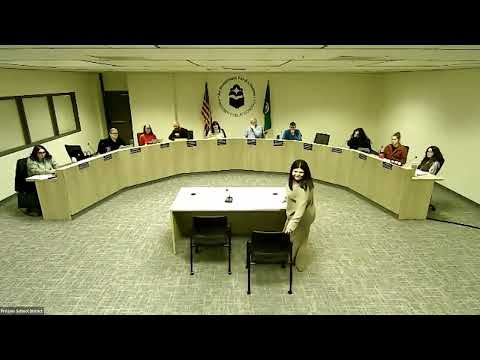
Communities In Schools representatives told the Prosser School District Board on Monday that the program provides tiered, in‑school and individualized supports to students and families and partners with local donors to reduce district costs.
The organization’s executive director, Lupe (last name not provided), told the board the Communities In Schools program has operated in the Prosser School District for about eight years and that the district contract is $40,000. Lupe said Prosser Thrive provides matching funds and that private donations and in‑kind help reduce the district’s net per‑student cost to about $385.
The student support coordinator at Housel Middle School, Laura Hermosillo, who identified herself as “Mrs. H,” described the program’s activities. “I provide school wide supports, which is tier 1, which is for all students. That includes family engagement support, attendance support, life social skill supports, enrichment motivation supports, academic assistance supports, physical health supports, behavior intervention modification supports, professional mental health supports,” Hermosillo said, adding that she also case‑manages about 45 high‑risk students with parental consent.
Hermosillo described outcomes and activities last year, saying 91 percent of her case‑managed students improved their attendance and noting school social events organized with the Housel FCCLA and school leadership. She also shared a case in which Communities In Schools and school staff helped a family identified under the McKinney‑Vento definition move from unstable housing (a moldy RV) into sustainable, safe housing using a mix of district staff coordination and community donations.
Lupe told the board that the program brings in local in‑kind donations (food, clothing, school supplies, hygiene items, shoes and technology), national and state affiliated resources, and private donors; she cited a recent in‑kind donation program as “Soles4Souls” as a source of brand‑new shoes distributed to students.
Board members asked about the scope of services and how in‑kind donations are handled. Lupe and Hermosillo explained “in‑kind” means donated goods rather than purchased services and said local dollars raised for Prosser stay in Prosser. The presentation emphasized that individualized case management requires parental consent.
Why it matters: The board packet and the presentation make clear the district funds an external partner to provide case management and hands‑on family supports that the district says it cannot fully staff, while local partners and donations reduce the net cost to the district.
Board next steps: No formal vote on the contract occurred at this meeting; the presentation served as an informational update and a prompt for questions about matching funds, service reach and outcomes.
Ending: Board members offered thanks and moved on to other agenda items including travel approvals, policy reviews and a district data presentation.