Get Full Government Meeting Transcripts, Videos, & Alerts Forever!
Get email alerts on the Public Art Temporary topic
No spam. Unsubscribe anytime.
Portsmouth committee debates rules for temporary public art; favors set removal dates and legal review
Summary
Members of the Portsmouth Public Art Review Committee discussed criteria for temporary public art, including recommended durations, removal responsibility and how to handle politically themed pieces; committee directed staff to draft a set of bullet-point guidelines and consult legal.
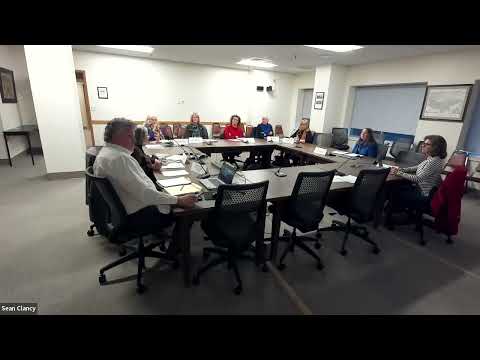
Members of the Portsmouth Public Art Review Committee spent much of the meeting debating how the city should define and manage temporary public art, focusing on how long pieces may stay in place, who pays for removal and when the committee should require formal review.
The committee discussed a range of timeframes and uses for temporary work, from ephemeral pieces (sand mandalas, chalk) to installations that might remain months or years. Several members said the committee should require a removal date and a clear plan and budget for removal. Committee members asked that the guidelines allow shorter, event-driven installations to proceed without onerous review while reserving committee oversight for pieces intended to remain beyond an event.
Members noted that other cities cycle temporary art on a three- to six-month schedule, while smaller cities sometimes allow temporary installations of up to five years. A commonly stated compromise in the meeting was to treat “temporary” pieces as typically up to one year and to allow renewals if the work remains in good condition.
The group also discussed when projects must go to the Historic District Commission (HDC) or be handled under the city signage ordinance. Speakers said murals in HDC areas must continue to follow HDC rules and that land-use boundaries affect the committee’s authority over private property. Several members recommended clarifying that projects on private property and those subject to land-use review may follow different procedures.
Political content and First Amendment concerns drew extended comment. While members said art can be provocative, the committee agreed it should not act as a final arbiter of political content; instead, the group will flag contentious proposals and refer legal questions to the city’s legal department.
The committee directed staff to draft a concise set of bullet-point criteria that include: a required removal date (with budgeted removal), a default one-year term with optional renewal, permit requirements and triggers for formal committee review. Members agreed to return to the draft at a subsequent meeting and to invite legal staff to advise on First Amendment and insurance questions if needed.
The discussion did not produce a formal vote; members sought to finalize language in a circulated draft before returning it for review.