Get Full Government Meeting Transcripts, Videos, & Alerts Forever!
Get email alerts on the Social Media Policy topic
No spam. Unsubscribe anytime.
Board debates social-media rules for trustees, flags First Amendment and public-meeting limits
Summary
Directors discussed three distinct questions: official board social accounts, personal social media by trustees, and whether trustees' engagement on social platforms about district matters creates legal or governance risks. They asked staff to draft a policy and guidelines and to form a small group to help prepare the materials.
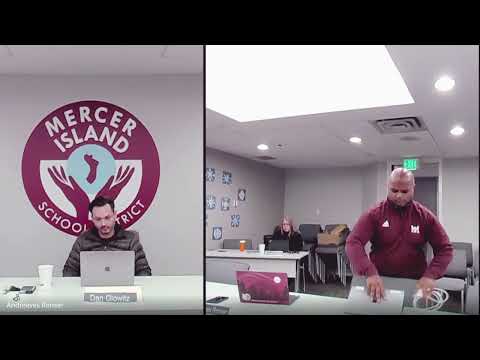
The Mercer Island School District Board of Directors devoted a second segment of a special meeting to the question of social-media guidance for trustees and for an official board presence.
Directors framed the discussion as three separate issues: (1) rules for official board social-media accounts; (2) guidance for trustees' personal accounts (for example whether a director may identify themselves as a board member in a personal profile); and (3) whether directors should engage with district-related discussion on personal pages and, if so, how to avoid legal or governance risks.
Members raised legal concerns tied to the First Amendment and to Open Public Meetings Act (OPMA) rules. One frequent point: courts have treated some elected officials' social pages as public forums when the account is used to discuss government business; in those cases, removing constituent comments has led to First Amendment challenges. Directors also worried that public online back-and-forth among board members and the public could create serial-communication risks under OPMA if exchanges reach a quorum and amount to deliberation.
Some directors expressed skepticism about setting strict limits on personal speech. Others said trustees' conduct on social platforms has produced real operational distractions in recent weeks and argued for clear guidance to reduce misunderstanding and harm. Several directors proposed an orientation module for new trustees explaining how social media can be used and misused, and said a small set of clear guidelines (rather than punitive rules) would help prevent problems.
The board did not adopt formal restrictions. Instead, directors asked staff to prepare a draft policy and separate, nonbinding guidelines (staff suggested policy language for board-related posts and guidelines for personal usage) and to bring that draft back for further discussion. Directors suggested separating stricter policy language governing official board accounts from advisory guidelines for individuals. Several directors volunteered informally to help staff draft those materials.
No enforcement mechanism was adopted at this meeting; staff will return with draft material the board can consider in public.