Get Full Government Meeting Transcripts, Videos, & Alerts Forever!
Get email alerts on the Workforce Development Cte Collaboration topic
No spam. Unsubscribe anytime.
Bill would add labor and business voices to Perkins planning; stakeholders seek technical edits
Summary
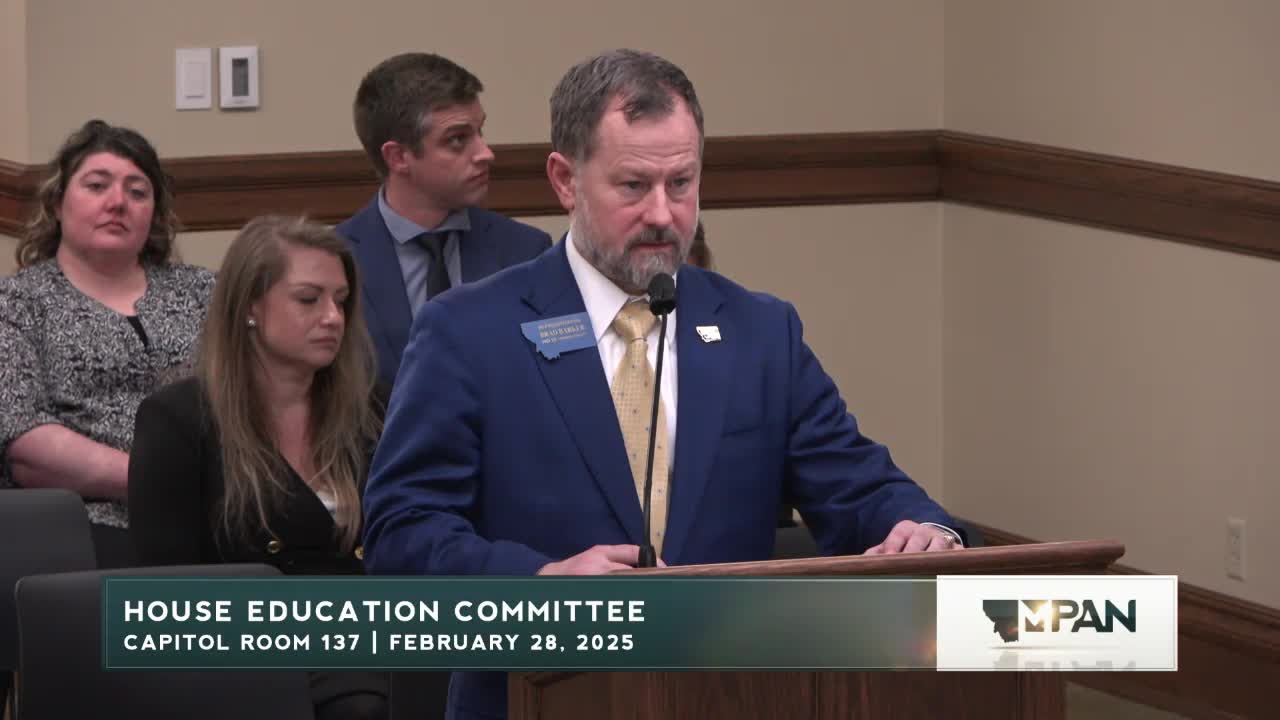
House Bill 823 would add representatives from the state workforce board, business and labor to the Perkins planning committee and require inclusive quarterly planning meetings for career-technical education funding, sponsor Rep. Brad Barker told the committee.
Representative Brad Barker told the House Education Committee that House Bill 823 would improve collaboration by ensuring representatives from the State Workforce Innovation Board (SWIB), business, and organized labor serve on the Perkins plan committee and by providing a facilitator role if the Board of Regents does not convene required stakeholder meetings.
Sarah Swanson, commissioner of the Department of Labor and Industry, testified in support and outlined federal funding streams that the state must coordinate—approximately $27 million in annual workforce-related federal funds, including Perkins and WIOA grants—and said the bill would ensure required parties are invited to quarterly planning meetings. Swanson said the bill is aimed at improving coordination, transparency and efficiency as Montana implements several new workforce measures enacted by the legislature.
Labor and industry witnesses, including representatives of the IBEW, Building and Construction Trades Council and the Montana AFL-CIO, urged support and said labor-run apprenticeship and joint training programs are a crucial asset in training Montana's workforce.
OCHE deputy commissioner Joe Thiel and Office of Public Instruction superintendent Susie Hedalen appeared as soft opponents with technical concerns. OCHE told the committee it attends SWIB meetings but does not hold a formal seat; both agencies asked for small technical amendments to ensure educator voices remain proportionate in committee membership and to clarify facilitation responsibilities if the Board of Regents does not convene meetings.
Committee members discussed amendment timing but ultimately moved HB 823 to the House floor with the understanding stakeholders would finalize technical language. The committee advanced the bill by voice vote; witnesses indicated agreed changes were in progress and that a floor amendment was expected to reflect negotiated language.