Get Full Government Meeting Transcripts, Videos, & Alerts Forever!
Get email alerts on the Elections Audit Transparency topic
No spam. Unsubscribe anytime.
Senate committee approves bill requiring counties to preserve cast-vote records and audit logs
Summary
After hours of testimony, the Senate State Administration Committee voted to advance Senate Bill 494 as amended, directing counties to test voting systems after changes and retain electronic audit data; voice and data-retention questions persisted in debate.
The Senate State Administration Committee on Feb. 7 advanced Senate Bill 494 as amended, a measure that would require expanded testing of voting systems after changes and preservation of electronic audit records used to verify tabulation.
Sponsor Sen. Theresa Manzella, R-Ravalli County, told the committee the bill “requires the election administrators to test voting systems whenever a new system is acquired or after any changes are made to the system, or if there's upgrades or repairs.”
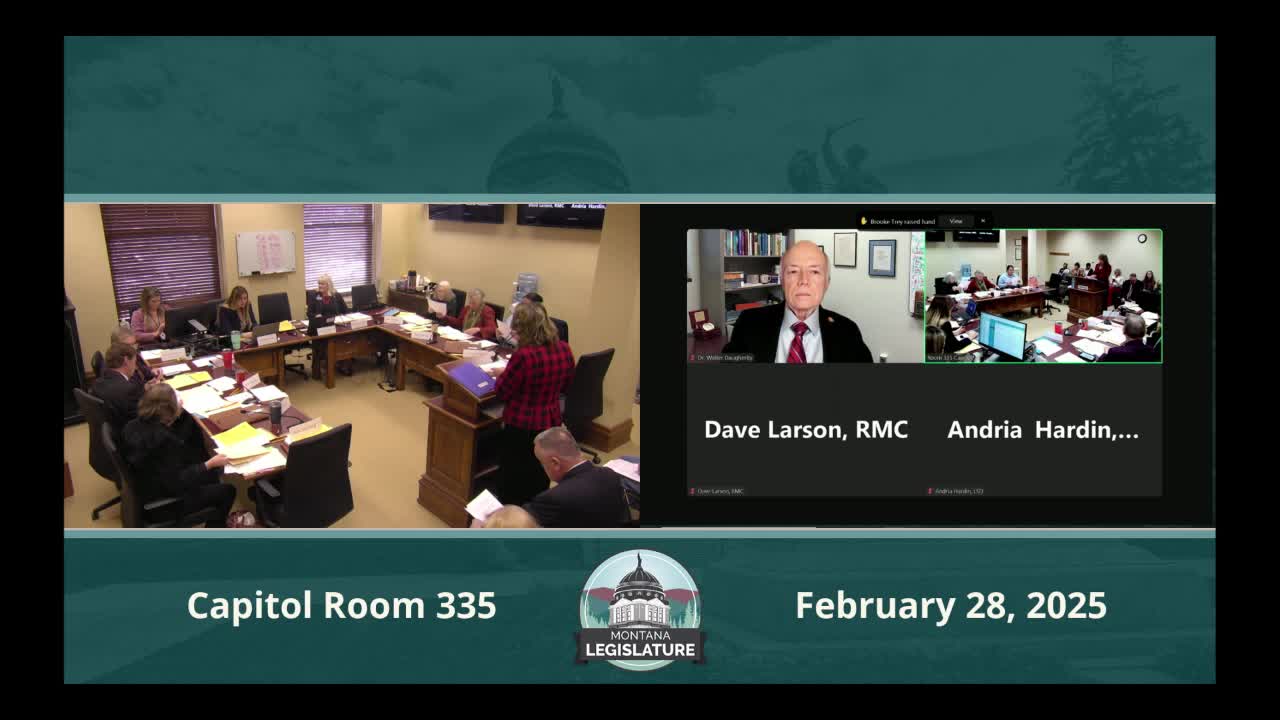
The bill drew lengthy testimony from election integrity advocates, local election officials and technical experts. Dr. Walter Daugherty, introduced as an expert witness, described cast-vote records and audit logs and argued they are central to auditability and public confidence. “Auditability is fundamental because if you don't have a way of verifying that the results are accurate, then why bother having an election?” Daugherty said. He also said a typical cast-vote-record file “has no personally identifiable information” and that publication enables independent checks of reported totals.
Proponents said the change would increase transparency and give counties tools to investigate discrepancies. Dave Nims, who has worked with counties on voter-roll cleanups, told the committee the records are needed so citizens and auditors can reconcile ballots to voters. “This is a good first step,” Nims said.
Election administrators and the Montana Association of Clerk and Recorders raised operational and privacy concerns. Regina Plettenberg, Ravalli County election administrator and president of the association, said some counties lack the hardware or staff to produce the records and that secrecy of the ballot is a constitutional and statutory concern. “The concern has been the secrecy … if we give that out and … give out the record as is without any type of redaction, then you could know how someone voted,” Plettenberg said.
Halston (Austin) James, director of elections in the Secretary of State’s office, told the committee the office worked with the sponsor and that the amendment addressed technical concerns. James also said the public-records law requires counties to produce records they already have but does not require creation of new records on demand.
Opponents and supporters pressed the committee on the length of retention and storage method. Sponsor Manzella had proposed retaining cast-vote records “in perpetuity”; some county officials flagged storage costs and long-term file-format maintenance. Plettenberg said ES&S told her a single cast-vote record can be saved on an 8-gigabyte thumb drive, but she cautioned the counties about archiving and long-term accessibility.
After committee discussion and amendment, the committee voted to advance the bill as amended. The amendment passed on a roll call and the bill moved forward on a 5-4 roll-call vote.
The bill now goes to the Senate floor with support from several proponents and technical backers — but with unresolved questions about the final retention language, county costs and approaches to balancing secrecy and auditability.
Ending: If enacted, the bill would require counties to expand testing after software or system changes, and to make specified audit artifacts available under the terms the Legislature ultimately approves. The secretary of state’s office and county clerks said they will need to coordinate implementation and likely technical guidance on extraction and long-term storage.