Get Full Government Meeting Transcripts, Videos, & Alerts Forever!
Get email alerts on the Higher Education Affirmative Action topic
No spam. Unsubscribe anytime.
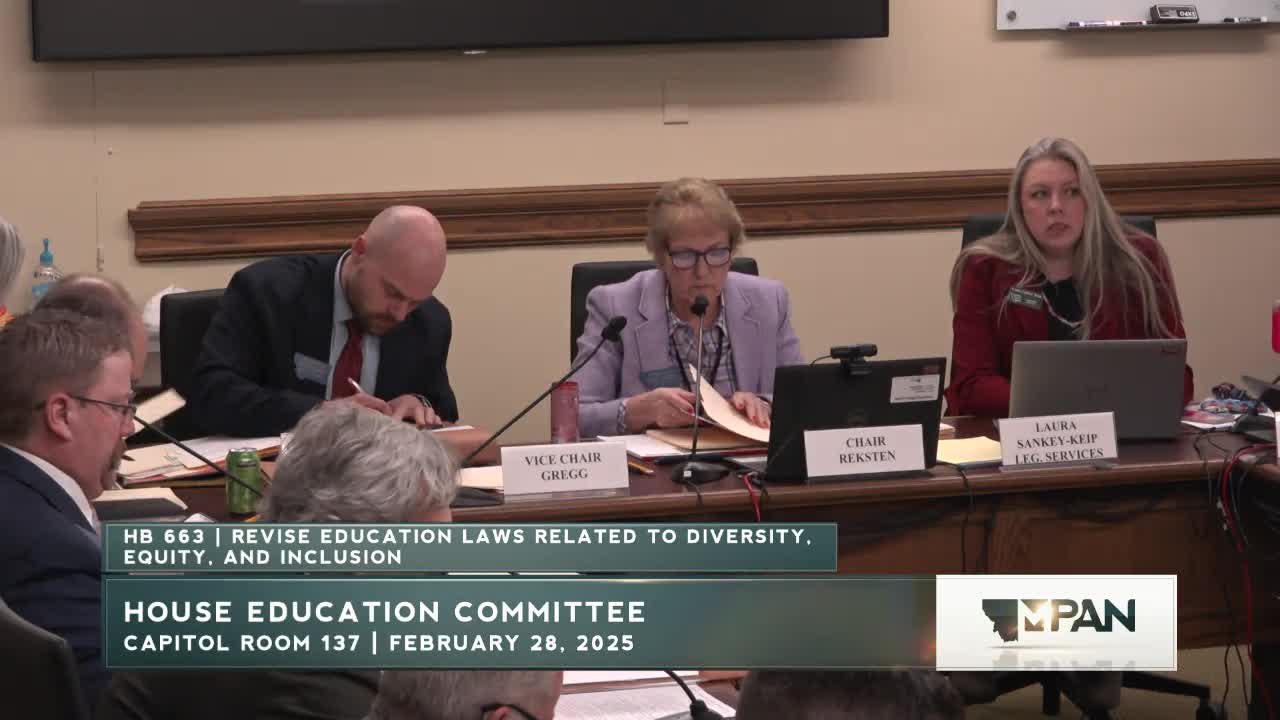
Montana committee hears bill to bar race-conscious practices at public universities
Summary
Representative Carrie Seekins Crowe told the House Education Committee that House Bill 663 would prohibit public universities from considering race, ethnicity or national origin in admissions, hiring and financial-aid decisions, saying the measure would ensure applicants are judged “on their merit, character, and abilities.”
Representative Carrie Seekins Crowe opened the hearing on House Bill 663, saying the measure would “ensure that qualifications, hard work, and merit determine success, not factors beyond an individual's control.” Seekins Crowe, the bill sponsor, told the Montana House Education Committee the bill would bar the use of demographic factors in admissions, scholarships and hiring across the state university system and would give institutions until Oct. 1, 2026, to comply.
Hope Morrison, representing the Associated Students of the University of Montana, testified in opposition and said the bill “increases government overreach and puts unnecessary restrictions on how universities make decisions.” Morrison told the committee survey results showing 85% of University of Montana students value exposure to different lived experiences.
Joe Thiel, deputy commissioner for the Office of the Commissioner of Higher Education, appeared as an informational witness. Thiel said OCHE’s assessment is that the system’s current admissions and financial-aid practices “do not currently discriminate on the basis of any of these classes.” He told the committee that an amendment removing a proposal to blind admissions officers to demographic data addressed a major practical concern, because federal reporting requires the system to capture certain applicant information.
Committee members pressed the sponsor and OCHE on whether the bill was needed given existing constitutional provisions and federal guidance. Representative Estesman cited the Montana Constitution’s guarantees and asked why statute was necessary; Thiel replied OCHE did not assert a statutory need but urged careful drafting to avoid unintended costs or operational impacts.
In executive action, the committee approved a sponsor-negotiated amendment that removed the most operationally disruptive language and then voted to send HB 663 to the House floor as amended. Representative Gregg moved the floor motion. The roll-call tally recorded in committee was 8 in favor, 7 opposed.
The bill’s text and committee-recorded amendment were described by the sponsor as aligning state statute with current OCHE practice and with federal guidance cited in a Department of Education Office for Civil Rights letter distributed at the hearing.
The bill now moves to the full House for consideration with the committee amendment in place; the transcript does not record any final legislative action beyond committee transmittal.