Get Full Government Meeting Transcripts, Videos, & Alerts Forever!
Get email alerts on the Medicaid Cost Settlement topic
No spam. Unsubscribe anytime.
Montana bill would speed Medicaid settlements for critical access hospitals
Summary
Lawmakers held a hearing on House Bill 732, which would allow Montana Medicaid to begin interim cost settlements for critical access hospitals when cost reports are filed, aiming to reduce multi-year payment delays that hospital officials say have strained rural facilities.
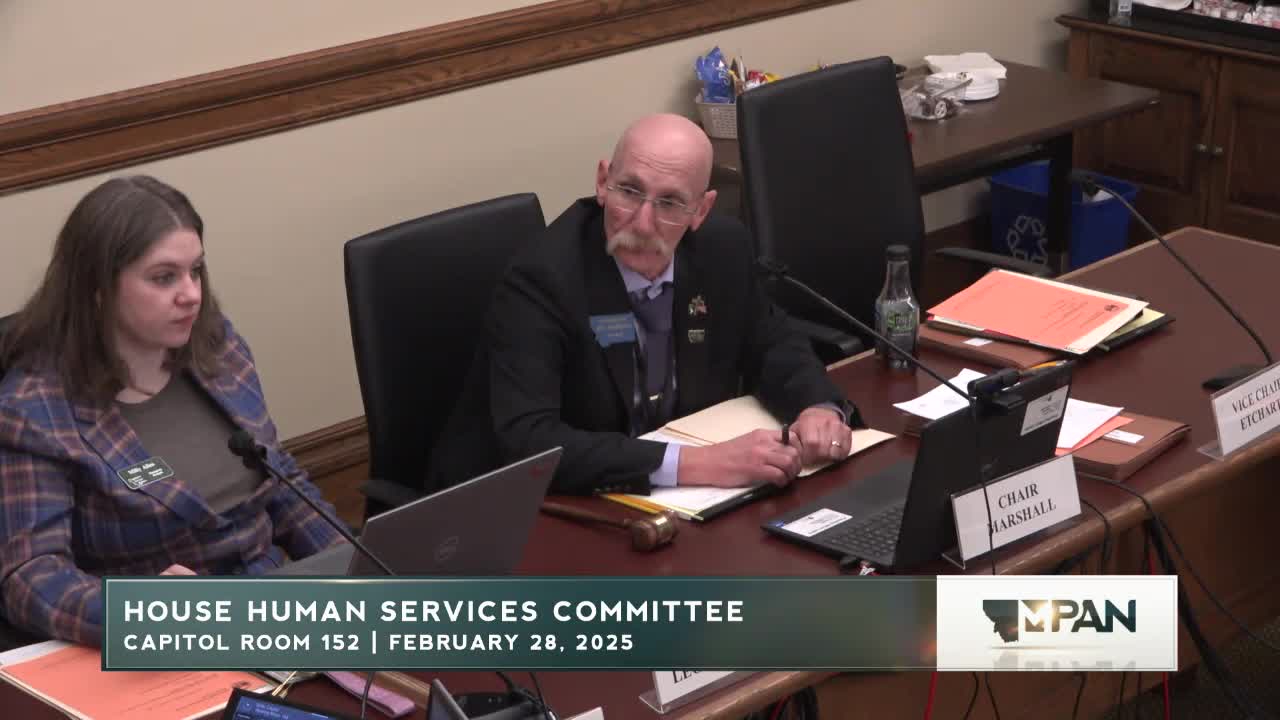
The House Human Services Committee opened a hearing on House Bill 732, which would change Montana Medicaid’s cost-settlement practice for critical access hospitals so initial settlements can begin when hospitals file annual cost reports rather than waiting for final federal Medicare audits.
Proponents told the committee the change is aimed at reducing long delays that leave rural hospitals without predictable settlement payments. "The bill would impact approximately 50 critical access hospitals spread throughout Montana," said Duane Pressinger of the Montana Hospital Association. "Currently, Medicaid does not cost settle with critical access hospitals, but waits until after the Medicare audit is completed. This delay is at least 3 years and recently from the pandemic is upwards of 5 to 6 years."
Montana Department of Public Health and Human Services officials and hospital leaders described the financial strain. Mary Lemieux, division administrator for DPHHS’s Health Resources Division, said the department supports the bill and that aligning Medicaid interim cost-settlement practices with Medicare would "ensure timely, predictable funding for the cause," which she said is essential for rural health care. John Bishop, chief executive officer of Bitterd Health in Hamilton, described how the current delay affects cash flow: under the present process, Medicaid waits for Medicare’s final audit before settling, and "since 2020, extreme delays in the completion of the final desk audit from the Medicare administrative contractor have created excessive delays for these reports."
Representative Beatty (sponsor) told the committee he had drafted an amendment to provide an appropriation to address the backlog, with half the amount from the State General Fund and the other half expected as a federal match. Several hospital leaders said specific hospitals have outstanding settlements: Pressinger cited a department report showing 15 hospitals with unsettled reports from 2022 and seven with unsettled reports dating to 2020; Bishop and other witnesses said individual hospitals — including Bitterd Health and Bighorn Hospital in Hardin — have experienced multi-year delays and cash-flow shortfalls. Bighorn’s CEO, Christie Gatrell, said the hospital had faced the prospect of a negative budget for fiscal year 2025 and that the hospital typically waits "a minimum of over a year and a half" after filing to receive settlements and in some cases waits about two years after a fiscal year ends.
Committee members asked whether the change could be made by administrative rule. Lemieux said the department could implement the change administratively but that it also needs the appropriations to address the existing backlog. DPHHS hospital and physician services bureau chief Don Holmlund identified his bureau as the unit that performs cost settlements and offered to answer questions from the committee.
No formal committee vote or final action on the bill was recorded in the hearing excerpt. The discussion closed with committee members' questions about administrative capability and funding; Lemieux repeated that the technical change could be made administratively but the appropriation is necessary to clear the backlog.