Get Full Government Meeting Transcripts, Videos, & Alerts Forever!
Get email alerts on the Greenhouse Gas Rulemaking topic
No spam. Unsubscribe anytime.
Sponsor urges DEQ rulemaking to limit greenhouse gas emissions after Held opinion; advocates press for rules, industry backs alternative package
Summary
Representative Powers sought rules requiring DEQ to limit greenhouse gases, citing the Montana Supreme Court's Held decision; supporters urged the committee to direct rulemaking to protect public health and the environment, while industry witnesses opposed this bill in favor of a different legislative package.
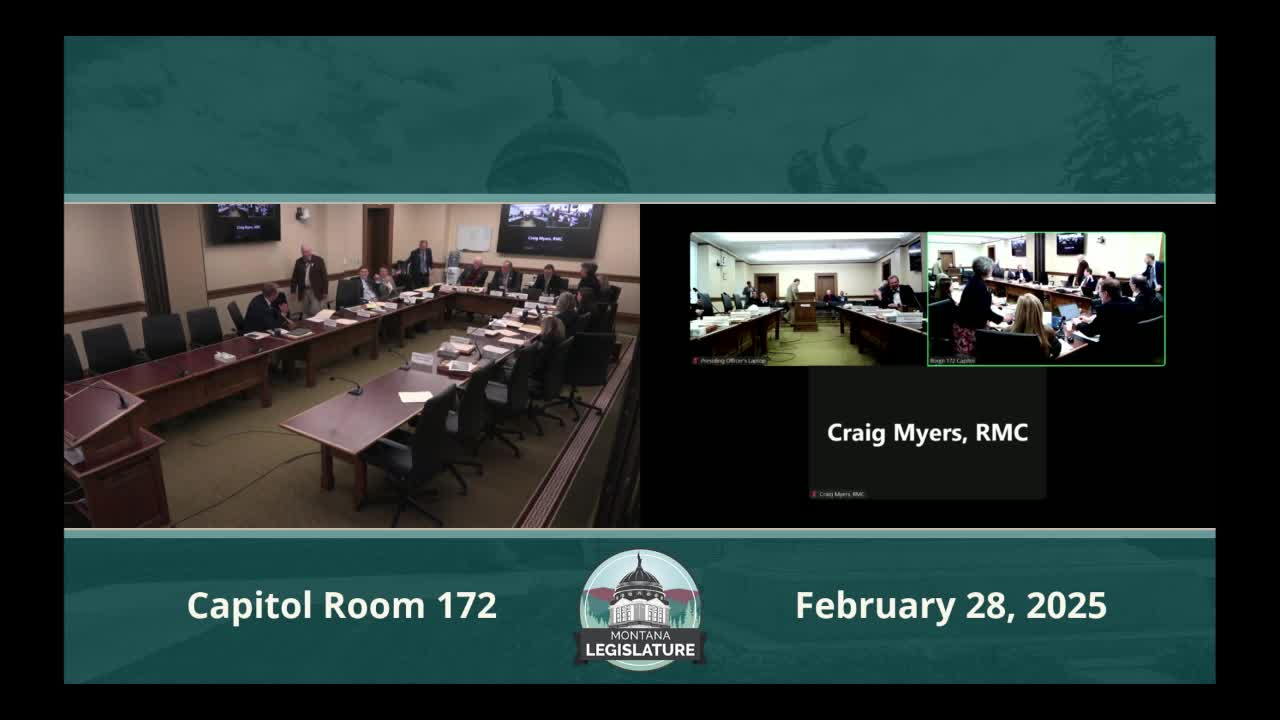
Representative Ryan Powers (sponsor) opened a hearing on House Bill 660 by framing the bill as a response to the Montana Supreme Court's Held decision and a step to implement the state's constitutional environmental protections. "I respectfully request your support for House Bill 660 that requires that the department shall develop rules to limit greenhouse gas emissions to protect public health safety and the welfare of the environment," Powers said, citing the court record that the state did not dispute key climate-science findings.
More than a dozen proponents — including conservation groups, economists, physicians, local climate organizations and parents — urged the committee to direct DEQ to begin rulemaking. Testimony cited climate impacts across Montana, including heat, drought, wildfire and economic losses to agriculture and outdoor recreation. Shannon James (Montana Conservation Voters Education Fund) and Anne Hedges (Montana Environmental Information Center) submitted state-specific reports and expert testimony from the Held trial and asked the committee to act. Michael Hudson of Families for Livable Climate said Montana's per-capita greenhouse gas emissions are well above national and global averages and urged action to protect children from wildfire smoke and health harms.
Opponents, including John Iverson for Treasure State Resources Association and Sonny Capice for the Montana Petroleum Association, said other legislative vehicles better address the Held decision and opposed HB 660 as duplicative or poor policy. Iverson said a package of other bills (referenced in committee discussion) was the appropriate path and therefore his coalition opposed this specific bill.
DEQ Director Sonia Nowakowski and Air Quality Bureau Chief Bo Wilkins appeared as informational witnesses. Nowakowski said DEQ had been consulted during drafting and that the bill would direct rulemaking but that an earlier DEQ greenhouse-gas rulemaking effort (circa 2010) was reviewed by the Environmental Quality Council and did not proceed after objection. "That rule making package was brought forward and reviewed by the Environmental Quality Council which objected to that rule making and that rule making did not proceed," Nowakowski told the committee. Wilkins noted the department's monitoring and indicated that wildfire smoke is captured in monitoring data but is treated differently for regulatory designations under federal rules.
Committee members asked about fiscal implications and program staffing; DEQ said initial costs would be covered from air-fee special revenue in its fiscal note and that EPA reporting systems would be used for inventory purposes. Lawmakers also debated how wildfire smoke is treated in air-quality programs and whether the rulemaking should target particular greenhouse gases or sectors; sponsors said the bill intentionally left scope to DEQ rulemaking. The committee closed the hearing without immediate action.