Get Full Government Meeting Transcripts, Videos, & Alerts Forever!
Get email alerts on the Utility Relocation topic
No spam. Unsubscribe anytime.
Montana bill would let MDT reduce utility relocation reimbursements after repeated noncompliance and set rulemaking process
Summary
Representative Courtney Sprunger introduced House Bill 672 to let the Montana Department of Transportation reduce relocation reimbursements for utilities that repeatedly fail to relocate facilities after notice and to require MDT-led rulemaking with contractors and utilities to set timelines and exceptions.
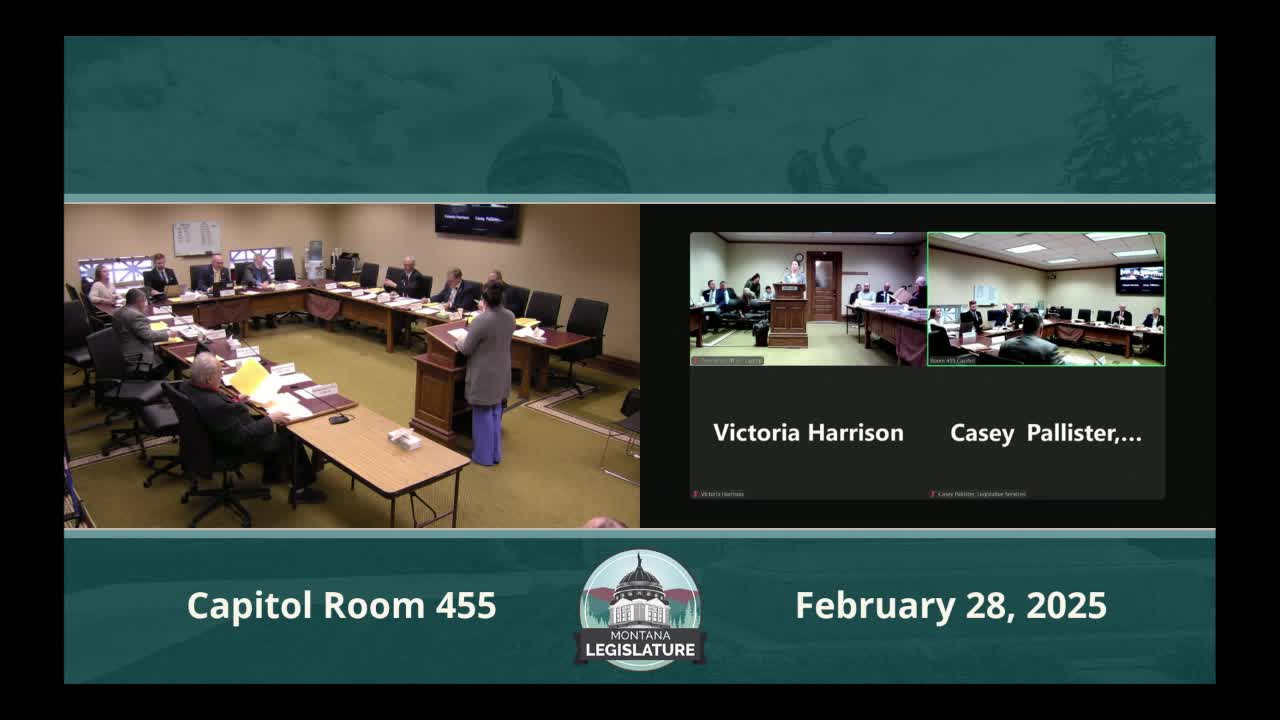
Representative Courtney Sprunger introduced House Bill 672 on the House Transportation Committee floor as a measure aimed at shortening delays on highway construction projects caused by slow or uncertain utility relocations. The bill would preserve the state’s existing relocation reimbursement program (currently capped at 75% of a utility’s costs) while adding authority for the Montana Department of Transportation to reduce that reimbursement — incrementally down to zero — if a utility repeatedly fails to relocate facilities after notice.
The bill sponsor told the committee the proposal grew out of “very personally lived experience” on a project that sat idle for six weeks while a utility failed to relocate on a predictable schedule. Sprunger said the bill is intended to “defend the taxpayer” by limiting delays that push projects into another construction season.
Proponents including Montana Department of Transportation Director Chris Dorrington, contractors and utilities said the bill is the product of weeks of stakeholder discussions and stressed that most relocations proceed cooperatively. “This bill … moves accountabilities to the right place,” Director Dorrington said, urging the committee to pass the measure so the department can impose a consequence scale for ongoing noncompliance while the parties continue to finalize details through rulemaking.
The bill directs MDT to convene a stakeholder group of contractors, utilities and other partners to flesh out procedures and exceptions for the new enforcement mechanics. Witnesses said rulemaking will cover realistic timelines, material lead times, mapping and depth verification to reduce safety risks from mislocated facilities, and standard communications milestones: sponsors described a plan-in-hand milestone at roughly 90% design and an intent to give utilities as much as a year’s notice on some larger projects.
Utilities raised a separate legal concern that emerged during drafting: a proposed indemnity/hold‑harmless structure. CenturyLink/Lumen’s counsel said the industry sought a negligence standard for claims arising from relocations, while MDT sought a gross‑negligence or willful‑misconduct threshold for situations where MDT hires a contractor to relocate a utility after repeated notices. Representatives of telecom and electric cooperatives said they would participate in the rulemaking and urged the committee to advance the bill.
The sponsor included an effective date provision in the draft that would make most new authorities effective Jan. 1, 2026, to allow time for rulemaking. At the committee’s executive action, members voted to advance the bill to the House floor for second reading.
Ending: Committee members pressed sponsors and agency staff on the legal standard in the bill’s liability section and on operational details that the stakeholders will be asked to refine in rulemaking. Sponsors and utility representatives said the stakeholder process is central to ironing out timelines, exceptions (for supply or weather delays) and definitions of contractor competency before MDT would exercise the power to hire a third party and reduce reimbursements. The bill passed the committee and will proceed to the House second reading.