Get Full Government Meeting Transcripts, Videos, & Alerts Forever!
Get email alerts on the Civil Rights And Public Order topic
No spam. Unsubscribe anytime.
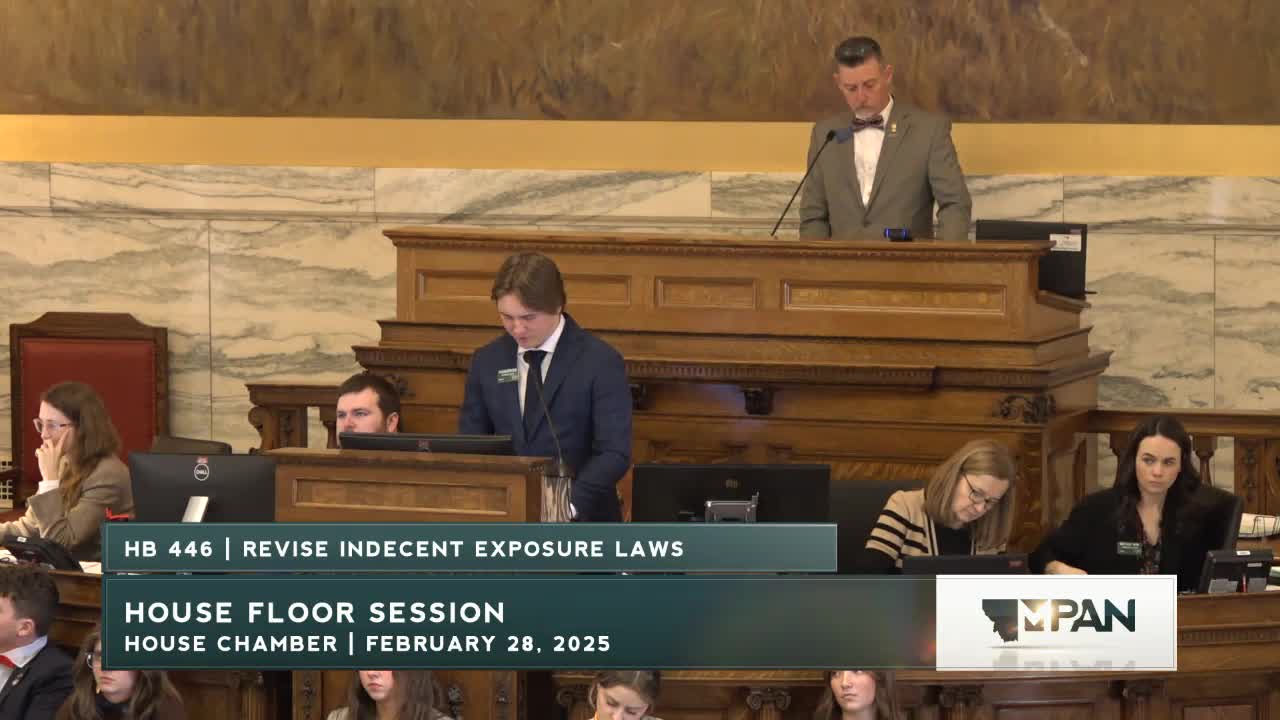
House advances indecent-exposure changes; debate highlights dignity language and transgender concerns
Summary
Lawmakers approved a committee recommendation on House Bill 446, which revises indecent-exposure statutes to add a dignity standard and creates a separate public-place provision. Debate centered on whether the proposal would unfairly affect transgender people using public locker rooms.
The Montana House’s committee of the whole recommended passage of House Bill 446, a measure to revise indecent-exposure law and add a statutory protection referencing human dignity.
Sponsor Representative Jay Hinkle said the bill updates statutes to address conduct that “violates their dignity” and to ensure that exposure of intimate parts in public places can be charged where current statutory language may not provide a clear remedy. “Indecent exposure can be a chargeable offense in public places,” Hinkle said in committee remarks, describing section 4 as patterned after Tennessee law.
Representative Staffman offered an amendment (HB446.002.001) that would keep the sponsor’s dignity language but remove a separate provision that creates an alternative indecent-exposure offense tied solely to whether the person exposed was of the opposite sex or the sex observed at birth. Staffman argued the separate section was unnecessary and could criminalize members of the transgender community who use locker rooms or changing facilities. “This amendment…retains the language about affronts to dignity,” Staffman said, and removes the provision he called duplicative and harmful.
The amendment failed on the floor (41 yes, 58 no), and the bill as introduced passed the committee report by a recorded vote of 54 in favor and 45 opposed. Debate was heated and included personal testimony: Representative Zooey Zephyr (identified herself as a transgender woman in chamber remarks) asked lawmakers to stop targeting transgender people with bills and said repeated measures were exhausting.
Points of contention and bill specifics - Dignity language: the bill inserts statutory language referencing the inviolability of human dignity (the sponsor cited Article II, Section 4 of the Montana Constitution in debate) and frames certain indecent-exposure conduct as violating a person’s dignity. - New public-place offense: section 4 removes the requirement that exposure be committed “in order to” abuse, humiliate, harass, or gratify sexual response when the person observing is of the opposite sex (or sex observed at birth). Opponents said that creates a separate offense that can be prosecuted without showing intent to harm. - Civil liberties and enforcement: opponents and amendment proponents argued the separate provision would place transgender Montanans at risk of criminal liability when they use public facilities; supporters stressed the bill targets unwanted exposure of intimate parts and said it does not criminalize a person for entering a facility.
Committee outcome and next steps The committee recommended do pass (54–45). The sponsor urged the House to adopt the update, saying it fills gaps that current law leaves open for victims seeking recourse. Opponents urged caution, citing potential discriminatory effects and enforcement risks. The bill will continue through the House process for additional action.