Get Full Government Meeting Transcripts, Videos, & Alerts Forever!
Get email alerts on the Legislative Procedure topic
No spam. Unsubscribe anytime.
Montana Senate Ethics Committee adopts hearing rules, orders document production and formalizes due-process letter
Summary
The Senate Ethics Committee voted to adopt most committee rules, agreed on a hybrid evidence-admissibility procedure, approved sending a due-process letter to the respondent and authorized subpoenas for documents from the Legislative Services Division ahead of a March 7 adjudicatory hearing.
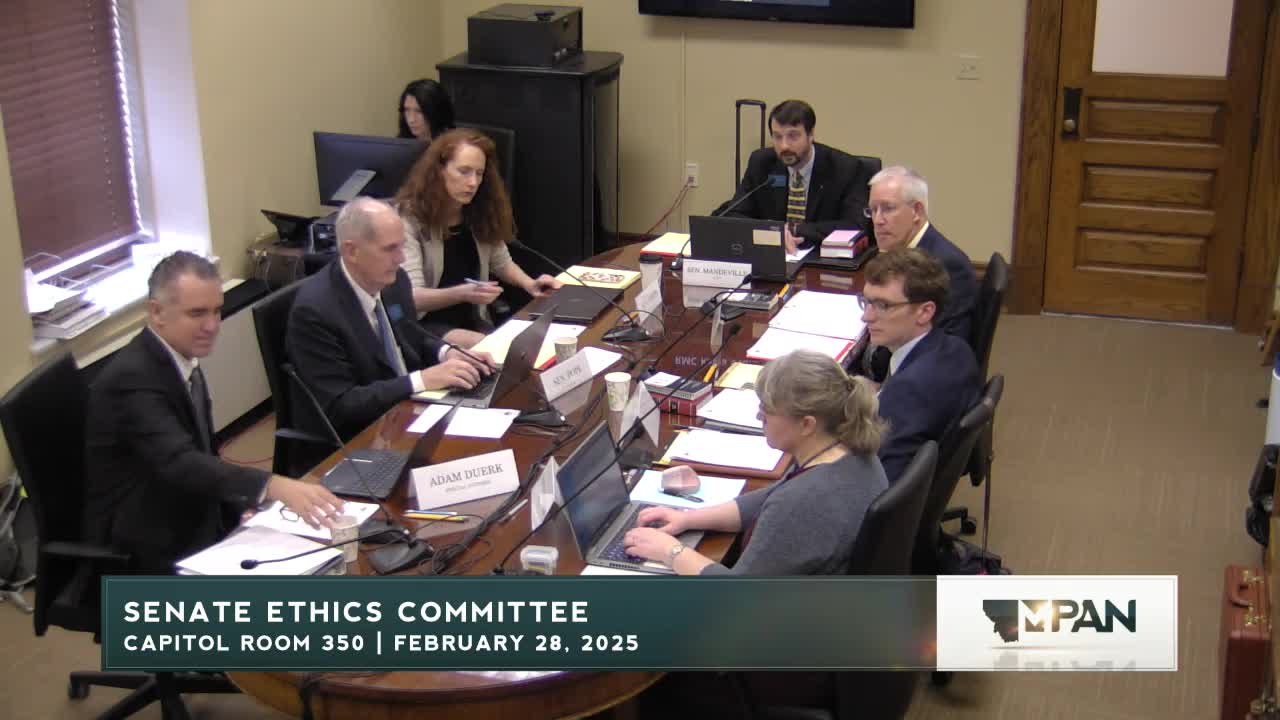
The Montana Senate Ethics Committee on March 3 adopted a set of internal rules for its inquiry into actions by the senator from District 43, approved a hybrid evidence-admissibility process for the upcoming adjudicatory hearing, voted to send a written due-process letter to the respondent and authorized subpoenas for documentary materials held by the Legislative Services Division.
Committee chair Senator Mandeville opened the session and recognized Senator Ellsworth, who said he wanted the panel to “go over our rules” after a prior rules meeting with the majority leader and raised concerns the rules had been “manipulated.” Special counsel Carroll and others then reviewed constitutional and statutory authorities the committee is using, including provisions of the Montana Constitution, joint rules of the legislature, and Mason’s Manual of Legislative Procedure, and outlined the committee’s obligations to provide notice, formal charges and a hearing with an opportunity to cross-examine witnesses.
Why it matters: The committee is conducting a fact-finding investigation that the full Senate referred to it on Jan. 27, 2025; by constitution only the Senate may punish or expel members, and the committee’s report could lead the full body to consider whether “good cause is shown” for punishment or expulsion. The rules and disclosure decisions the committee adopted shape what evidence the respondent and the committee may present at the adjudicatory hearing scheduled March 7, 2025.
Most significant actions taken
- The committee voted to send a letter dated Feb. 28, 2025, to the senator from District 43 inviting the respondent to state in writing, at least 24 hours before the adjudicatory hearing, any objections or suggestions regarding procedural due process. Vice Chair McGilvry moved the motion; the committee approved it and the chair said he and Senator Pope would sign the letter.
- The committee adopted its package of rules with one item reserved for additional discussion (rule e10-70). Senator McIlree moved to adopt the entire set of rules except e10-70; the motion carried.
- On e10-70, the panel adopted hybrid language resolving an internal debate about the chair’s authority and committee review of evidentiary rulings. The adopted text (summarized) states objections shall be ruled on by the chair; members may appeal the chair’s decision to the committee with the question stated, “Shall the ruling of the chair be upheld?” It also requires that, to the extent possible, admissibility of witness testimony be determined prior to the adjudicatory hearing; testimony is admissible unless a majority of the committee deems it inadmissible; and exhibits shall be admitted by a committee vote after the close of testimony. The committee adopted the hybrid language by motion and voice vote.
- The committee authorized seeking subpoenas for production of records identified as “a copy of all documents provided to respondent’s counsel as part of the public records request,” directed to the Legislative Services Division; Senator Smith moved that motion and it passed.
What the committee said about due process and evidence
Special counsel and counsel for the committee (Mister Carroll and Special Counsel Dirk) told the committee that Mason’s Manual establishes that adequate notice, formal charges and a public hearing with the right to cross-examine witnesses are required when a legislative investigation may lead to expulsion. Carroll told the committee it had provided notice and formal charges (including a letter issued Feb. 24, 2025 specifying a March 7 hearing), which he said provided the respondent 11 calendar days’ notice and at least nine legislative days’ notice.
Mister Carroll and Special Counsel Dirk also described procedures they recommended to promote fairness: exchange of witness lists and an exhibit list, a short summary of each witness’s anticipated testimony, and procedures for subpoenas for records the committee intends to use at the hearing. Dirk said those steps both facilitate due process and allow the committee to consider issuing subpoenas for records on the respondent’s behalf.
Objections from respondent’s counsel
Respondent’s counsel (identified in the record as Miss Mel) appeared late because of court and raised multiple formal objections to the committee’s process. She said the committee failed to provide meaningful prior notice of today’s agenda and that documents used by the Legislative Auditor (and related investigative materials) had not been produced in full. She argued the committee’s adopted rules risked prejudicing the respondent because they would permit the committee to hear evidence and then exclude it after the respondent presented their case. Miss Mel asserted the committee had relied on special counsel who, she said, represents the Senate president and the majority, and that providing special counsel such a prominent advisory role created a risk of bias and “substantive and procedural unfairness.” She listed a statutory citation (MCA 49-1-202) and other case law in arguing there was a protected interest in holding office and that the committee must provide full procedural protections.
How evidentiary disputes will be handled
The adopted hybrid rule requires the chair to rule on objections and allows members to appeal to the committee with a vote phrased, “Shall the ruling of the chair be upheld?” It also provides that, where possible, admissibility of witness testimony should be resolved before the adjudicatory hearing; testimony is deemed admissible unless a majority of the committee finds otherwise; and exhibits will be admitted only by vote after all testimony is complete. Committee counsel clarified that “after the close of testimony” means after the end of all witnesses’ testimony for the hearing.
Next steps and timeline
The committee scheduled the adjudicatory hearing for March 7, 2025, beginning at 9 a.m. or immediately after floor session. It directed staff to produce materials already provided to respondent’s counsel and authorized subpoenas for additional materials from the Legislative Services Division. The chair and the committee’s minority vice chair were identified as signatories for the due-process letter to the respondent.
What the committee did not decide
The committee repeatedly noted that it has no authority to impose punishment or expel a member; that determination belongs to the full Senate. The committee limited its actions at this meeting to procedural rules, production of documents and scheduling of the adjudicatory hearing. Respondent’s counsel reserved additional objections and asked for broader production of the Legislative Auditor’s materials, which the committee did not rule on at this session.
Ending note
Committee members and counsel emphasized that Mason’s Manual, the Montana Constitution and joint legislative rules provide the governing framework for the inquiry, and the committee will apply the rules it adopted to manage the March 7 hearing and related prehearing disclosure and subpoena requests.