Get Full Government Meeting Transcripts, Videos, & Alerts Forever!
Get email alerts on the Workers Compensation Medical Evidence topic
No spam. Unsubscribe anytime.
Committee backs bill to clarify how judges weigh medical opinions, expand access to independent medical evaluations
Summary
Senate Bill 345 would change evidentiary rules for workers' compensation medical opinions and expand reimbursement for out‑of‑town independent medical evaluations (IMEs); insurers and employers said the bill improves access and fairness; claimants' advocates supported the changes.
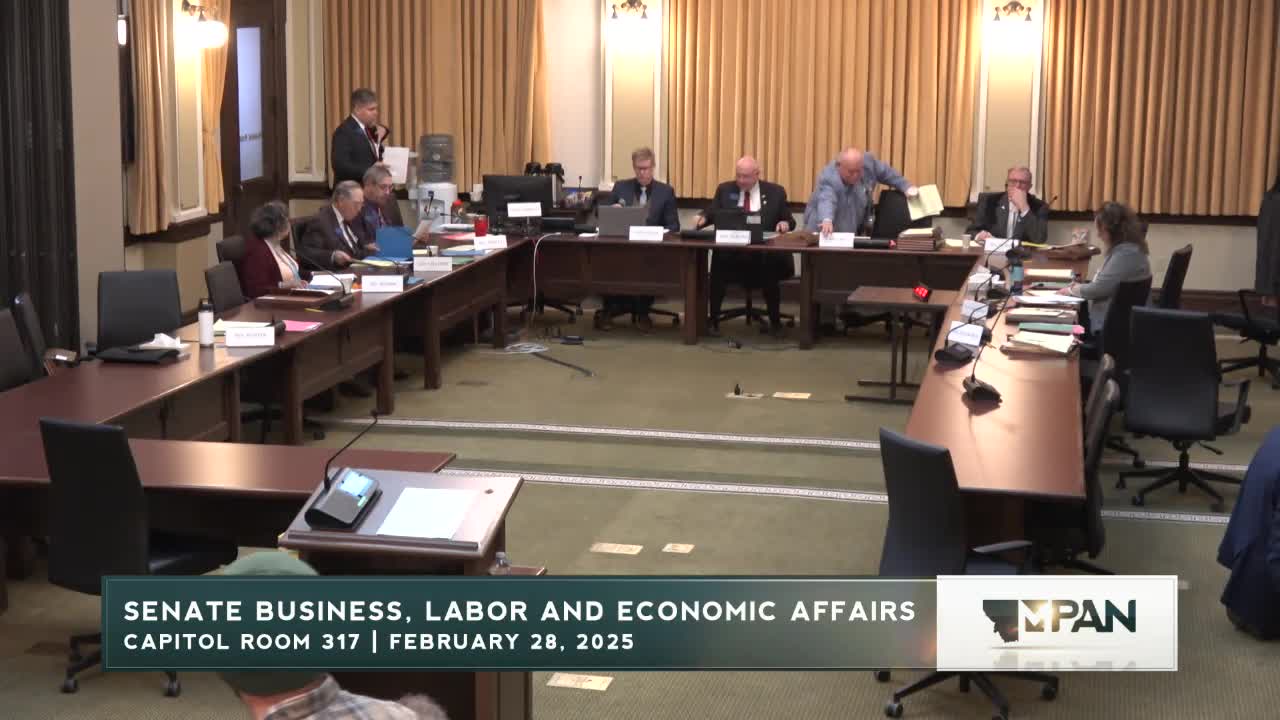
Helena — The Senate Business and Labor Committee heard testimony supporting Senate Bill 345, legislation aimed at changing how workers' compensation courts evaluate competing medical opinions and making it easier for injured workers to obtain independent medical evaluations (IMEs).
Proponents, including self‑insuring employers, the Montana State Fund and public school insurers, told lawmakers the bill would remove an automatic judicial preference for a treating physician’s opinion and instead require judges to weigh multiple factors — training, experience, specialty and the extent of treatment — when assessing credibility. Supporters said that change would improve accuracy in complex cases, including severe injuries that may require out‑of‑state specialist review.
Peter Strauss, representing the Montana Self Insurers Association, said judges sometimes give deference to treating providers without explaining why, and that expert specialists can offer essential perspective on complicated injuries. "Ask about how often they do this, ask about their knowledge, training, expertise and experience," Strauss said, urging the panel to allow the trier of fact to weigh those factors rather than apply automatic deference.
State Fund and school insurers testified the bill also expands typical reimbursements for injured workers asked to travel for IMEs. The proposal would explicitly authorize reimbursement for travel, lodging, meals and limited additional items such as childcare and pet care when an injured worker must travel long distances for an IME, and it clarifies timing and scheduling expectations for IMEs.
Nick Mazanec of State Fund described Montana’s geography and provider shortages as drivers of the change: specialists needed for some claims often practice out of state, and ensuring access to those specialists can speed accurate compensability decisions and return‑to‑work planning.
The Montana Chamber of Commerce and the Montana School Group Insurance Association supported the bill, saying it would help move claims to resolution, improve access to specialty opinions and reduce delays in returning injured workers to employment.
Several requesters of earlier amendments worked with the sponsor during the hearing to refine language clarifying when and how judges should evaluate medical testimony and to limit discovery requests for IME physicians to relevant subject matter. The sponsor indicated he would accept a technical amendment drafted by stakeholders to clarify the role of a treating physician’s frequency of interaction with an injured worker in credibility assessments.
No formal vote was recorded in the hearing transcript; the sponsor asked the committee to place an agreed amendment on the bill and to advance the bill as strengthened by the amendment.