Get Full Government Meeting Transcripts, Videos, & Alerts Forever!
Get email alerts on the Religious Release Time topic
No spam. Unsubscribe anytime.
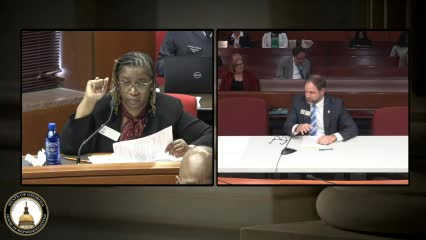
House education panel tables bill to permit release‑time religious instruction during school day
Summary
At a meeting of the House Education Committee, lawmakers debated House Bill 133 (LC492137), a measure that would permit parents to enroll students in off‑campus release‑time religious instruction during the school day; the committee ultimately tabled the bill after an 8–6 hand count.
At a meeting of the House Education Committee, lawmakers debated House Bill 133 (LC492137), a measure introduced by Representative Clark that would allow parents to enroll students in off‑campus "release‑time" religious instruction during the school day and would permit local school systems to create policies to implement such programs.
The bill would authorize public schools to permit release‑time courses during school hours for students whose parents sign consent forms. Representative Clark, the bill’s sponsor, described the proposal as voluntary for parents and local systems and said the measure merely “allows parents who wanna sign their kids up during school hours.”
Why it matters
Supporters said the measure would expand options for families and retain students who otherwise might leave public schools for private religious instruction. Supporters cited national examples and data from large providers, telling committee members that some programs operate in hundreds of schools and report improved attendance and reductions in bullying.
Opponents and many questioners raised implementation and liability concerns. Committee members pressed for clarity about: who vets and insures outside organizations that transport or instruct children during the school day; whether background checks should be mandatory for organizations that have repeated contact with pupils; how parental consent should work for adult students; and whether a state policy could create an unfunded mandate for smaller or low‑capacity districts.
Key provisions discussed
- LC492137 would permit release‑time religious instruction; it requires parental consent for participating students as drafted. - The bill originally directed local school systems to adopt a policy by Aug. 1, 2025. During committee debate members successfully amended the draft to remove that deadline and to change the directive from a compulsory requirement ("shall") to permissive language ("may"). Representative Clark agreed to those changes on the floor of the committee. - Committee members repeatedly asked whether organizations running release programs perform criminal‑background checks and carry insurance for vehicle transport and off‑campus activities. Supporters said established providers conduct background checks and coordinate logistics with local schools; opponents asked for explicit statutory or policy safeguards.
Representative Clark said the measure is meant to be parental choice and local control: “it just allows parents who wanna sign their kids up during school hours,” and she pointed to programs she described as operating nationwide. Committee members asked for written evidence about typical vetting, insurance practices and any fiscal impacts on school operations.
Outcome
Committee members moved to table the bill for further work. The motion to table carried on a hand count, 8 in favor and 6 opposed, and HB133 was laid aside for additional discussion and redrafting. Committee leaders invited the bill sponsor to work with members who had implementation questions and promised the bill could be returned to the committee after those issues are addressed.
Votes at a glance (actions recorded at this meeting)
- HB 175 (LC492064), DECAL background‑check cleanup (due pass) — passed out of committee (motion and voice vote; tally not specified in transcript). - HR 145 (LC492231S), urging expanded vision and hearing screening for students — adopted by voice vote (motion and voice vote; tally not specified). - HB 127 (LC492020), allow teachers to use up to 5 days of accumulated sick leave as personal days — due pass (voice vote; tally not specified). - HB 371 (LC492236), raise maximum authorization for capital outlay funding from $300,000,000 to $3.75 billion (author: presentation by Department of Education director Mike Sanders) — due pass (voice vote; tally not specified). - HB 12 (LC499002S), lower equalization eligibility threshold from 14 to 10 mills and add penalties for mills rolled back below new threshold — passed and carried to rules (voice vote; tally not specified). - HB 335 (LC492115), student‑athlete mental health awareness materials and coach training (mirrors Georgia High School Association practice) — due pass (voice vote; tally not specified). - HB 200 (LC492101), three‑year pilot immersive writing program for grades 2–5 — passed as amended (amendment 490231 added; voice vote; tally not specified). - HB 235 (LC492305S), paid leave for organ/bone‑marrow donation for K‑12 certified employees (fix to prior statute to include educators) — due pass (voice vote; tally not specified). - HB 37 (LC491994), require notice to employees when a local system does not participate in Social Security — passed (voice vote; tally not specified).
What the committee asked sponsors to provide next
Committee members asked sponsors and interested parties to return with: - Written descriptions of practice for background checks and insurance used by established release‑time providers; - Clarification of fiscal impacts for districts that might choose to accommodate release‑time programs (transportation, staffing, supervision); - Any model policy language that would protect districts while preserving parental choice.
Ending
Committee leaders said members can continue drafting and that the sponsor should meet with colleagues to address implementation and liability questions. The committee recessed with a note that several bills are likely to return for additional consideration before crossover.