Get Full Government Meeting Transcripts, Videos, & Alerts Forever!
Get email alerts on the Committee Executive Action topic
No spam. Unsubscribe anytime.
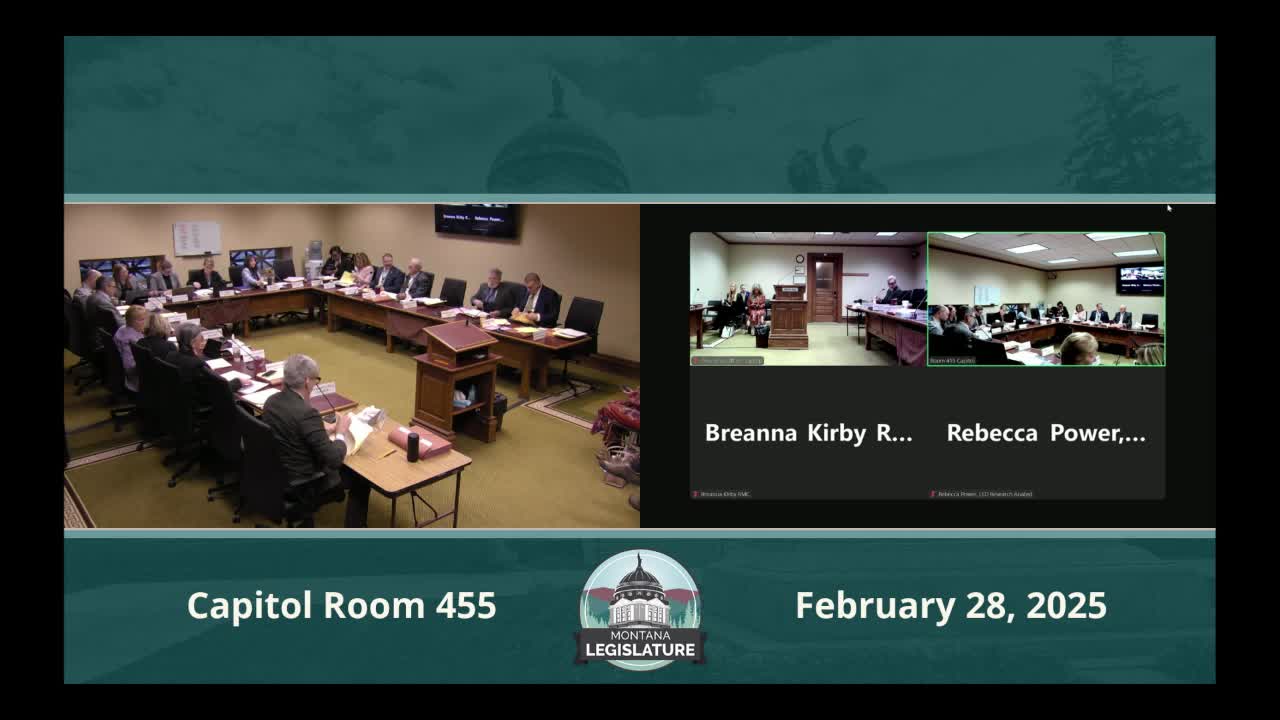
House State Administration advances veterans study, meal-per-diem change and campaign rules; several bills tabled
Summary
The House State Administration Committee met for a series of bill hearings and executive actions that resulted in a mix of approvals and tablings on measures ranging from veterans services to campaign finance rules.
The House State Administration Committee met for a series of bill hearings and executive actions that resulted in a mix of approvals and tablings on measures ranging from veterans services to campaign finance rules.
In executive action, the committee approved bills moving responsibility for Montana’s decennial veterans long-term care needs study to the Montana Veterans Affairs Division, extended meal allowances for night-shift road construction crews, aligned state reporting on certain campaign contributors, and advanced local-marijuana ballot-language clarifications. The committee also tabled several bills for further work, including proposals that would add new disclosure duties for attorneys in civil cases and a proposal to require public hearings on proposed ballot initiatives.
The votes come after a full day of hearings in which bill sponsors, state agency representatives and outside groups provided testimony. Supporters said many bills correct technical gaps or align statute with current practice; opponents warned of unintended consequences or legal conflicts that merit more study.
Votes at a glance - HB 566 — Decennial veterans long-term care needs study: passed (do pass). Sponsor: Rep. Marta Bertoglio. Supporters included the Montana Veterans Affairs Division and Montana National Guard leadership. Outcome: approved in executive action. - HB 769 — Night-shift meal allowances for state road construction crews: passed (do pass). Sponsor: Rep. Julie Matthews. Department of Transportation and union representatives testified in support. - HB 759 — Clarify reporting for contributions drawn on LLC/LP accounts (align with FEC practice): passed (do pass). Sponsor: Rep. Rene Gregg. The Commissioner of Political Practices participated as informational witness. - HB 688 and HB 698 — Clarify ballot question language for local governments on marijuana cultivation/manufacturing and dispensaries: both passed (do pass). Sponsor: Rep. Bill Mercer. The bills drew lengthy opposition from cannabis industry representatives who said the measures would shift local authority. - HB 770 — Clarify candidate filing/reporting when no contributions: passed (do pass). Sponsor: Rep. Jodie Echart. - HB 724, HB 728, HB 780, HB 789, HB 788 and others — tabled for further consideration or conceptual amendment (committee vote). - HB 804 — Adjust lobbyist payment threshold and codify inflation factor: passed (do pass). Sponsor: Majority Leader Steve Fitzpatrick. - HB 379 — Sale and leasing changes for state trust lands (passed after being taken from the table).
Why this matters Committee action moves a set of items—some technical, some policy—closer to final consideration by the full House. Bills affecting how the state conducts long-range veterans planning, how workers are reimbursed for travel while on night shifts, and how campaign reporters treat donations from business-entity accounts all affect state operations and public transparency. The tabling of other measures signals outstanding legal and policy questions committee members want resolved before advancing.
Background and next steps Most passed bills will be scheduled for floor consideration; tabled measures may be revised and returned to committee or reintroduced in future sessions. Several items prompted requests for follow-up from state agencies and for conceptual amendments, which committee members said they would review before executive action or floor drafting.
Proponents and opponents in hearings included agency staff from the Department of Transportation, Montana Veterans Affairs Division, the Commissioner of Political Practices office, organized labor, veteran groups and cannabis industry representatives. Several speakers urged precision in statutory language to avoid unintended shifts in authority or litigation.