Get Full Government Meeting Transcripts, Videos, & Alerts Forever!
Get email alerts on the Artificial Intelligence In Healthcare topic
No spam. Unsubscribe anytime.
Lawmakers debate bill to require transparency and human review of AI used by health insurers
Summary
House Bill 556 would require health insurance issuers to disclose use of artificial intelligence (AI) tools in utilization review and prohibit AI from being the sole basis for denials, delays, or modifications of medically necessary care. Insurers urged caution, calling the drafting overly broad and potentially harmful to efficient approvals.
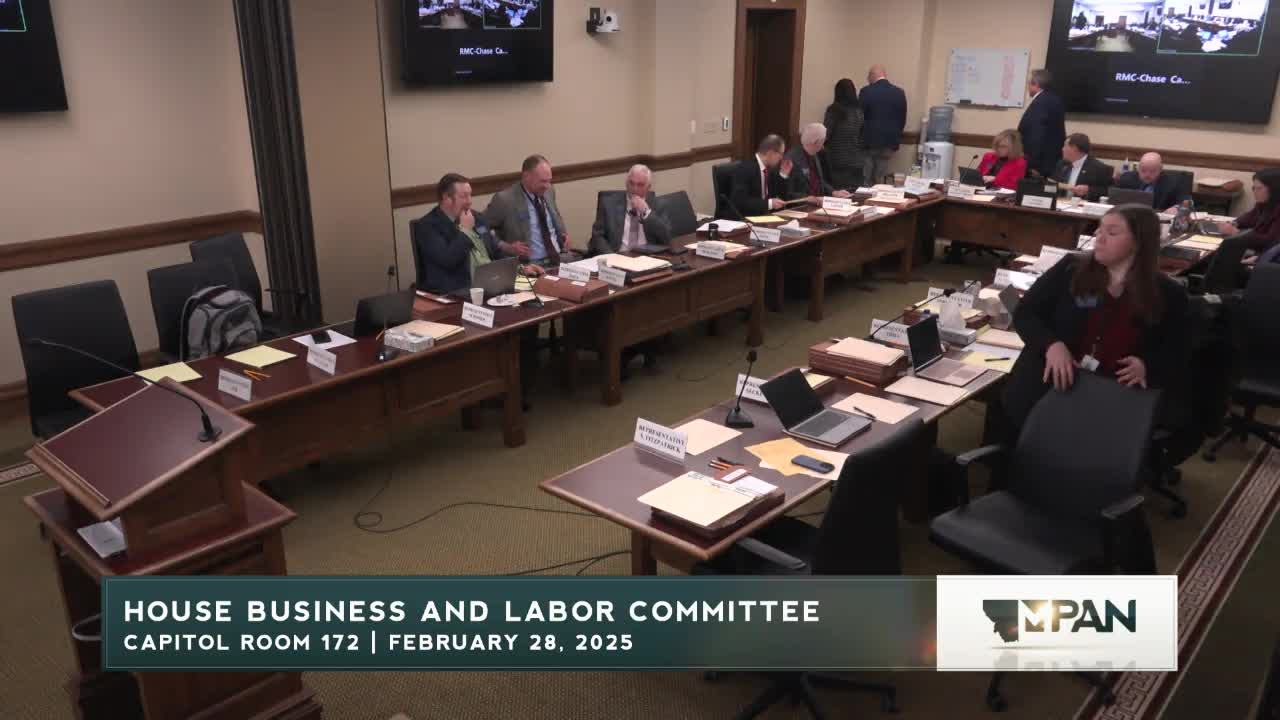
Representative Jill Koehnauer opened the hearing on House Bill 556, a bill that would require health insurers using artificial intelligence, algorithms, or software tools in utilization review to meet transparency, nondiscrimination, and human‑review standards.
Proponents included Jean Branscum of the Montana Medical Association, who called the bill a targeted step to protect patients from inappropriate denials or delays driven solely by automated systems. Branscum and Senator Ken Bogner (registered as a proponent) cited national examples where automated processes delayed necessary care, including a case where an algorithm rejected a prior authorization for a colonoscopy for a patient under 40 who had early cancer signs, slowing diagnosis and treatment.
Opponents included Drew Chuck of Blue Cross Blue Shield of Montana, Sarah Clerget for AHIP, Jackie Boyle of Montana Health Co‑op, Cynthia Wolken of PacificSource Health Plans, and Frank Cote representing the Commissioner of Securities and Insurance. Opponents said insurers already use algorithms primarily to speed approvals, not to deny care, and expressed concern the bill’s definitions ("algorithm," "software tool") are too broad and would sweep in basic, non‑AI automation (for example, routine rule‑based checks). Blue Cross described current use as AI augmenting human judgment to approve requests on the spot. Opponents also warned that the bill could force disclosure of proprietary information to the state regulator without sufficient data protections.
Committee questioning focused on the bill’s scope, whether it would unintentionally restrict automated approvals, how proprietary models and trade secrets would be protected, and whether a pending AI study (House Joint Resolution 4) was a better forum to evaluate the technology. The Commissioner of Securities and Insurance testified that existing and pending bills (including bills passed earlier in the session that affect prior authorization and utilization review) might make this bill unnecessary and asked the committee to table it for further study.
Nut graf: HB 556 seeks to strike a balance between harnessing AI to reduce administrative burden and protecting patients from automated denials of medically necessary care, but insurers argue drafting is too broad and could impede beneficial, time‑saving approvals while raising trade‑secret and operational concerns.
The committee did not take a vote at the hearing; sponsors and industry indicated willingness to work on narrower definitions and data protections during the legislative process.