Get Full Government Meeting Transcripts, Videos, & Alerts Forever!
Get email alerts on the Religious Freedom Rfra topic
No spam. Unsubscribe anytime.
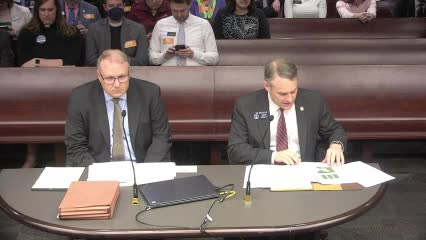
Senate committee advances state RFRA after contentious testimony and failed amendments
Summary
Senate Bill 36, which would adopt a state Religious Freedom Restoration Act mirroring the federal standard, passed the Judiciary Committee after more than an hour of pro and con testimony and several failed amendments; the final committee vote was 7–3 in favor.
The Senate Judiciary Committee voted 7–3 to advance Senate Bill 36, a proposed Georgia Religious Freedom Restoration Act (state RFRA) that would apply the strict‑scrutiny test to claims of religious burden by state and local governments and otherwise mirror the federal RFRA framework.
Senator Sutzler introduced the bill (LC 442920) and presented materials showing 38 states with either statutory or judicial RFRA protections and cited a 1997 U.S. Supreme Court decision that limited the federal RFRA’s reach to federal actions. He said the draft mirrors federal RFRA language and includes two changes requested by the governor’s office: a provision protecting judges from suit in their official capacity and a clarification that the statute does not alter the Establishment Clause.
Supporters — including representatives of religious groups and faith‑based organizations — said the bill restores robust free‑exercise protection at the state level. Testimony in favor came from Thomas Weaver; Mike Griffin, public affairs representative with the Georgia Baptist Mission Board; Paul Smith of Citizen Impact; and Chelsea Thompson, general counsel for Frontline. They described the proposal as restoring the free‑exercise clause to a higher level of judicial scrutiny and argued it would give religiously motivated claims a forum in state courts similar to the federal standard.
Opponents voiced concerns that the bill would create sweeping religious exemptions to neutral laws, encourage litigation, and permit discrimination against protected groups. Nneka Ewuanu, staff attorney with the ACLU of Georgia, warned the bill could be used to challenge nondiscrimination, health and safety, and employment laws and cited examples from other states where RFRA has been invoked in contentious litigation. Rabbi Michael Bernstein, Reverend Matthew Daniel O'Rear and other faith leaders said the bill could be used in bad faith to justify discrimination and urged senators to protect marginalized Georgians. Multiple witnesses warned about risks to LGBTQ people, women, and other protected classes.
The committee considered and rejected several amendments. Leader Jones offered a substitute (LC 443106 ERS) that would have combined a state RFRA with a statewide nondiscrimination framework and included an employer reasonable‑accommodation exception; that amendment failed on a Senate voice vote. Senator Parent offered two narrower amendments — one preserving existing municipal nondiscrimination ordinances and another limiting private‑attorney‑general litigation — both of which failed to gain majority support in the committee.
After debate, Leader Gooch moved the bill do pass and Senator Kaussert seconded. The committee recorded a 7–3 vote to advance LC 442920 (Senate Bill 36). Sponsors said the bill is the tested, national RFRA model used in many states and that it is designed to work alongside existing law; critics said it would invite litigation and could roll back local nondiscrimination protections.