Get Full Government Meeting Transcripts, Videos, & Alerts Forever!
Get email alerts on the Cte Capacity topic
No spam. Unsubscribe anytime.
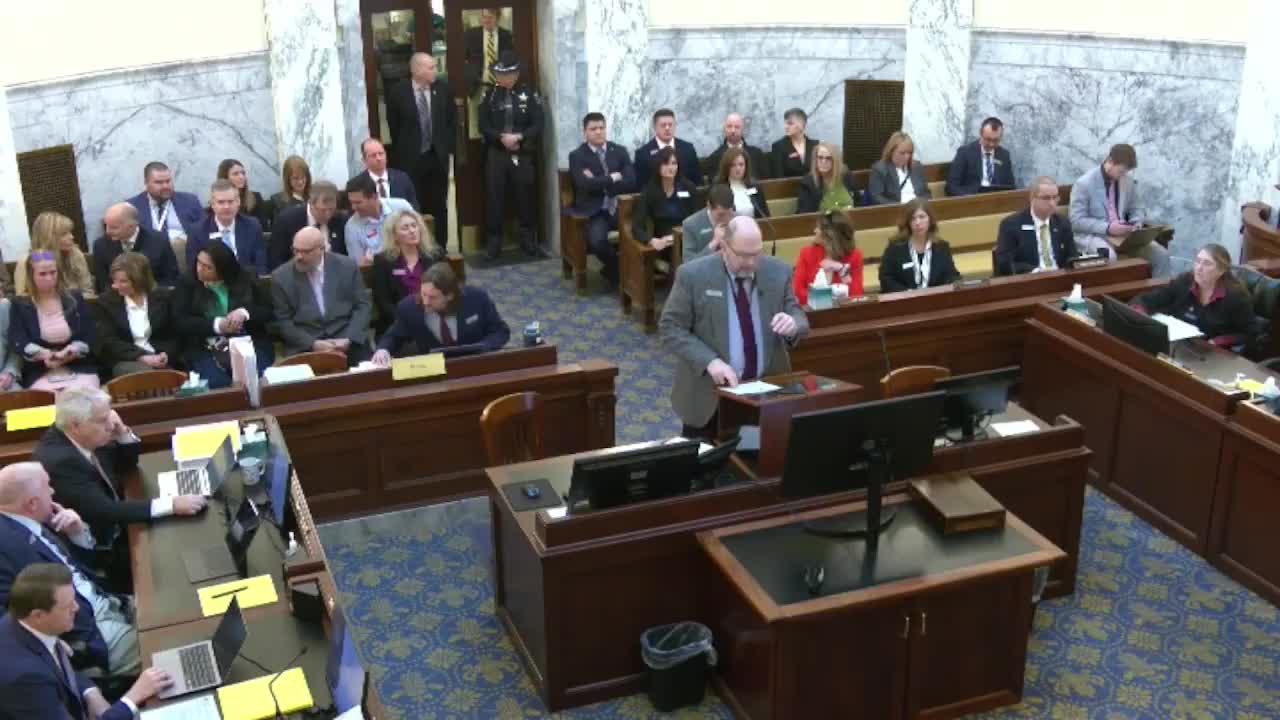
College of Eastern Idaho tells JFAC it needs funding to expand CTE capacity and raise staff pay
Summary
College of Eastern Idaho President Lori Barber told JFAC CEI has grown rapidly since 2017, serves thousands in workforce training, reported a 465-student CTE wait list in fall 2024, and asked that at least $2 million of a proposed $10 million community-college CTE fund be allocated to CEI.
The Joint Finance-Appropriations Committee reviewed the College of Eastern Idaho’s base budget and FY2026 request, hearing from Legislative Services Office analyst Kevin Campbell and CEI President Lori Barber.
Barber said CEI has grown from roughly 700 students as Eastern Idaho Technical College to about 3,600 degree-seeking students and more than 14,000 workforce-training enrollments. "In fall 2024, we actually had ... 465 CTE students who wanted a space in one of our CTE programs," President Lori Barber told the committee, adding that CEI has the facilities and equipment in some areas but lacks faculty, updated equipment and the advising and wraparound services to expand enrollment quickly.
Budget numbers presented to the committee included a FY2024 state appropriation to CEI of $7,003,700; Campbell said CEI typically spends 100% of its state appropriation. Barber outlined pay and retention problems: CEI identified 20 full‑time faculty below the average K‑12 salary and estimated a compensation lift to bring adjuncts and full-time faculty to parity would cost roughly $2,260,000.
Barber described employer partnerships that expanded capacity in some programs — for example, INL providing instructors for cybersecurity training and local dealerships partnering on apprenticeship-style auto technician training — but said those employer arrangements are not a substitute for sustained state investment in faculty, equipment and facilities. Regarding a proposed legislative set‑aside for CTE, Barber said CEI would use allocated funds for up-to-date equipment and to hire faculty in math and science to support health-care and technical prerequisites.
Barber asked the committee to prioritize community and technical college funding in the pending higher-education package; she said "an increase in our general fund allocation from that 10,000,000 of at least $2,000,000 ongoing would be absolutely transformational." The committee asked CEI to provide further detail on program-level capacity and confirmed CEI's continued reliance on employer partnerships to expand training where possible.