Get Full Government Meeting Transcripts, Videos, & Alerts Forever!
Get email alerts on the Medicaid Budget topic
No spam. Unsubscribe anytime.
Idaho Medicaid budget briefing: committee hears $367 million forecast adjustment and $190 million hospital-assessment request
Summary
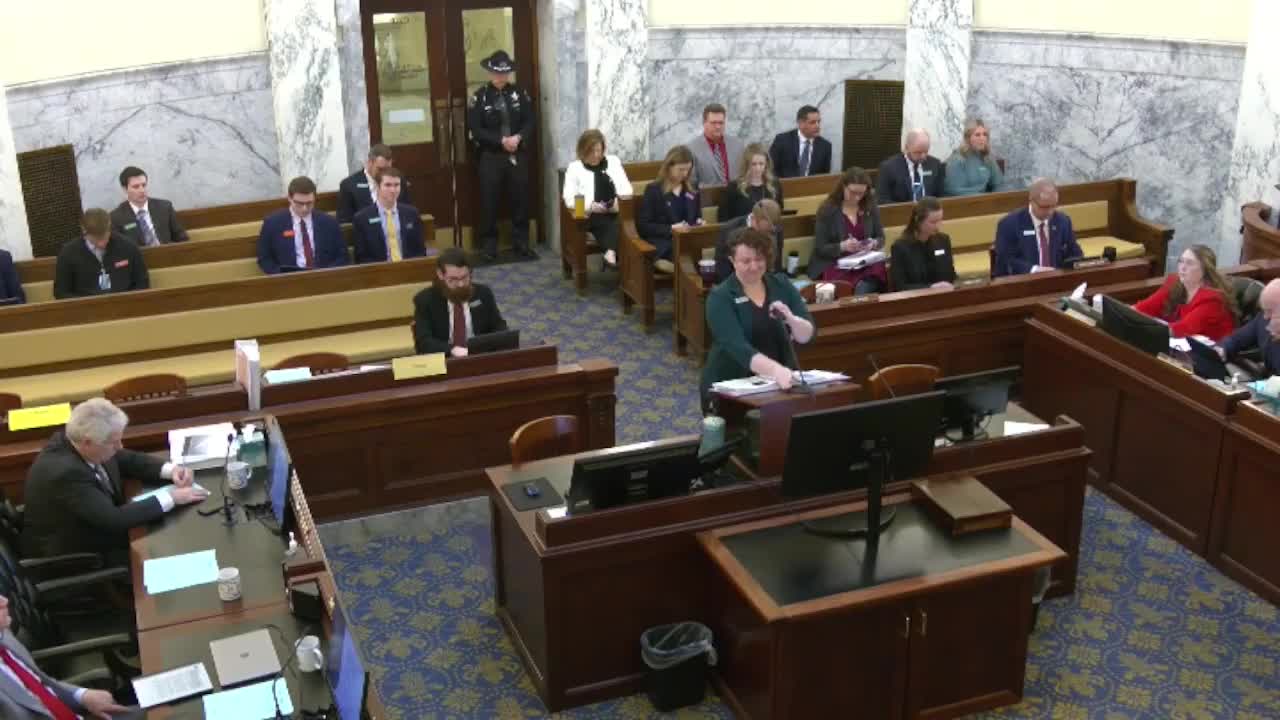
Boise — The Joint Finance-Appropriations Committee on Feb. 26 received an overview of Idaho’s Medicaid budget that highlighted large supplemental requests and a major population forecast adjustment tied to caseload growth and federal funding changes.
Boise — The Joint Finance-Appropriations Committee on Feb. 26 received an overview of Idaho’s Medicaid budget that highlighted large supplemental requests and a major population forecast adjustment tied to caseload growth and federal funding changes.
“The division of Medicaid is responsible for administering plans to finance and deliver health services for people at risk due to low income and other factors,” Alex Williamson, budget and policy analyst with Legislative Services, told the committee. Williamson walked members through five supplementals the governor recommended for fiscal 2025 and a series of 2026 enhancement requests.
Why it matters: Idaho Medicaid spending has risen for multiple reasons cited by Williamson and Department of Health and Welfare Director Alex Adams — the COVID-19 public health emergency’s effects, provider rate increases enacted by the Legislature and changes to how hospitals and skilled nursing facilities are reimbursed. Those changes, plus caseload growth, are driving both near-term supplementals and a larger ongoing population forecast increase.
Key numbers and requests presented
- A hospital-assessment-related supplemental request for $190,000,000 in “entrusting benefit payments,” of which $77,000,000 would come from the hospital assessment (dedicated funds) and $113,000,000 from federal funds. Williamson tied the request to the methodology changes in Senate Bill 1350 (2022) that altered the upper payment limit calculations.
- A population forecast adjustment (listed in the budget book as a 2026 enhancement) that would add $367,000,000 to the Medicaid budget. Williamson said that figure reflects changes including caseload, cost-based pricing, mandatory pricing for certain clinics and utilization.
- Capitation-rate increases associated with the Idaho Behavioral Health Plan totaling roughly $108,800,000 (one-time federal funds); Williamson provided a plan-by-plan breakout (expansion ~$33,000,000; coordinated ~$1,900,000; enhanced ~$14,800,000; basic ~$58,000,000).
- The Medicaid Management Information System (MMIS) procurement: a multi-year project with a state share of $11,700,000 (from the MMIS dedicated fund) and roughly $105,000,000 in federal funds across the procurement timeline.
- A supplemental to meet the Centers for Medicare & Medicaid Services’ external quality review requirement for managed care (an amount described by staff at about $1.3 million in the hearing materials; the analyst noted a related ongoing/one-time labeling typo in the budget book).
Federal share, FMAP and expansion
Williamson told the committee that some of the forecast growth is driven by a shift in the federal medical assistance percentage (FMAP). Director Adams said that Idaho’s overall FMAP changed modestly (roughly from 69% to 68% in round numbers), which shifts about $45,000,000 from federal funds to the state general fund. Adams warned members that if the special 90/10 federal match for Medicaid expansion were to taper to the state’s traditional match (roughly 68/32), the state’s obligation could rise by more than $200,000,000 on an annual basis.
Budget process and supplementals
Adams emphasized that Medicaid is an entitlement program and that the department submitted what it described as a maintenance budget: “I submitted as close to a maintenance budget as I could submit,” he said. Because caseload and utilization can change, he told the committee supplementals are common: when spending exceeds the enacted appropriation, the department returns to JFAC to request additional funds to pay providers for services already delivered.
Committee reaction and next steps
Members repeatedly pressed staff and department leaders about whether policy levers exist to restrain growth. Representative Tanner called for policy options; Director Adams and other department leaders said policy direction must come from the Legislature and that the department would implement statutory changes. Williamson and Adams encouraged members to review the more detailed materials posted on SharePoint, which include line-item histories and forecasting assumptions.
Ending
The budget briefing covered both immediate supplemental requests and larger multi-year pressures. Committee members asked the department for follow-up information on several items, including a more detailed monthly transparency report on Medicaid spending and further explanations of the hospital assessment methodology.