Get Full Government Meeting Transcripts, Videos, & Alerts Forever!
Get email alerts on the Workforce Development topic
No spam. Unsubscribe anytime.
Task force plans testimony and outreach after athletic-trainer language folded into larger public-health workforce bill
Summary
Members of an athletic-trainer task force discussed outreach, testimony and student debt data after their draft language was incorporated into a larger public-health workforce bill. They agreed to gather written testimony, mobilize stakeholders including students and physicians, and create shared materials for legislators.
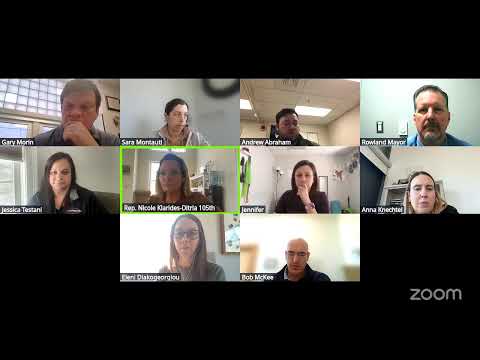
Members of the athletic-trainer task force said their draft language has been incorporated into a broader public-health workforce bill and laid out plans this week to collect testimony, mobilize stakeholders and prepare materials for a public hearing once a bill number is assigned.
The task force discussed next steps for outreach to legislators, with staff support and assistance from national and state associations. "We don't have the bill number yet because our individual bill is being morphed into, 1 of the bigger public health bills on workforce development," said Nicole (staff member). She told the group the bill should be raised within a few weeks and that a public hearing will follow.
Why it matters: Task force members said the state faces shortages of athletic trainers across high schools, colleges and other settings, and they framed the bill as a way to address workforce gaps and the economic barriers that keep students and early-career professionals from entering or staying in the field.
Members cited student debt as a factor in retention and recruitment. Task force members reported examples from recent surveys showing one graduating student owed about $61,000, another about $100,000 and a third roughly $55,000. A member also said a commonly cited national average for similar programs is about $86,000.
What the group will do: Participants agreed to compile written testimony and to encourage live testimony where possible. The Connecticut Athletic Trainers Association (CATA) and the National Athletic Trainers' Association (NATA) were reported as partners: NATA will draft advocacy materials and templates, CATA will coordinate a "hit the hill" legislative day scheduled by CATA for March 26 and will help identify legislators and talking points. The group plans to prepare a one-pager for meetings with legislators and to create a shared drive for templates, talking points and submissions.
Organizers described targeted outreach to several stakeholder groups: students and program directors at regional colleges, high-school athletic directors and superintendents, parents, physicians (including the Connecticut State Medical Society sports-medicine committee), game officials, and employers in emerging/nontraditional settings such as industrial occupational-health programs. The group said having testimony from non–athletic-trainer stakeholders (parents, physicians, school administrators) could strengthen the case.
On logistics, the task force said public hearings will accept both in-person and virtual testimony. Members volunteered to draft a Google form for people who cannot testify live so organizers can gather contact information and sample testimony. The group also agreed to review the advocacy templates NATA provides and to circulate them to the task force for edits.
Next steps and scheduling: Organizers proposed a follow-up meeting in roughly three weeks to review NATA materials and finalize outreach. Participants tentatively discussed dates around the CATA legislative day; there was a small disagreement over whether to schedule the next meeting on March 20 or March 21 at noon. Task force co-chairs and staff said they would distribute a shared folder of documents to the group by the middle of next week and asked members to review materials within roughly one week.
Quotes and attributions in context: Gary (task force member) summarized the student-focus framing: "This is for the students." Nicole (staff member) described the process and timeline for bill numbering and hearings: "We don't have the bill number yet because our individual bill is being morphed into, 1 of the bigger public health bills on workforce development." The group also noted NATA and CATA support; a NATA contact (Deanna) was reported to be preparing advocacy templates and a targeted advocacy plan.
Ending: Organizers instructed members to collect testimony, identify stakeholders to testify or submit written statements, and to expect a shared drive with templates and a proposed timeline from staff within a week. The task force will reconvene after participants have reviewed the materials and once the bill language and number are public.