Get Full Government Meeting Transcripts, Videos, & Alerts Forever!
Get email alerts on the Agency Operations topic
No spam. Unsubscribe anytime.
OCTFME outlines programming, radio, grants and contracting; nonprofit flags ARIBA procurement difficulty
Summary
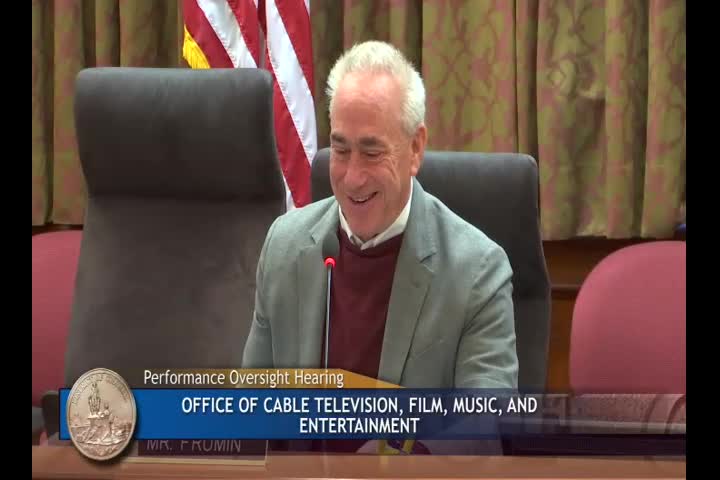
During the Feb. 20 oversight hearing OCTFME described DC TV public‑access work, DC Radio, 202Creates and the Go‑Go support program; committee members pressed the agency about contractor usage, overtime, and procurement hurdles raised by a nonprofit witness with the ARIBA system.
The Committee on Human Services examined Octfme’s programming, contracting and procurement Feb. 20 as agency officials described public‑access services, DC Radio operations, creative grants and contractor staffing; a nonprofit witness asked for procurement assistance.
Latoya Foster, OCTFME director, said the agency produces programming across three government channels and operates DC Radio in partnership with Howard University’s WHUR 96.3. Foster highlighted original series, sports coverage, and a multi‑platform streaming effort (‘‘DCE’’) and said the office produced more than 500 mayoral press conferences and other events in FY24.
Nance Rickard of DC TV described DCTV’s role as a noncommercial media training and access provider; Rickard said DCTV developed the three‑week CCAP training module and serves as an employer mentor some years.
The committee probed contractor and staffing costs. Foster acknowledged a list of FY24 contractors in appendix B and said OCTFME uses contractors to staff production, master control and field shoots when internal personnel are unavailable. Committee members asked for totals; Foster said the agency would provide them. The transcript shows an overtime total of about $200,000 in FY24; the agency cited long hearings, events and unexpected press conferences as drivers of overtime expenses.
Councilmembers also asked about a recurring vendor used for production support. Foster said All Pro Services and similar vendors supply videographers, editors and master‑control operators when OCTFME needs flexible field coverage or backup staffing for long hearings and events.
The Creative Affairs Office described several programs: the 202Creates residency (an 11‑week curriculum with roughly 25–30 participants per cohort), the Gogo fund (about $1,000,000 annually to support Go‑Go music and activations), and PAPA venue tax‑rebate certifications (OCTFME certified 13 venue applications to the Office of Tax and Revenue in FY24). Foster said CAO supported 73 Go‑Go Fund events in FY24 and assisted in international exchanges and festival activations intended to boost tourism and local artists.
Gloria Hightower, representing the Friends of Carter Barron Foundation for the Performing Arts, described difficulty submitting a proposal in the city’s ARIBA procurement portal and urged that the Office of Contracting and Procurement provide on‑site assistance or tutorials for arts organizations that need to bid or accept government funds. Hightower said the entertainment sector often requires split payment cadence (e.g., deposits before performance) that can complicate vendor processing.
Committee members asked how the agency tracks audience reach for its PEG channels and DC Radio. Foster said online platforms (YouTube and the DCE streaming service) provide view metrics, but traditional PEG cable viewership is harder to measure; the agency is exploring ways to model or estimate audience for noncommercial government programming.
The committee did not take action at the hearing but requested spreadsheets and contractor totals and asked OCTFME to respond with follow‑up materials and data clarifying contractor costs, overtime totals, and program outcomes.