Get Full Government Meeting Transcripts, Videos, & Alerts Forever!
Get email alerts on the Board Governance topic
No spam. Unsubscribe anytime.
Oak Park–River Forest board holds community session on governance, communications and decision-making
Summary
Members of the Oak Park–River Forest SD 200 Board of Education reviewed the board's responsibilities, the district's strategic priorities and outreach plans, and took community questions — including concerns about the timing of events during the election season and how the board balances community input and its fiduciary duties.
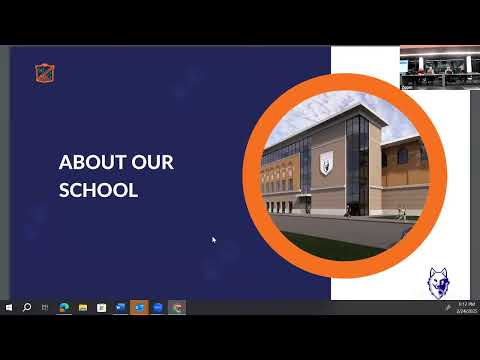
The Oak Park–River Forest SD 200 Board of Education held a special community meeting on Feb. 20 to review board responsibilities, discuss the district’s strategic priorities and explain how the board solicits and uses community input.
At the start of the meeting, Audrey (Board member) framed the session as part of a multi-step effort to strengthen communication: “there’s been a lot of work that the administrative team has done with respect to communications,” she said, and the board set up the meeting to allow a back-and-forth the regular board meeting format does not permit.
Jonathan (Board member) summarized the Open Meetings Act, noting that it “requires that public bodies conduct their business openly” and listed common exceptions (litigation, personnel matters, collective bargaining and similar narrow categories). The board used those rules as context for describing how members may interact with each other, with the administration and with the public.
Nut graf: The discussion centered on three related aims — clarifying the board’s proper role versus the superintendent’s operational role, improving district communications to reach under-engaged precincts, and explaining how board members weigh community input when making high-cost or high-profile decisions such as the recent facilities project known locally as Project 2.
Board roles and governance
Speakers described the board’s core duties as setting the district’s purpose, hiring and supervising the superintendent and monitoring district performance. Graham (Board member) summarized the district’s five strategic priorities — racial equity, transformative education, staffing and leadership, operations/facilities/finance, and communications — and said the board’s work is mainly high-level oversight and monitoring of those priorities.
Fred (Board member) described priority four (operations, facilities and finance) and explained the district’s use of the state’s evidence-based funding framework as a “roadmap” for spending and comparing categories of expense. He said the district’s adequacy level has been “somewhere in the hundred and thirties to hundred and forties percent,” a figure the board uses to judge state funding relative to an adequacy baseline. Fred also reviewed the Imagine facilities planning process and the work completed so far on the high school campus.
Demographics and equity goals
Jonathan presented a 10-year enrollment snapshot and staff demographics, noting relative stability in total enrollment and a decline in Black non-Hispanic students over the period shown. Graham outlined board goals on staffing diversity, including a stated objective to increase representation of faculty of color to roughly 35 percent and a related focus on retention, which he said is in the “high nineties.”
Communications and outreach work
The board discussed steps to identify constituencies the district is not reaching and described tactics already underway: analyzing Skyward logins and parent-teacher conference attendance, targeted outreach to identified precincts with low engagement and superintendent outreach visits with board member participation. The board also said staff have begun targeted focus groups — for example, parents of color — because prior communications survey respondents skewed toward white parents.
How the board balances community input and decision-making
Several community members asked how trustees balance their personal views, expert or staff recommendations, and broader public input. Ross (Resident) urged the board to avoid hosting informational events during election season because, he said, “it could be seen as a campaign event.” Multiple board members responded that the board planned the session months earlier as part of its annual goals and did not intend it as campaign activity.
Board members described a deliberative approach: they said they review data, ask clarifying questions of the administration and synthesize stakeholder input before voting. Fred gave the board’s recent Project 2 decision as an example: the board chose not to pursue a public referendum and instead financed the work through district debt paid from the operating budget; he cited inflation, facility deterioration and community support as factors that influenced the timing.
Student voice and pilots
Board members also announced a recent pilot to bring student delegates onto the board. Audrey and others said the student-delegate pilot aims to amplify student voice in board deliberations and help reach pockets of the community that the board has not previously engaged.
Public Q&A highlights
During the public-comment period residents pressed the board on outreach and inclusivity. Steve Lehi quoted the Illinois Association of School Boards on local control and asked trustees to rate how well they reflect community control; members replied that they regard a range of stakeholders — students, families, faculty, staff and taxpayers — and highlighted ongoing steps to increase outreach, such as more focus groups and varied meeting locations. Megan Barajas, a senior at Oak Park–River Forest High School, told trustees she appreciated the chance for dialogue and said, “I’m a senior,” underscoring the student perspective in the room.
Meeting close
The session closed after roughly two hours of presentations and public discussion. A motion to adjourn passed by voice — board members answered “Aye” when the chair called for a vote.
What’s next
Trustees said they plan a follow-up session on communications in April as part of a continuing effort to widen outreach and refine how the board gathers community input and monitors progress toward its strategic goals.