Get Full Government Meeting Transcripts, Videos, & Alerts Forever!
Get email alerts on the County Meeting Summary topic
No spam. Unsubscribe anytime.
Lancaster supervisors review school budget scenarios, parks grants and growth strategy; hunting and short‑term rental rules debated
Summary
The Lancaster County Board of Supervisors on Feb. 27 reviewed school budget scenarios following an insurance renewal that came in flat and heard updates on school construction, parks projects and the county's Lancaster 2035 economic plan; several public items—including a proposal to allow centerfire rifles for deer hunting and neighbor complaints about short‑term rentals—generated extended public comment.
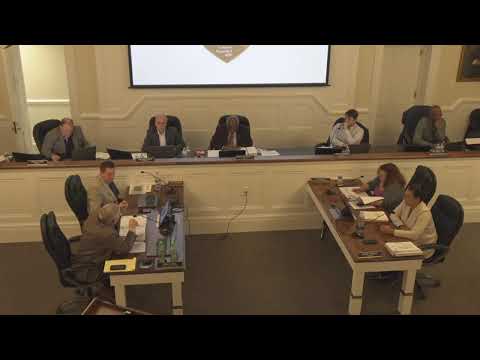
The Lancaster County Board of Supervisors met on Feb. 27 and heard briefings and public comment on a range of planning and policy matters from the local school budget to parks projects, a county economic plan and proposed changes to hunting and short‑term rental rules.
Superintendent and school budget
School leaders told the board the division’s draft budget remains “student‑centered” and that a recent insurance renewal came in with no increase, freeing money to consider higher employee pay. The administration presented three scenarios for staff raises — roughly 3%, 4% and 5% — and said the board has expressed interest in a 5% raise for staff but is weighing options. The staff described a roughly $499,882 state funding increase in the coming fiscal year and said federal grant reimbursements are processed through a multi‑step state approval system; the district continues to submit claims regularly to avoid delays.
District staff described positions added in recent years that they want to retain, including a full‑time elementary STEAM teacher, three student coaches, and school security officers placed at each building. Administrators said one position originally funded through a grant (an elementary school security officer) could be at risk if the district cannot identify continuing funding, though they are still seeking grants.
The school staff also addressed a potential one‑time $1,000 bonus available to some employees under state rules for Standards of Quality (SOQ) positions. The district estimated about 220 staff, of which roughly half are SOQ‑funded; the administration estimated a local cost to complement that bonus could be about $100,000 if the district spread the benefit more widely.
School construction
The board heard a construction update for the new middle–high school. Project staff said steel framing and fireproofing are in place in academic wings C and D, with ductwork and classroom walls beginning and work continuing despite wet weather that set the schedule back about two to three weeks. The contractor reports the delay is recoverable and the project team expects to make up time as the site progresses.
Parks, Westland Beach and grants
Parks staff presented multiple project updates. Phase 1 work at Westland Beach is roughly 75% complete; pier decking is in place and railing installation had begun, and channel dredging and pier work are being scheduled. Staff reported phase‑2 procurement was ready to award that night and the board later approved the contract for phase 2 (see “Votes at a glance” below).
Carter Cove and Taylor Creek park projects are in engineering and permitting, with Carter Cove’s engineering roughly 70% complete and a pavilion, paver patio and tiered seating shown in plans. Parks staff said the county received several grant awards (including a National Fish & Wildlife Foundation small watershed grant and federal Infrastructure Investment and Jobs Act money via DEQ) to support living shorelines at Westland Beach, Carter Cove and Taylor Creek and had re‑applied to the state Community Flood Preparedness Fund for a resilience project at Westland Beach.
Lancaster 2035: workforce, housing and communications
The Citizens Business Relations Advisory Committee (CBRAC), which led development of the Lancaster 2035 plan, briefed the board on the county’s long‑range economic strategy. The plan’s headline objective is to increase the county’s working‑age population about 20% by 2035 — roughly restoring the county to numbers seen in the past — with six strategies that emphasize broadband affordability, a business‑friendly environment, workforce development linked to schools and regional partners, and workforce housing.
Presenters stressed housing as the “lynchpin” for other priorities: local employers and the school division struggle to recruit workers because available housing at workforce price points is limited. The county plans a housing needs assessment with Virginia Housing and noted a menu of tools — tax credits, capital stacking, public‑private partnerships and use of county‑owned property — to support workforce housing options.
Hunting rules: centerfire rifles proposal
During public comment the board received a detailed proposal from Dana Greenlee asking the county to amend hunting regulations to allow centerfire rifles for deer season with requirements such as an elevated stand minimum (he proposed a clear definition of 8 feet measured to the barrel centerline) and limits on caliber and magazine capacity. Mr. Greenlee cited ballistics analyses and experience from neighboring Northern Neck counties that already permit centerfire rifles under restrictions. An expert in hunter education who worked on Northumberland County’s ordinance told the board he could provide technical testimony if the board sends the matter to public hearing. The board did not direct staff to schedule a public hearing that night; members said they wanted time to consider the presentation.
Short‑term rentals: applications and neighbor concerns
The planning office presented several applications for unhosted short‑term rentals (STRs). Staff recommended approval for some applications, and in other cases the board asked staff and applicants to clarify listing information and verify septic and occupancy limits.
Neighbors of a Blueberry Point Road property told the board they had experienced recurring late‑night noise, parking on narrow roads, and reported navigation and no‑wake violations on local waterways. Neighbors raised a separate concern that a listing had advertised the dwelling as a five‑bedroom rental while the health department’s septic capacity equated to a four‑bedroom system; the board chose to table that application and asked the applicant to amend public listings and provide proof of the corrected advertisement before the board votes again. Separately the board approved other STR special‑exception requests conditional on registry payment and code compliance (see Votes at a glance).
Bond hearing for Bon Secours/Rappahannock General Hospital
The board held a TEFRA (federal tax‑exempt bond) public hearing required under Internal Revenue Code section 147(ff). Bond counsel for the transaction said the local portion of conduit revenue bonds allocated to Rappahannock General Hospital is estimated not to exceed $10 million for capital projects and refunds; supervisors were asked to record their concurrence as the applicable elected representatives. Counsel emphasized the bonds would be conduit debt of the borrower and not obligations of the county. The hearing opened and closed as required; formal local concurrences are noted in the votes section.
Telecommunications and county radio operations
Planning staff presented a special‑exception application for colocation of a T‑Mobile antenna array on an existing SBA Communications tower (an application required by the zoning code). The board approved the request subject to receipt of an intermodulation/interference study confirming county public‑safety radio equipment would not be degraded. Separately, the board approved a lease amendment to replace obsolete broadband equipment on a sheriff’s‑office area tower with emergency radio equipment; the amendment raises rent (the county will also continue to receive rent for the tower ground and noted that the net impact was discussed in the meeting record).
Other business and next steps
The board approved multiple routine and capital items on the consent/consideration dockets including salaries and invoices, a reimbursement resolution to preserve the county’s ability to reimburse itself from future tax‑exempt financing (the resolution covered up to $25 million across school and county capital projects), various easements needed for sewer and public access work, and an agreement to participate in the Virginia’s River Realm regional marketing partnership. Several agenda items were deferred for follow‑up so staff could verify listing and septic details or gather sheriff’s‑office complaint records.
Why this matters
The meeting combined budgetary choices that directly affect staff compensation and retention with near‑term capital decisions — parks and school construction — that will shape the county’s physical and economic landscape. Housing and workforce development featured prominently in the Lancaster 2035 plan, which the county cited as central to keeping schools and local employers staffed. Two contentious public issues — a proposed change to hunting rules and several short‑term rentals that neighbors say are creating noise, parking and wastewater concerns — are examples of local policy choices that require balancing resident quality‑of‑life, public safety and private property rights.
What’s next
The board’s next regular meeting is scheduled for March 27; staff expects to return several STR applications after applicants provide amended listings or registrations, and Davenport & Company will present potential financing scenarios for capital projects. The school division has its public budget hearing on Monday and will continue refining salary scenarios pending final insurance and revenue figures.