Get Full Government Meeting Transcripts, Videos, & Alerts Forever!
Get email alerts on the State Budget topic
No spam. Unsubscribe anytime.
Westerville officials say governor's proposed budget would cut $4.1 million from district over biennium
Summary
Superintendent Angie Hamburg and Treasurer Nicole Marshall told the board the governor's biennial proposal would reduce state aid to Westerville City Schools by $2.8 million in fiscal 2026 and $1.3 million in fiscal 2027, and that the district's five‑year forecast shows deeper deficits.
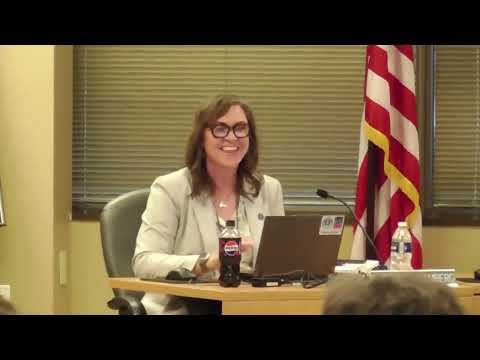
Superintendent Angie Hamburg told the Westerville City Schools Board of Education on Feb. 24 that the governor’s proposed state budget would reduce the district’s state funding by 6.8% in fiscal 2026 and 3.4% in fiscal 2027. “So that would be 2,800,000.0 in fiscal year 26 and an additional 1,300,000.0 in fiscal year 27 for a total of over $4,100,000 loss over the biennium,” Hamburg said.
Why it matters: The district must produce a five‑year forecast by law; Hamburg said the forecast shows cash balances falling as state revenue shrinks and costs rise. That can force the district to fund ongoing operating expenses from reserves, which the administration and board say is unsustainable long term.
Treasurer Nicole Marshall, who said she previously worked in the state auditor’s office, explained the historical context and the role of reserves. “I spent 7 years working for the state auditor's office and local government services… I find it ironic now that we're being criticized for having reserves to so that we can weather these economic downturns that we're dealing with now,” Marshall said. She told the board the district’s investment program is generating operating income and that investment income will fall as cash balances decline: “we are generating nearly $8,000,000 a year in operating income from our investment earnings.”
Hamburg and Marshall said other budget items reduce the district’s capacity to update facilities. Hamburg described $25 million in state facility credits the district has accumulated under the Expedited Local Partnership program and said those credits have not yet been paid: “we are accumulating credits and we're, last during our last, review that we had with them, we're just a little over 25,000,000, that we haven't been funded from that facilities project.”
Board and public process: Hamburg said the governor’s proposal is the start of the budget process and that the House and Senate will each produce versions before a conference committee reconciles differences; she encouraged members of the public to contact legislators and noted the House Education Committee was holding hearings. Hamburg also said she plans to contact the state senate leadership to discuss an article on the senate website that she characterized as “misleading.”
What the board emphasized: Board members and the superintendent repeatedly urged the public to contact state lawmakers and to submit testimony to upcoming hearings. They noted that the governor’s proposal comes on top of earlier mid‑biennium reductions the district has already absorbed.
Looking ahead: The district will continue to monitor the state budget process, update the five‑year forecast as the budget advances through the House and Senate, and report back to the board and community as more definitive budget language becomes law.