Get Full Government Meeting Transcripts, Videos, & Alerts Forever!
Get email alerts on the Scott Dam Decommissioning topic
No spam. Unsubscribe anytime.
Lake County supervisors approve formal comments to PG&E, seek state and federal review of Scott Dam decommissioning
Summary
The Lake County Board of Supervisors approved sending formal comments on Pacific Gas & Electric Co.'s draft surrender application for the Potter Valley/Scott Dam project, and authorized letters to Gov. Gavin Newsom and federal agencies raising concerns about restoration, wildfire mitigation and tribal impacts.
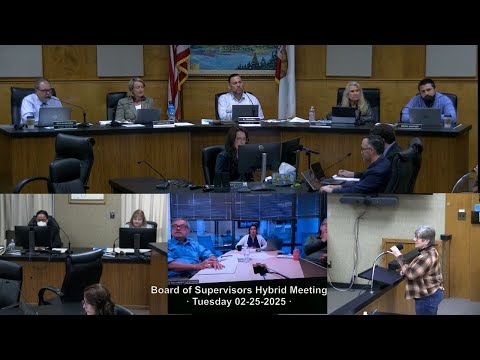
The Lake County Board of Supervisors voted unanimously March 1 to approve written comments to Pacific Gas and Electric Company and to send letters to California and federal officials raising concerns about the proposed decommissioning of Scott Dam and related effects on Lake Pillsbury and surrounding communities.
The board approved three separate actions: submitting county comments on PG&E’s draft application for surrender of the Potter Valley project license and for non‑project uses of project lands; sending a letter to Gov. Gavin Newsom concerning the project in light of Executive Order N‑16‑25; and sending a letter to federal agencies about the decommissioning in relation to recent federal executive orders. Each motion included authorization for the board chair to sign the documents. The motions were made, seconded and carried on voice votes with no recorded roll‑call in the public transcript.
County staff and contracted experts told the board the county’s technical review raises multiple concerns that were not fully addressed in PG&E’s draft. "These comments recognize the significance of water supply, recreation, wildfire suppression, and other benefits of Lake Pillsbury and the Potter Valley project," said Matthew Rothstein, chief deputy county administrative officer, summarizing findings from the county’s consultant, SLR International Corporation. Rothstein said SLR’s review highlights slope‑stability risks at each stage of proposed dam removal and recommends more detailed analysis of landslide hazard before any removal proceeds.
Other technical issues in the county’s submitted comments include wildfire‑response planning, tax and revenue impacts, and compensation for residents who may be adversely affected during or after removal. "SLR likewise remarks that PG&E states the community way of life for residents surrounding Lake Pillsbury will likely be adversely affected during and post construction. PG&E should therefore identify proper compensation for those to be affected," Rothstein said.
Board members and members of the public also emphasized concerns about sediment, legacy mining contaminants and the potential release of sludge from the reservoir. "I'm also really concerned about the impacts of the sludge and the contaminations and the death of the fish and the environmental issues that are gonna come along with that," said Supervisor Owen during public discussion, citing historical mining activity in the basin.
Tribal representatives and advocates urged the county to highlight tribal trust responsibilities and historical connections to the headwaters. A public commenter who identified herself as a Yuki and Pomo descendant said Lake Pillsbury sits on Yuki territory and urged the board to factor tribal water rights and cultural resources into any county responses to FERC and PG&E.
Local emergency‑services leaders and recreation stakeholders stressed the lake’s role for fire suppression and for the county’s tourism economy. "We were up there for both the Ranch Fire and the Complex fire. I was able to firsthand see in a fire mitigation situation how valuable that lake is," said Ray Tote, secretary of the Lake Pillsbury Fire Protection District and a full‑time Lake Pillsbury resident.
County presenters said PG&E submitted its final draft for public comment on Jan. 31, with a public comment deadline noted in staff remarks as March 3. Staff also said PG&E will forward its application to the Federal Energy Regulatory Commission (FERC) for review, with county speakers expecting FERC to act on filings in mid‑2025. The county’s packet and staff presentation are attached to the meeting record and will be part of the materials the county forwards to PG&E and to FERC as appropriate.
The board’s letters and the county consultant’s technical memo, included in the meeting packet, ask for fuller analysis and mitigation planning before any irreversible actions are authorized. SLR’s review and county comments request additional data on slope stability and landslide risk; a concrete plan for maintaining firefighting access and response if reservoir storage is lost; more complete economic and tax‑revenue effects; and a clear proposal for compensation or relocation assistance for affected residents and businesses.
Members of the public urged the board to press for a seat at regional discussions and to ensure Lake County’s concerns are carried into multi‑county negotiations that have so far, county speakers said, proceeded without full Lake County participation. The board’s approved letters say the county seeks meaningful engagement in the state and federal review processes.
The board’s actions instruct county staff to submit the formal comments to PG&E and to transmit the two letters to the state and federal officials with authorization for the chair to sign on behalf of the county. The board majority expressed support for continued technical review and for engaging tribal governments and local fire districts during the FERC and environmental review processes.
The county’s public‑comment packet and SLR’s technical memo are attached to the county’s meeting materials. County staff said they will continue to update the board as FERC and other agencies schedule formal steps in the application and NEPA/CEQA‑related review.