Get Full Government Meeting Transcripts, Videos, & Alerts Forever!
Get email alerts on the Public Safety Technology topic
No spam. Unsubscribe anytime.
Sierra Vista accepts DPS border grant to buy license-plate readers, drone and K-9; officials note recurring costs and privacy policy planning
Summary
The City Council approved acceptance of an Arizona Department of Public Safety local border support grant to buy 16 license-plate reader cameras, a higher-end drone and a patrol/narcotics K-9; staff said recurring data-management costs are about $40,000 per year and public-use policies will be developed.
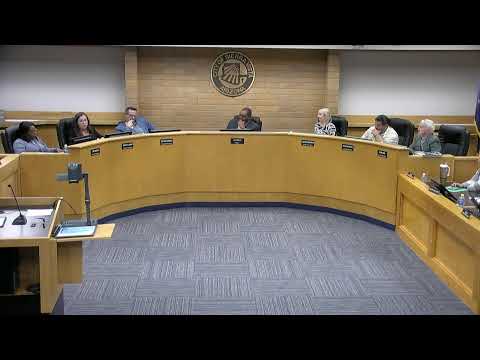
The Sierra Vista City Council on Feb. 27 approved a resolution to accept an Arizona Department of Public Safety Local Border Support Grant to purchase license-plate readers (LPRs), a drone and a replacement police K-9.
Councilwoman Angelica Landry moved to accept the grant; the motion passed by voice vote. During the staff report, the chief said the funding will be used to buy the hardware and cover first-year data management and training costs.
The grant amount was stated differently in the meeting record. Council paperwork listed $115,417.89 in the motion; the police chief said the grant is $115,472.89. The chief told the council the equipment portion of the plan is about $67,000 and that ongoing data-management and storage costs are expected to run about $40,000 a year if the city continues to operate the LPR system.
The chief described the intended uses for the equipment: the LPR cameras would be installed at strategic entry and choke points to collect plate reads and vehicle “fingerprints” (make, model, color, distinguishing marks) to assist with locating stolen vehicles, missing-person searches and timelines for suspect vehicles. The drone the department plans to buy will support 3-D crime-scene diagramming and accident-reconstruction work, the chief said. The K-9 replacement will restore a vacant handler position after a medical retirement, and the grant will pay for handler training.
Mayor Pro Tem Carolyn Humphrey asked whether the system’s stored data would be kept for 30 days. “30 days. Yes,” the chief replied. The chief also said the police department will consult other CALIA-accredited agencies and draft a public LPR policy before full implementation; he said those policies will be available to the public.
The chief added the LPR vendor and procurement process will allow flexibility so staff can stay within the grant budget, and that the city plans to pursue the same grant program in future years to offset recurring costs.
Council members raised no formal objections and called the question; the resolution passed.
The council did not adopt a final LPR policy during the meeting; staff said policy drafting and outreach to agencies with existing policies would precede wider deployment.
Votes at the meeting show the resolution passed by voice vote; no roll-call tally was recorded in the transcript.
What’s next: staff will proceed with procurement within the grant budget, draft an LPR use policy and return to the public and council as required for implementation steps.