Get Full Government Meeting Transcripts, Videos, & Alerts Forever!
Get email alerts on the Budget topic
No spam. Unsubscribe anytime.
Powhatan school board says proposed 2026 budget is millions short; legal fees, cybersecurity and alternative‑education among priorities
Summary
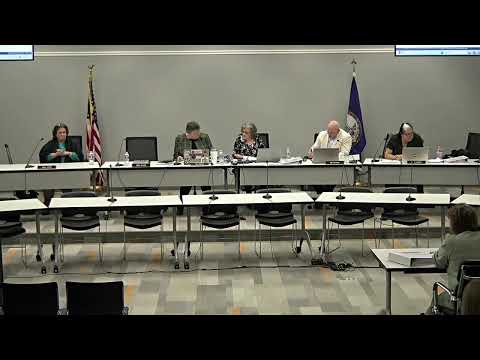
Powhatan County Public Schools officials told the school board on Feb. 25 that a revised county transfer leaves the division with a multi‑million dollar shortfall in its proposed fiscal 2026 budget.
Powhatan County Public Schools officials told the school board on Feb. 25 that a revised county transfer leaves the division with a multi‑million dollar shortfall in its proposed fiscal 2026 budget, and board members debated whether to cut programs, eliminate positions or seek other savings such as reducing legal fees.
Finance staff presented a one‑page summary of changes and said state budget amendments could reduce the gap but would not eliminate it. “When you take that $873,000 from the $2,500,000, we're still short a million $6.85,” said Mrs. Halloway, the division finance lead, summarizing a series of program and revenue adjustments. Halloway identified several specific changes: adding ongoing transportation software costs ($8,200), a psychologist intern including FICA ($19,700), software to support student transcripts, a decrease to one outside program by $7,800 and an increase to another by $8,900. She also said proposed state increases for Basic Aid ($603,214) and a special‑education add‑on ($139,581) would bring an additional $742,795 toward the shortfall.
Halloway told the board that the county finance staff revised the requested county transfer downward from an earlier request that included a $4,058,805 increase. After that revision the division’s revenue shortfall stood at $2,558,805; staff calculations and later state amendments left the board needing to find roughly $1.6–1.8 million depending on which items remain in the final state budget.
Board members debated priorities and options. Several members said they would resist cutting required positions and student supports. “The reading specialist is something we have got to add … It’s required,” Halloway said. The proposed budget also includes a new K–12 alternative education program (three teachers, five instructional assistants and two behavioral specialists), 1.8 additional division‑wide counselors, a student services program manager, a benefit specialist, an additional technology position, a clinic assistant for the high school, and pay adjustments for some administrators and instructional specialists.
Cybersecurity repeatedly surfaced in the discussion after the board heard about the PowerSchool incident affecting other districts. The division’s technology representative, Mr. Mecco, said vendor licensing can limit sharing platforms with the county but that cooperative purchasing or state programs could allow shared contracts. “If the county and we use some of that money, then we'd probably be on the same platforms,” he said, referring to VITA grant funding and state procurement options. The budget includes a line for cybersecurity infrastructure upgrades; staff described that as a non‑discretionary need.
Legal services were the most contested line item. Board members noted historical and current legal spending and proposed alternatives, including issuing an RFP to retain an in‑house or dedicated school board attorney at a fixed annual retainer. “I would much rather cut our legal budget … before we have to consider cutting teachers,” said Mrs. Ward, a board member. Other members and staff urged caution, saying the division has faced multiple due‑process and special‑education proceedings that require experienced counsel. “You don't go to court without an attorney,” said Doctor Taylor. The board’s current outside counsel, Sands Anderson, was cited repeatedly as the firm handling the division’s special‑education work; several board members said switching firms or retaining a full‑time attorney would need careful cost and risk analysis.
Board members emphasized the political reality that Powhatan’s revenue relies heavily on residential property taxes and that the county’s capital‑improvement needs are constraining the Board of Supervisors. Several board members said they will press county supervisors at a joint meeting next week to restore more of the requested transfer so the division does not have to cut classroom staff or required positions. “We are asking for basic needs,” the chair said. “When our budget is not funded, the message that is being sent is one of distrust and it ties our hands and prevents us from meeting the needs of our students.”
No formal action on the budget was taken at the workshop; staff said the division will work with the board after final state and county decisions are known. The board also discussed next steps including holding the joint meeting with the Board of Supervisors and pausing any additional staff time on line‑by‑line cuts until county guidance is firm.
Ending: Board members closed the workshop and moved into the advertised public hearing on the proposed 2026 budget; staff will return with revised options after the joint meeting with the Board of Supervisors and once the governor’s final amendments and county transfer decision are known.