Get Full Government Meeting Transcripts, Videos, & Alerts Forever!
Get email alerts on the Budget Compensation topic
No spam. Unsubscribe anytime.
Poquoson proposes $32.98 million FY26 budget centered on pay study to raise staff to regional averages
Summary
Superintendent’s proposed FY26 budget prioritizes a comprehensive compensation study, a 3% across‑the‑board raise, a $1,000 one‑time bonus, and targeted program funding; school officials said the plan depends on roughly $1.6 million in additional city support and still‑uncertain state actions.
Poquoson City Public Schools Superintendent’s proposed fiscal year 2026 budget would increase overall spending to about $32,984,006 and centers on a management advisory compensation study meant to lift employee pay to regional averages.
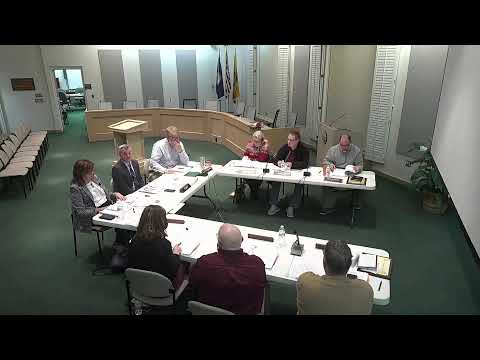
The budget package presented Feb. 18 by Tracy Spence, the division’s chief financial officer, pairs a market “true up” derived from the study with a 3% across‑the‑board salary increase and a $1,000 one‑time bonus for employees. “We recommend adopting the compensation study suggestions from the management advisory group along with the governor’s 3 percent salary increase,” Spence said during the presentation.
Why it matters: personnel costs account for roughly 82% of the division’s budget. Spence told the board the compensation items would cost approximately $1.277 million for the market alignment, $519,008.74 for the 3% raise, and about $304,500 for the $1,000 bonus; benefits and insurance increases were calculated separately. The division is requesting roughly $1.6 million in additional local support from the city to implement the full package; Spence also cited a city request figure of $1,626,197 in an earlier slide.
Key figures and program funding: the proposed budget includes $20,000 to support teachers completing Virginia licensure requirements, $20,300 for expanded professional development, an estimated $45,000 to cover a Canvas learning‑management system license if the Virginia Department of Education (VDOE) stops funding it, about $40,000 a year to cover Advanced Placement testing, and $50,000 to seed a dual‑enrollment “College Now” expansion. Spence summarized projected net revenue increases across state, federal and local sources at $2,411,747.
State funding uncertainties: the budget assumes the governor’s proposed SOQ and related funding but does not include two items that the General Assembly’s House and Senate had recommended as of Feb. 6: repeal of the state support cap (a change that would add about $390,000 for Poquoson) and an $88,000 special‑education funding increase. Spence warned the board these items were not yet finalized and that final state action after the General Assembly adjourns Feb. 28 could change the division’s city request.
Special education: the instructional update noted a roughly $122,000 (12.8%) projected decrease in “New Horizons” special‑education costs in the proposed budget, driven largely by a 26.2% reduction in contracted services for certain specialized programs based on a three‑year average of student placements. Ms. Saeed, who presented instructional items, said New Horizons slot counts shifted from a three‑slot average down to two in the ED program but emphasized that slots remain available if an IEP team determines placement is needed.
Canvas and technology: the division indicated that VDOE currently pays for Canvas and that the VDOE had not announced continued funding. Spence said the division had included roughly $45,000 in the FY26 budget as a contingency to purchase a division Canvas license if necessary; she noted alternative platforms exist but warned switching systems can add training burdens for teachers and families.
Budget next steps and public process: Spence said the division planned a public hearing March 18 and a possible joint work session with city council in late April. She told board members the FY26 capital improvement program would be presented in May. “This is a lot to digest in one meeting,” Superintendent Burbage said; he urged board members to schedule follow‑up work sessions before the board’s March decision.
Ending: board members praised the proposed package as ambitious but necessary to address long‑standing pay gaps; officials said if additional state funding materializes they would reduce the city request accordingly. The board’s formal approval of the superintendent’s proposed budget is scheduled in March, ahead of the city’s budget deliberations.