Get Full Government Meeting Transcripts, Videos, & Alerts Forever!
Get email alerts on the Mental Health Substance Prevention topic
No spam. Unsubscribe anytime.
School officials review teen mental-health first-aid proposal tied to opioid-abatement funds
Summary
Clarke County School officials heard a presentation from Northwestern Community Services Board on using Opioid Abatement Authority funds for a Teen Mental Health First Aid curriculum aimed at ninth-graders and opioid/fentanyl awareness; staff said they will proceed with an application if the board has no objection.
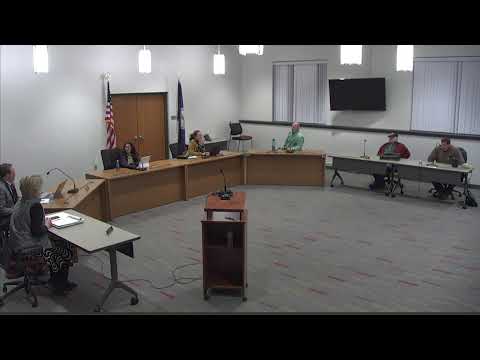
Andrea Bieber, director of program services for the Northwestern Community Services Board, told the Clarke County School Board on Jan. 27 that the board’s county administrator, Chris Boyce, invited the agency to propose using Opioid Abatement Authority funds for youth prevention work in local schools.
Bieber said the proposal would bring an evidence-based Teen Mental Health First Aid curriculum into Clarke County classrooms, targeted at ninth-grade students, and include an optional lesson focused on opioid and fentanyl awareness. “An ounce of prevention is worth a pound of cure,” Bieber said, and described the curriculum as an established practice endorsed by national behavioral-health groups.
The nut graf: The presentation asked the school board’s consent to allow county staff to complete a grant application that could direct Opioid Abatement Authority settlement funds to school-based prevention and education. School staff said the application would not obligate the division to accept funds beyond the school system’s decision-making process.
Bieber described how the Opioid Abatement Authority distributes settlement money to cities and counties under a state formula tied to assessed harm and per-capita measures. She said Clarke County must decide locally how to use any awarded funds and that the proposal would be non-competitive in the sense that each locality determines allocation priorities.
Bieber outlined the proposed program: identified school staff (for example, counselors) would be trained to deliver the Teen Mental Health First Aid course during the school year (either three 90-minute lessons or six 45-minute lessons depending on scheduling). The plan would run on a two-year grant cycle so two ninth-grade cohorts would be served in succession. Parents would be able to opt children out of the lessons, she said.
Bieber also provided local context. She said Clarke County’s cost-per-person estimate tied to opioid-related services is about $493 and reported county opioid deaths of seven in 2021, four in 2022 and two in 2023. She said those county-level figures are “stratified across the general population,” not limited to high-school students, and confirmed that fentanyl is included in the Abatement Authority’s scope: “Fentanyl is definitely part of the problem with the opioid abatement,” she said. She added the curriculum could be customized locally and that the proposed partnership would include neighboring counties.
School Superintendent Dr. Bowling and county staff said they would move forward with completing the grant application unless the board directed otherwise. At the meeting’s close of the presentation the superintendent said staff would keep the board informed at each step.
Ending: The presentation did not create a binding commitment to accept funds; it advanced the county and school staff’s plan to file an application for Opioid Abatement Authority monies to pilot a prevention program in ninth grade and to add an optional fentanyl-awareness lesson if the grant is awarded.