
FCPS facilities proposes custodial reorganization to standardize training, reduce turnover
Get AI-powered insights, summaries, and transcripts
Subscribe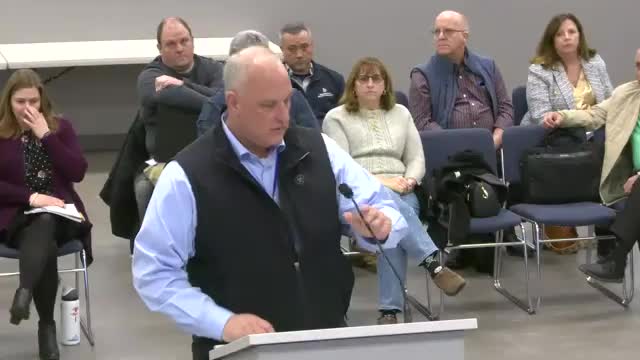
Summary
Frederick County Public Schools facilities staff proposed creating a dedicated custodial trainer and bringing custodial supervision under central facilities to standardize cleaning to APPA level 2 and reduce a reported high turnover rate.
Brian Davis, the facility services director for Frederick County Public Schools, presented a proposed custodial reorganization at the Building and Grounds Committee meeting on Feb. 10, 2025. The proposal would add a dedicated custodial trainer position, move supervision and evaluation of all custodial staff under the facilities department, and standardize cleaning practices divisionwide to meet Association of Physical Plant Administrators (APPA) target cleanliness standards.
Davis said the division currently staffs custodial operations with a director, a coordinator of custodial operations, a records coordinator, two custodial floaters and 21 school-level custodial leads, which has produced “21 different syllabuses” for cleaning practices. He said the department wants to move the division from APPA “level 3” cleanliness to “level 2,” described in the presentation as “ordinary tidiness” with minor, routinely addressed signs of dust or dirt.
Davis and other facilities staff described benefits the change is intended to deliver: standardized training and expectations, improved ability to reassign custodial staff between schools when needed, lower turnover and improved cleanliness. He said custodial staff completed 5,681 work orders in 2024 (January–December) and that current open work orders are about 70 compared with about 800 at the same time last year.
Committee members asked operational questions about shifts and workforce composition. Davis said the division currently uses two shifts (day and night) with roughly an even split. When asked about turnover, Davis said the division loses about 16 custodial employees per year. Facilities staff said changing supervision to the central facilities group would allow more flexible deployment of custodians for tasks such as snow removal, plowing adjunct surfaces, and preparing buildings for morning activities.
Davis described specifics of the reorganization: hiring a dedicated custodial trainer (modeled on similar positions in nutrition and transportation), formalizing training materials and evaluations under facilities, and creating standardized chemical/supplies lists informed by APPA guidance but tailored to local needs. He said training could include vendor or APPA-produced videos and on-site trainer visits, but the division will create its own procedures and materials.
No formal action was taken at the committee meeting; the item was presented for review and discussion. Committee members praised the presentation and asked for follow-up data (for example, exact counts of entry-level versus veteran custodians), which facilities staff said they would provide.
The committee discussion made a distinction between informal operational direction (staff will return with additional data and proposed job descriptions) and a formal policy or budget decision (none was approved at this meeting).