
ESL leaders seek 43 additional teachers to match growing English‑learner enrollment and new state staffing guidance
Get AI-powered insights, summaries, and transcripts
Sign Up Free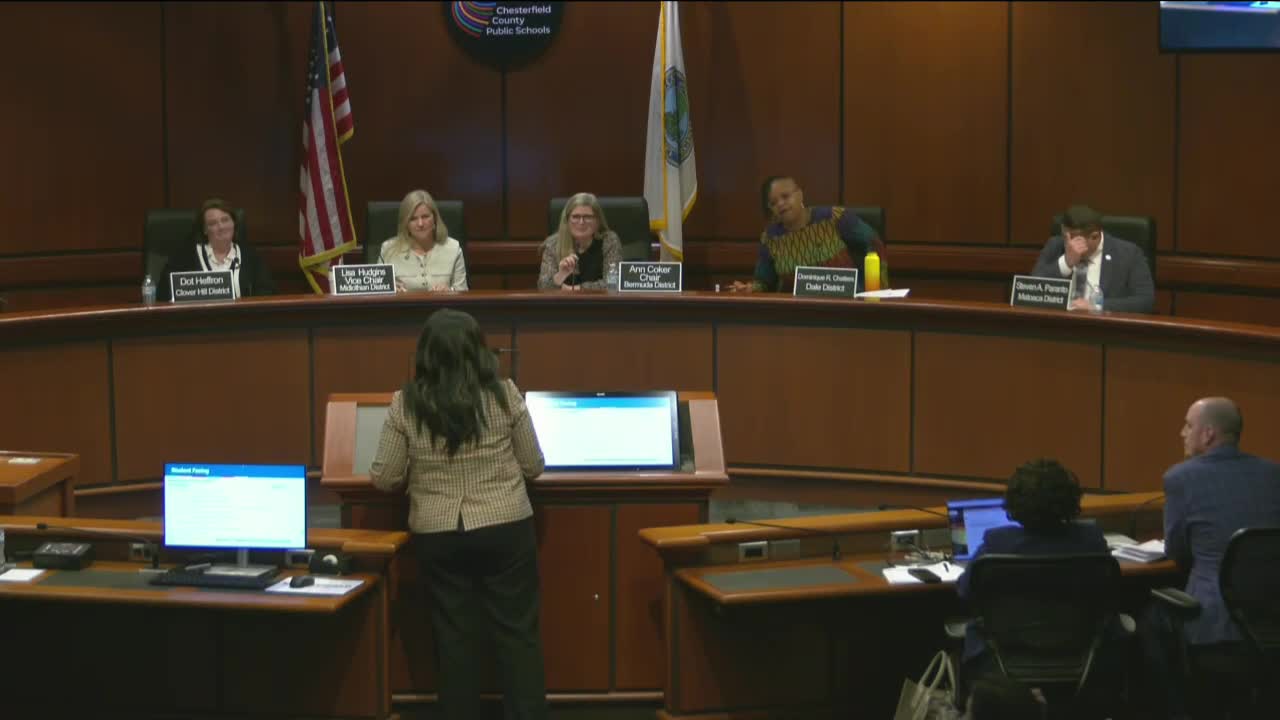
Summary
ESL program leaders reported a growing English‑learner population (10,669 as presented) and recommended 43 additional ESL teachers to bring staffing toward a differentiated staffing standard the division uses; presenters said recent Virginia SOQ changes create new monitored‑student staffing expectations.
Tina Jenkins, speaking on behalf of the district’s ESL programs on Feb. 4, said Chesterfield’s English‑learner population has grown steadily since 2016 and that the division serves more than 10,600 English learners (the presenter noted the figure as of a few days before the meeting and said the number is increasing).
Jenkins described the division’s staffing approach prior to the state’s most recent Standards of Quality (SOQ) change: a differentiated staffing model that allocated one ESL position per 25 students for lower‑proficiency levels and one per 40 for higher‑proficiency levels. She said the revised state SOQ now includes a staffing model for monitored students (students who have exited direct services and are monitored for four years) at a 1:100 ratio.
To align staffing with local growth and to remain ahead of the new state guidance, Jenkins said the division is requesting funding for 43 additional highly qualified ESL teachers for FY26 (the presenter framed this as a dollar request tied to those positions). She said the division is running internal recruitment, offering endorsement pathways with the University of Richmond and using HR strategies to retain and hire ESL‑endorsed teachers.
Jenkins emphasized that the ESL headcount changes quickly as students enroll throughout the year and that fall counts are typically lower than spring counts because newly arriving students are added later. Board members requested a school‑level breakdown of where the requested ESL FTEs would be deployed and asked the presenter for monitoring numbers tied to the new SOQ; Jenkins said those school‑level placements and monitoring data are tracked and can be provided.
No formal board action was taken; staff said they will include the staffing request in the superintendent’s FY26 budget proposal.