Get Full Government Meeting Transcripts, Videos, & Alerts Forever!
Get email alerts on the Operating Budget topic
No spam. Unsubscribe anytime.
Chesterfield schools present needs-based FY2026 budget; $25.6 million visible for priority spending
Summary
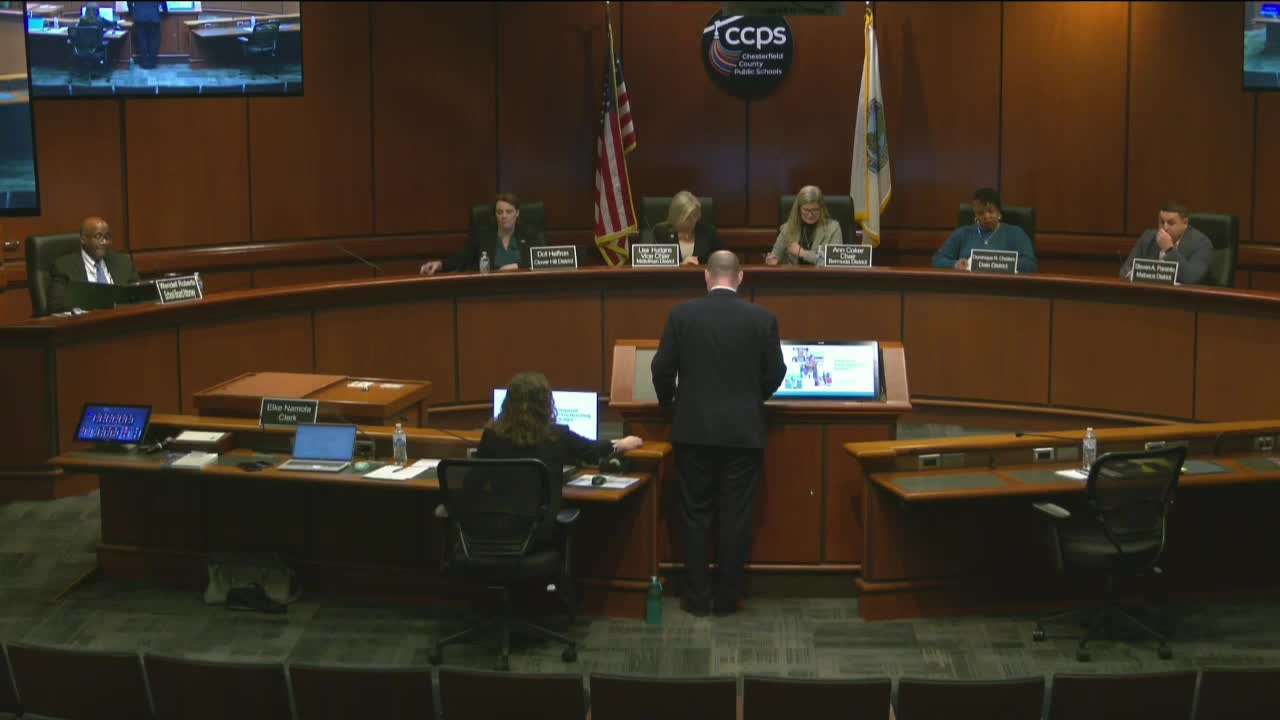
Chesterfield County Public Schools presented the superintendent's FY2026 proposed operating budget during a Jan. 23 work session, identifying $25.6 million in currently visible incremental revenue and a set of required and priority expenses that absorb most of that amount.
Chesterfield County Public Schools presented the superintendent's FY2026 proposed operating budget during a Jan. 23 board work session, laying out $25.6 million in incremental revenue the division currently has line of sight to and a prioritized needs-based spending plan.
The proposal front-loads mandatory and high-priority expenses: a 3% raise for all staff, health and dental cost increases, custodial contract escalators, technology service inflation and a new lease for the spring-line District 60 administrative space. Budget presenters said that set of items consumes most of the $25.6 million and leaves an unfunded gap of about $16.8 million for other identified needs.
The budget matters because the division calls it “needs-based” under Virginia code and says local and state funding together determine whether identified student supports and capital partnerships can be funded. The board was asked to review proposals and use upcoming town halls to gather community input before school-board action in late February and a final adoption before the July 1 fiscal deadline.
Presenters said the currently affordable items include the 3% compensation increase and contract-driven inflation (health/dental, custodial, technology) and the spring-line lease that will enable an expanded CTC Hall and 650 CTC seats. The division estimated compensation-related costs at roughly $20 million; the health and dental increase at about $1.3 million; custodial contract escalators at about $1.2 million; and technology-service inflation roughly $1 million.
Unfunded student-facing needs total about $14 million of the roughly $17 million in additional requests. The largest single unfunded bucket described was special-education growth and outsourcing pressure, estimated at $9.7 million. That sum includes about $2 million for caseload growth (about six teachers and 28 instructional assistants), roughly $4.5 million for increased speech-language services (driven in part by hiring difficulty and outsourcing), about $2.2 million to add behavioral-support personnel (about 50 special-education IAs), and roughly $850,000 for IEP-related nursing (estimated as the equivalent of ten contracted IEP nurses), plus smaller items for adaptive arts and early-childhood furniture.
English learner (EL) growth was identified as another large unfunded area, with presenters showing an increase of more than 5,000 EL students projected for 2026 versus prior years and recommending roughly 43 additional FTEs for EL services; presenters noted the state SOQ funding would cover a portion of that cost. The Chesterfield Recovery Academy was funded at $500,000 from the state but presenters said the program needs an additional ~$300,000 to sustain current service levels.
Other items singled out as unmet included fleet and fuel increases (about $1.3 million, with roughly $300,000 attributed to fuel volatility), intercom replacements (about $415,000 to begin replacing end‑of‑life systems), staff laptop and monitor replacement ($162,000), and continued funding for district mega trailers (the division requested about $582,000 to cover roughly half of ongoing trailer lease costs that previously came from one-time funds).
Presenters emphasized that the $25.6 million figure is a point-in-time estimate based on the governor's proposed budget and an initial county transfer estimate; both state and county processes remain active and the numbers may change. The division asked the community to attend upcoming town halls (Jan. 27–Feb. 10, with a Spanish-language session Feb. 6) and to advocate with legislators and the Board of Supervisors as the General Assembly and county budget processes proceed.
Board members pressed staff on assumptions used in key line items (health/dental inflation, fuel assumptions, staffing placement for new special-education and EL positions), asked for school-level staffing allocations if additional funds arrive, and requested more granular lists (for example, which schools are using portable classrooms and which schools are slated for intercom replacements). Staff agreed to provide those details at subsequent work sessions.
The board took no formal vote on the operating budget at the Jan. 23 work session; members set February work sessions and a public hearing leading to a planned special meeting on Feb. 25 for a possible approval vote.