Get Full Government Meeting Transcripts, Videos, & Alerts Forever!
Get email alerts on the Public Comment topic
No spam. Unsubscribe anytime.
Local resident alleges special‑education compliance issues and grant misuse during public comment
Summary
At the Feb. 27 special meeting, resident Wendy Little used public comment to allege repeated violations of special‑education law (IDEA Part B), criticize grant management, and call for board direction to the superintendent and an audit of certain expenditures.
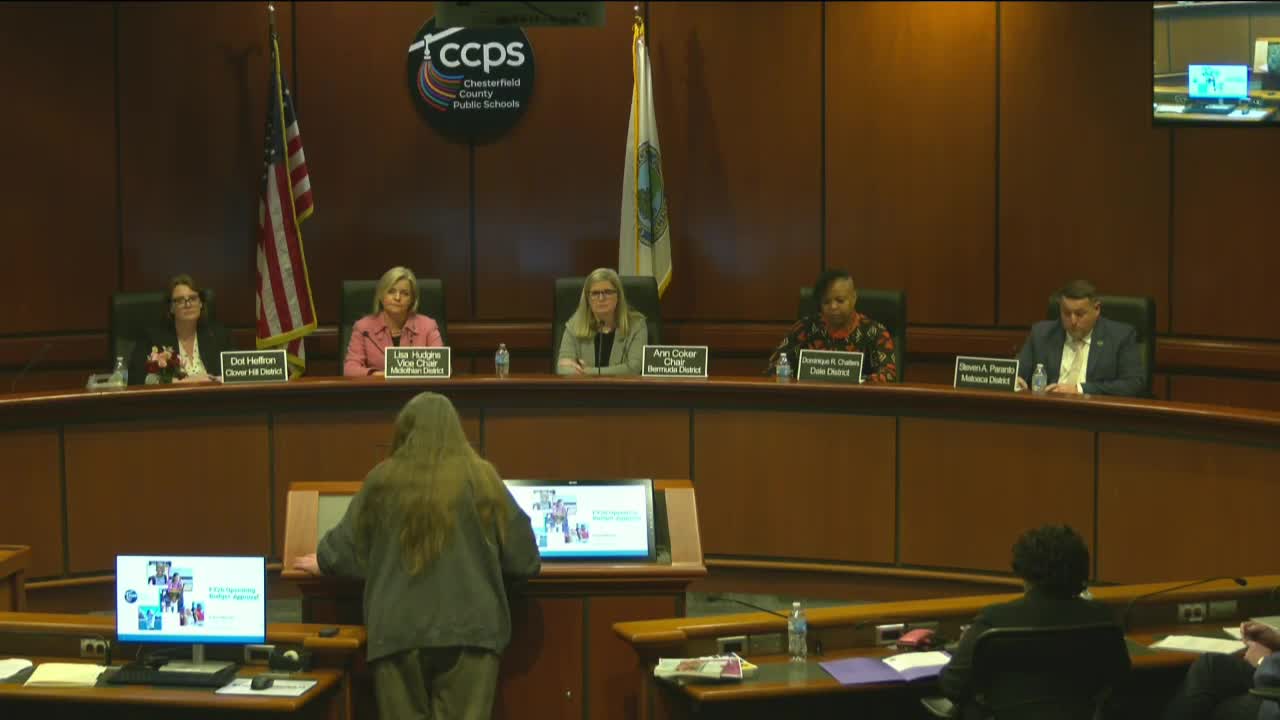
During the public‑comment period at the Feb. 27 Chesterfield County Public Schools special meeting, resident Wendy Little addressed the board with a prepared statement alleging repeated violations of special‑education rules and concerns about grant administration.
Little told the board she had provided material she called "the purple book" and other documents to board members and asserted the division was violating special‑education laws and regulations "every single day, right now, all of last year, all of this year." She said she "would not sign a special education IDEA part B plan" and warned the board against approving what she characterized as fraudulent grant applications.
"It is your obligation as a school board, any and all of you to direct your superintendent to fully resolve these issues," Little said, adding criticisms of operating‑budget spending and alleging legal defense costs related to a named individual had been borne by taxpayer dollars. She also praised staff member Josh Davis for his work on the CIP and described a need for stronger operational oversight and auditing, while criticizing outside legal advisors and the role of the Virginia School Boards Association in influencing local decisions.
Little’s remarks were delivered during the public‑comment portion of the meeting and were not accompanied by board action at the session. Board procedure announced at the start of the public‑comment segment noted that written comments submitted online were provided to the board in advance and that in‑person remarks would be summarized in the official minutes.
The board did not respond with formal action during the meeting; any follow‑up or investigation would require a subsequent board direction or staff report.