Get Full Government Meeting Transcripts, Videos, & Alerts Forever!
Get email alerts on the Technology topic
No spam. Unsubscribe anytime.
Technology office recommends district Chromebook leasing, stepped hardware replacement cycles and stronger cyber posture
Summary
The technology department recommended moving from ownership to a four‑year device lease for Chromebooks, establishing multi‑year replacement cycles for school hardware, and boosting cybersecurity and network investments; staff said the Chromebook lease model would cost about $10 million annually.
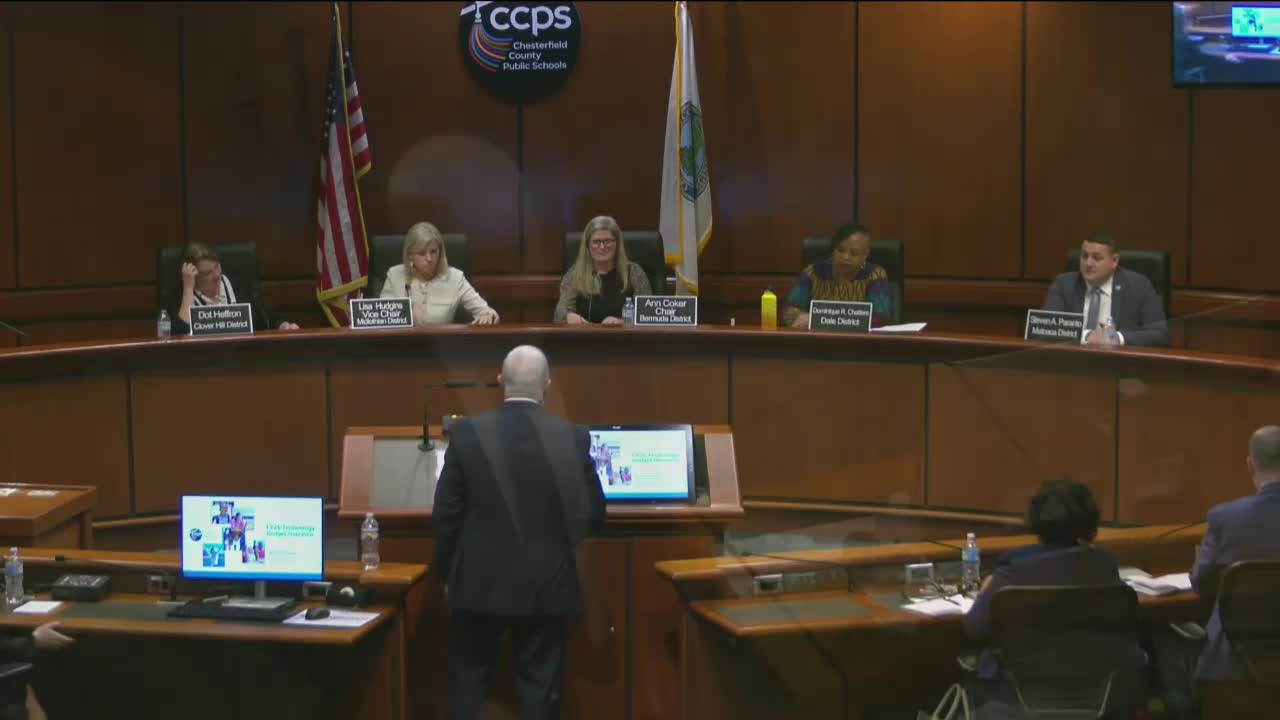
Chief Technology Officer Mr. Longworth presented the FY2026 technology overview on Feb. 4, urging a shift from the current ownership model for student Chromebooks to a predictable four‑year lease model that would include accidental‑damage coverage and change how repair services are budgeted.
Longworth said the division currently owns most devices, which leads to staggered warranty expirations, unpredictable repair costs, and an operational practice of cannibalizing older devices for parts to meet service‑level goals. He proposed a device lease costing roughly $8 million annually plus about $2 million in associated services — $10 million per year total — to provide uniform four‑year‑cycle coverage and reduce ad‑hoc repair spending. He said current monthly repair and intentional‑damage expenditures (presented as internal figures) are large and that the lease model would consolidate device replacement and warranty coverage under a single predictable contract.
Beyond Chromebooks, Longworth recommended developing planned replacement cycles for other school technologies that have reached or passed expected life spans (intercom systems, phone systems, projection systems and server/network hardware). He said several intercom and phone systems are 25 years old and that failing components may be unobtainable without planned replacement. Longworth also flagged cybersecurity investment as a third priority and suggested steps to leverage E‑rate funding where applicable, consider full cost of ownership and reduce redundant ways of delivering critical functions such as emergency notification.
“Keeping our device lease separate from our service model allows us to continue to have conversations with our principals and community around how we approach Chromebooks,” Longworth said, noting that operations such as whether younger students take devices home can be managed as a separate service decision if the devices are leased.
Board members asked about management of younger students’ devices and praised the technology staff for the speed of device turnaround when a student’s Chromebook fails. Longworth said replacement‑day service goals are a high operational priority and that predictable leasing would reduce hidden parts costs and time spent cannibalizing devices.