Get Full Government Meeting Transcripts, Videos, & Alerts Forever!
Get email alerts on the Compensation topic
No spam. Unsubscribe anytime.
Chesterfield proposes 3% pay increases, step boosts and targeted scale changes in FY26 budget
Summary
At a Feb. 25 budget work session, school staff presented a FY26 compensation plan that would hold teacher starting pay at about $55,047 with a 2% market adjustment plus a step increase, expand step ranges for several job families, preserve substitute daily rates and continue several $3,000 recruitment/retention bonuses.
Chesterfield County Public Schools officials on Feb. 25 outlined a FY26 compensation proposal that would add a roughly 3% total increase for most staff by combining a 2% market adjustment with a step increase tied to successful experience.
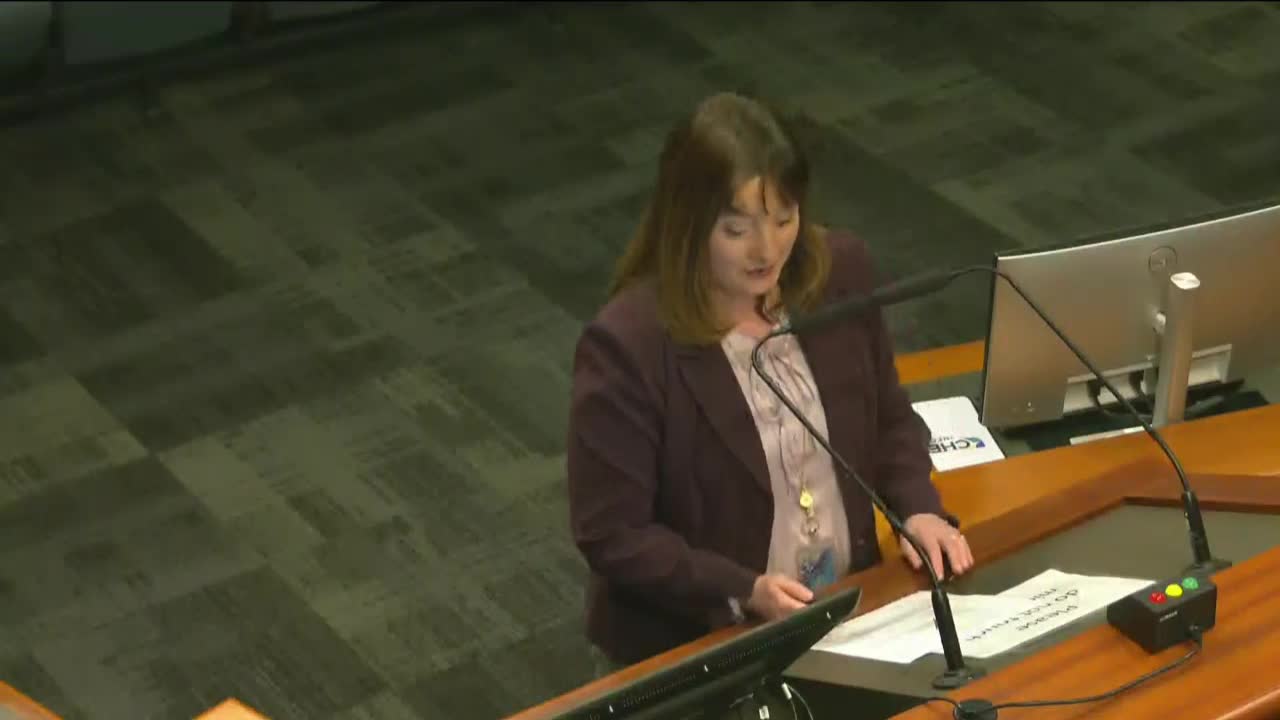
The proposal, presented by Dr. Huff, covers teacher pay, instructional assistants, student support services (speech/OT/PT, psychologists, social workers), school security officers and graded-range hourly positions. The superintendent's proposed budget for FY26 includes the compensation package, targeted step extensions for several scales and continuation of existing bonus programs.
Dr. Huff said the system proposes to raise teacher starting pay to $55,047 and to combine a 2% market adjustment with a step increase so experienced teachers receive about a 3% total increase. "This step ... makes sure to maintain some distance there, for successful experience," Dr. Huff said, adding the teacher scale would continue to include lanes for bachelor’s, master’s and doctorate credentials.
Why it matters: Officials said steps plus the market adjustment are intended to avoid pay compression — where new teachers earn nearly the same as more experienced teachers — and to retain staff in high-turnover positions. Dr. Huff said the division has reduced many key vacancies over the past two years and has hired large numbers of staff: "We hired almost 3,000 people last year, including full time, part time, substitute, and temporary employees." She added teacher annual attrition is down from recent highs and now near pre-pandemic national averages.
Key details from the presentation: - Teacher starting salary proposed: $55,047 (2% market increase plus step for experienced teachers, roughly 3% total). - Instructional assistants (IAs): proposal mirrors teacher approach (2% plus step), recommends adding step 26 to the IA scale (IA scale currently ends at step 25) to retain experienced IAs. Dr. Huff said roughly a little over 10% of IAs are at the current top step and the proposed budget includes an additional 70+ IA positions. - Student support services (speech-language pathologists, school psychologists, OT/PT, audiologists, social workers): a new scale introduced last year is proposed to continue with a 2% market increase plus a step; the presentation proposes extending that scale from step 35 to step 36 to retain specialized staff. - School security officers (SSO): proposed extension from step 25 to step 26, plus a 2% market increase and step recognition for successful experience. - Graded-range hourly positions (bus drivers, food service associates, day porters, etc.): proposed minimum to move from $14.42 to $14.70 per hour with a 3% target increase that combines market and experience adjustments. - Substitutes: the division reports more than 3,000 substitutes. The division’s target is a 90% daily fill rate; through Jan. 17 this school year the fill rate was 89% (87% last year). The current daily rate of $136 will be maintained in FY26, with high-demand day rates (listed as $203 for certain days) preserved. - Bonus structure: continuation of existing bonuses, including $3,000 for teachers at high-need schools, a $3,000 bus driver bonus, and bonuses for instructional assistants, tutors, monitors, library assistants and custodians.
Officials described recruiting and retention gains: Dr. Huff said bus driver vacancies were reduced by more than 80%, day porter vacancies by more than two-thirds, and instructional assistant vacancies by about 40% over two years. The division reported hiring from substitute pools: 253 substitutes were hired into full- and part-time roles last school year (103 certified teachers), and 280 hires through December of the current year (111 teachers), which staff called an encouraging pipeline into full-time positions.
Board members asked for cost details and supporting documentation for parts of the proposal. When Board Member Peronto asked for the FY26 cost to extend the SSO scale to step 26, Dr. Huff said the change involves 20 employees and cited a figure she would double-check. During the meeting staff later supplied additional numbers for IAs and student support position costs for FY26.
Officials flagged limits and market pressures: Dr. Huff noted the division is competing with health care and private companies for some roles and that the public budget timeline (which fixes pay through June 2026) can make midyear market responses harder.
The presentation concluded with staff offering to provide additional detail on specific scales and the compensation plan. "I'd be happy to answer any questions at this time," Dr. Huff said.
Ending: The board asked staff for further breakdowns of the scale changes and the projected FY26 costs; staff agreed to provide the requested spreadsheets and line-item detail ahead of the next meeting.