Get Full Government Meeting Transcripts, Videos, & Alerts Forever!
Get email alerts on the Environment topic
No spam. Unsubscribe anytime.
Environmental advisory committee urges districtwide LED, expanded solar ownership and curriculum changes
Summary
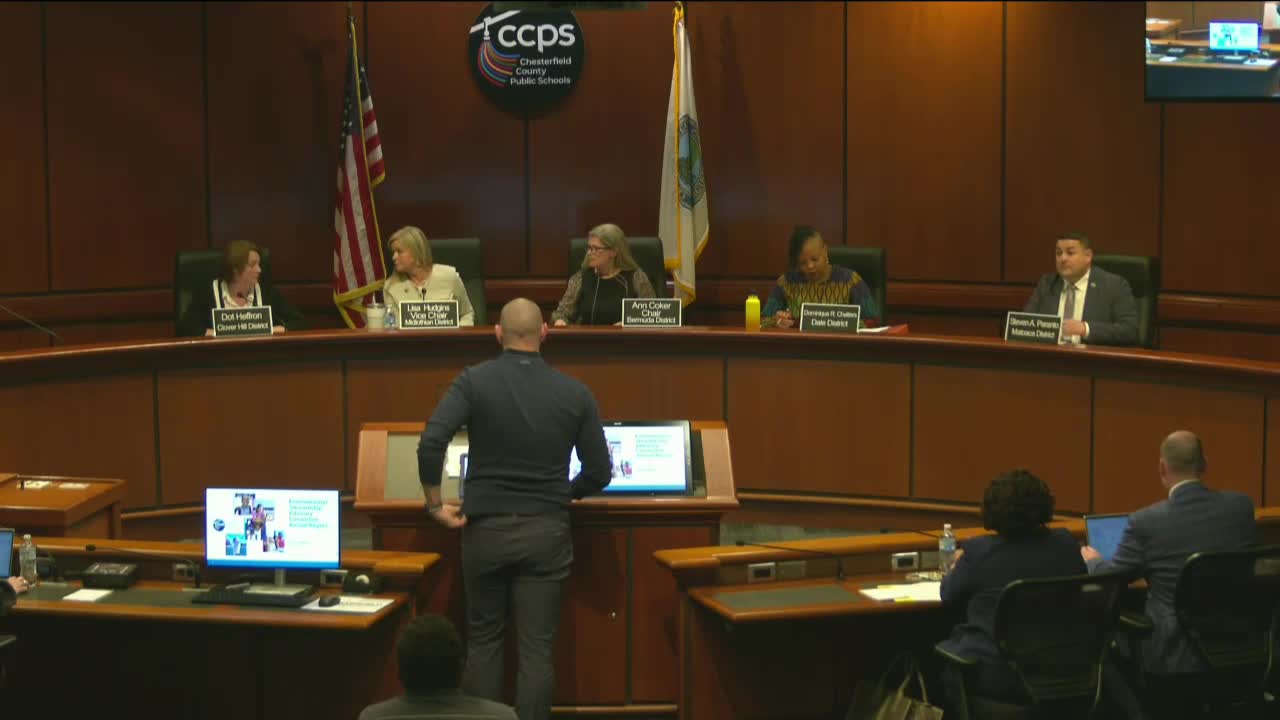
Justin Walker, a representative of the Environmental Stewardship Advisory Committee, told the school board on Feb. 4 that the committee is pressing several operational and curriculum initiatives intended to reduce costs and greenhouse‑gas emissions while expanding student learning opportunities.
Justin Walker, a representative of the Environmental Stewardship Advisory Committee, told the school board on Feb. 4 that the committee is pressing several operational and curriculum initiatives intended to reduce costs and greenhouse-gas emissions while expanding student learning opportunities.
The committee’s headline recommendations included accelerating upgrades to building automation controls, completing a districtwide LED lighting conversion as a single project rather than a piecemeal approach, increasing on-site solar ownership where financially sensible, replacing the oldest buses in the fleet and piloting geothermal heating/cooling on new or retrofit high‑school sites. The committee also proposed changing the high‑school environmental science curriculum so required service or citizen‑science projects are a regular, year‑long component.
Why it matters: Walker said better building automation “dramatically” improves temperature control and reduces maintenance burdens and energy use, which in turn affects classroom comfort, staff workload and operating costs. On LED lighting, the committee showed calculations indicating a five‑ to seven‑year payback at current energy rates and urged treating LED conversion as a single-phase project to capture maximum savings and avoid inconsistent fixture types across schools.
“We feel like this has somewhere between a 5 and a 7 year return on cost,” Walker said about LED conversions, noting that the estimate assumes current energy rates. He added that doing the lighting work piecemeal produces varying color and product types districtwide and complicates maintenance.
On solar, Walker said the division currently has seven sites served under a power‑purchase agreement (PPA) that places equipment on school roofs and sells electricity back to the district. The committee urged staff to examine scenarios where the district borrows to buy arrays outright. “For the first 10 or so years…you get roughly the same amount of return as you would from a power purchase agreement,” Walker said. “But after that loan is repaid, those savings go up dramatically.” He added that routine upkeep is modest — committee members estimated cleaning and basic software updates might run around $3,000 a year per rooftop for a contracted service, but rain often reduces the need for annual cleaning in the region.
Fleet and HVAC recommendations: The committee reported the district operates nearly 700 buses, with about one in four older than 16 years; those older vehicles are less reliable, often lack cooling and do not meet 2009 emission standards. Walker estimated that bringing fleet ages to target levels would improve fuel economy and could save roughly $1 million a year in fuel costs. On HVAC, the committee proposed geothermal systems for new high‑school construction and certain retrofits, noting the ground‑source approach can cut heating and cooling energy use as much as half and that federal credits can narrow first‑cost differences compared with conventional equipment.
Environmental education: Jason Woodby, the committee’s Bermuda District representative and a science teacher at Carver Career Academy, described a proposal to require a service or citizen‑science project as part of the high‑school environmental science course rather than leaving it optional “if time allows.” He said projects could include vegetable gardens, composting, or pollinator habitats, and that making the work part of the curriculum would improve continuity when staff turnover otherwise causes programs to lapse. Woodby asked the board to restore a $1,000 annual “environmental champions” stipend for teachers who lead these projects to cover summer and after‑hours work.
Board members asked staff and presenters clarifying questions about scope and cost. Trustee Bronte asked whether a previously discussed $5 million estimate included stadium and exterior lighting; Walker said he believed the earlier figure covered interior spaces and gyms but not parking lots and stadiums and that he would confirm. Board members also discussed usage patterns for stadium lighting and whether those exterior projects deliver the same financial returns as interior lighting because of fewer run hours.
The committee left the board with an appendix that includes the LED and solar calculations and a curriculum appendix Woodby said contains sample projects and local partner lists, including master gardeners and master naturalists willing to support school programs.
The presentation was a work‑session briefing; the board did not take formal votes on the committee’s recommendations at the Feb. 4 meeting.