Get Full Government Meeting Transcripts, Videos, & Alerts Forever!
Get email alerts on the Transportation Bay Avenue Corridor topic
No spam. Unsubscribe anytime.
Capitola council backs roundabouts for Bay Avenue, keeps Bay Hill quick‑build in place
Summary
After a months‑long study, the City Council selected roundabouts as the preferred long‑term design for the Bay Avenue corridor and voted to keep the temporary Bay Hill quick‑build configuration in place while the city pursues design refinement, outreach and grant funding.
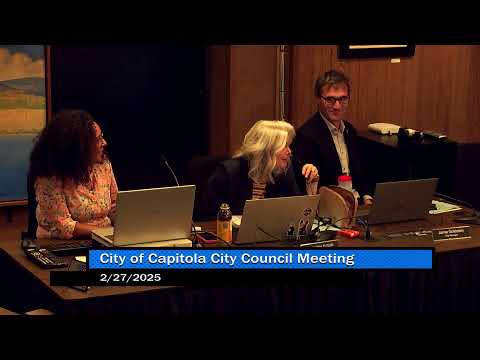
The Capitola City Council on Feb. 20 selected roundabouts as the city’s preferred long‑term safety and traffic‑operations improvement for Bay Avenue and directed staff to continue public engagement and pursue grant funding for final design and construction.
The action followed a traffic corridor study by consulting firm Kimley‑Horn and city staff showing that roundabouts at key intersections would reduce vehicle delay, shorten pedestrian crossing distances and cut the number and severity of conflict points compared with maintaining stop control or installing traffic signals. The council also voted to retain the existing Bay Hill quick‑build traffic configuration as an interim safety measure while the city works toward permanent designs.
Kimley‑Horn traffic analyst Derek Wu summarized the firm’s findings during the presentation, saying roundabouts “provide a more continuous flow of traffic, which improves overall efficiency and reduces vehicle delay through the corridor.” The study team’s collision review found about 37 reported crashes along the corridor in the prior 10 years, including 10 bicycle and nine pedestrian collisions, and identified safety and operational benefits from redesigns that slow vehicle speeds and shorten crossings.
Council members asked how roundabouts would handle deliveries and emergency vehicles. Frederick Venter of Kimley‑Horn said emergency apparatus can navigate properly designed roundabouts and that traffic simulations in the study forecast lower average delay and shorter queues under the roundabout alternative. Staff noted roundabouts typically have higher upfront construction costs — typical per‑location estimates in the study ranged from about $2 million to $3.5 million — but lower lifecycle costs and stronger grant competitiveness because many active‑transportation programs prioritize projects that reduce severe crashes.
The council’s direction instructs staff to identify Alternative 2 (roundabouts) as the preferred long‑term solution, conduct further public outreach and concept refinement, and seek grant funds for engineering and construction. The motion passed on roll call with councilmembers voting aye.
Separately, the council addressed short‑term modifications at the Bay Hill intersection, where the city previously installed a “quick‑build” road‑diet configuration. Staff reported traffic volumes and level‑of‑service analyses before and after the quick build showed small, measurable changes but no material safety regressions; staff also presented tradeoffs for various interim options such as raised crosswalks, extended bike striping and additional bollards. Council voted to maintain the quick‑build configuration in its current form until long‑term plans proceed.
Staff estimated that a full engineering, grant application and construction process for roundabouts could take multiple years; in discussion staff said an accelerated schedule would depend on the city’s budget priorities and success in obtaining grants. Councilmembers asked staff to explore targeted stakeholder outreach (business owners, freight providers, senior housing residents and school representatives) and to test traffic during school peak hours in future data collection.
The study and the council’s direction will move to the next phase of public engagement and concept refinement; staff said it will return to council with refined concepts, cost estimates and proposed funding strategies for each major intersection.