Get Full Government Meeting Transcripts, Videos, & Alerts Forever!
Get email alerts on the District Finance topic
No spam. Unsubscribe anytime.
Beverly Public Schools reviews federal, state and local funding while approving routine transfers and fee updates
Summary
District finance staff outlined federal and state grant mixes, Medicaid school-based claiming and revolving-fund carryforward plans; the subcommittee approved several routine transfers, a small grant increase, a new student activity account and facility-use fee updates and set a summer pilot for pest control at Beverly High School.
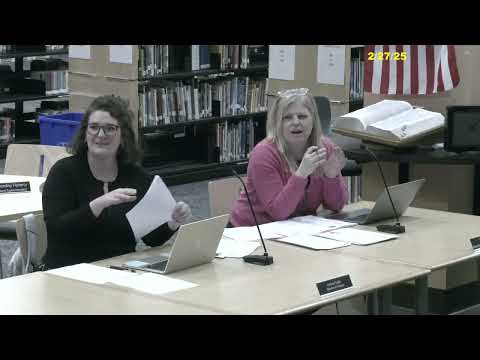
Emma Pugliese, Beverly Public Schools director of finance, told the Finance and Facilities Subcommittee on Feb. 27 that the district’s recurring federal grant revenue has averaged about $2,500,000 per year over the last five years, while some pandemic-related funding (ESSER) has declined and will not reappear in the current budget year.
The summary, presented to the hybrid meeting, listed the district’s revenue streams as local tax dollars, state Chapter 70 aid, federal and state grants, school nutrition programs and various revolving funds. Pugliese said the district participates in school-based Medicaid claiming and “we do bring in about $450,000 a year into the city, through reimbursement claims,” money that appears on the city’s books rather than on the school operating statement.
Why it matters: The subcommittee’s review highlighted how the district blends one-time carryforward balances and recurring grants to balance the operating budget. Pugliese said the district has been drawing on reserves such as circuit breaker, school choice and revolving fund carryforwards to make up for reduced federal COVID relief funding. The committee discussed the implications if federal or state policies change for programs such as IDEA (special education), Perkins (CTE), Title I/II/III/IV and the state’s universal free meals policy.
District officials described how federal grants are restricted by allowable purposes and frequently come with a 27-month spending window; Pugliese noted “these are reimbursement based grants,” meaning the district incurs expense before drawing funds down. She also emphasized the maintenance-of-effort rule that prevents federal dollars from simply replacing local funding.
Discussion highlights and clarifications
- Grant mix and one-time carryforward: Pugliese explained the current budget includes unusually large “other special revenue” line items this year that reflect planned use of carryforward balances and revolving-fund receipts. That account shows items that did not appear in prior-year columns because the district is breaking out anticipated carryforward receipts for the current year to match planned expenditures.
- Special education and IDEA: Pugliese said the district uses its IDEA 240 grant to fund paraprofessionals and its extended school-year services; she noted the program is reimbursement-based and that some positions (for example, roughly 40 paraprofessionals on the 240 grant) depend on current-year grants and carryforward balances.
- School nutrition and CEP: The district currently participates in the Community Eligibility Provision (CEP) for universal free meals after a 2023 threshold change. Pugliese explained that if the state or threshold changes, the district could lose CEP eligibility; federal funds would still cover the free-lunch population, but the district’s food-services operations could see increases in charges to families and pressure on its self-sustaining nutrition accounts.
- Medicaid school-based claiming: Pugliese clarified those reimbursements are recognized on the city side of the budget under Massachusetts revenue-recognition rules and that the $450,000 figure represents typical annual student-service claims for Medicaid-eligible services (speech, OT/PT, mental-health supports). She noted parental consent and eligibility rules limit which services are claimable.
Votes at a glance (formal actions taken Feb. 27)
- Approval of Jan. 21 meeting minutes — outcome: approved. (Roll call recorded; vote noted as passing in the meeting record.) - Acceptance of gifts to schools — amount: $7,153.40 — outcome: approved 4–0. - Budget transfer #1033 — reallocation of student activity adviser funds between middle and high school — outcome: approved 4–0. - Budget transfer #1554 — reallocation to create superintendent-search line and cover ancillary search-related costs — outcome: approved 4–0. - Acceptance of grant increase — comprehensive school health service — amount: $7,900 — outcome: approved 4–0. - Creation of a Beverly High School Class of 2028 student activity revolving account — outcome: approved 4–0. - Policy ECB (building maintenance) amended to clarify municipal Department of Public Services responsibility includes school parking lots and access roads; amendment and policy moved forward — outcome: amendment approved 4–0; policy forwarded 4–0. - Policy ECF/EDE (conservation) — outcome: approved 4–0. - Facility-use fee schedule and associated adjustments (new per-hour and furniture/use fees; 5% update on private-use fees) — outcome: approved 4–0.
What the votes mean: Most items were routine operating approvals: two budget transfers, acceptance of gifts and a small grant increase, creation of a student activity revolving account, and updates to facility-use fees to better cover overtime custodial and technical staff costs. The committee amended policy ECB to explicitly reference access roads after seeking clarification from the district’s buildings and grounds director.
Budget context and risks
Pugliese said the district has used one-time federal funds and carryforward balances in recent years to supplement the operating budget; with pandemic-era federal dollars largely expired, the district expects more reliance on revolving funds and a careful review of recurring vs. one-time revenues. She urged caution on utility and snow-removal lines, which are currently under pressure from recent cold storms and overtime costs.
Numbers and constraints the committee flagged
- Average recurring federal grant entitlements (five-year average): about $2,500,000. - Medicaid school-based claiming reported flows to city: approximately $450,000 per year (student services reimbursement). - Circuit breaker carryforward cap: state law does not set a minimum but limits carryforward to one year’s revenue for that fund. - Last fees update for transportation/athletics/preschool revolving funds: fiscal-year 2014; committee members recommended reviewing fees at least every two years going forward.
Ending
Finance staff will post the detailed slides and vendor materials used in the meeting on the district’s meeting portal. Committee members requested additional follow-up where federal program changes are still unresolved and asked finance to flag lines (utilities, snow removal and nutrition) that may need further monitoring or city support. The subcommittee adjourned after completing the evening’s agenda.