Get Full Government Meeting Transcripts, Videos, & Alerts Forever!
Get email alerts on the Infrastructure Dams topic
No spam. Unsubscribe anytime.
Council approves $170,000 study application for Moore’s Creek Dam; staff to seek 50% reimbursable grant
Summary
The Lexington City Council approved a roughly $170,000 engineering and geotechnical study of Moore’s Creek Dam and authorized staff to submit a 50 percent reimbursable grant application to the Virginia Department of Conservation and Recreation.
The Lexington City Council approved moving forward with an engineering study of Moore’s Creek Dam and directed staff to submit an application for a competitive, 50 percent reimbursable state grant to fund roughly half of the study’s estimated $170,000 cost.
Council members and staff stressed that the study is an assessment only — it will document materials, slope stability and potential failure scenarios, and it may recommend further engineering or remediation work. The study does not itself repair the dam or guarantee any additional funding for repairs.
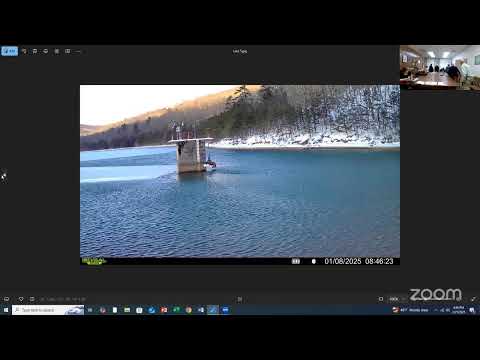
City staff said they have submitted the grant application to the Virginia Department of Conservation and Recreation (DCR) and that DCR staff have already completed initial internal checks. Patrick Madigan and other staff described the scope: geotechnical borings, materials testing, slope‑stability modeling and an inundation analysis that would trace downstream flow paths in a failure scenario. Staff said the work will also examine historic construction phases and pipe outfalls that have been patched previously.
Jeremey (city counsel/legal staff) told council that regulatory engagement makes the study effectively necessary; in his words, the city “ultimately” will need to address the dam’s condition and comply with DCR requirements. Staff emphasized that the grant request is for a reimbursable award: the city would initially pay invoices and request reimbursement if the grant is awarded. Council members asked staff to pursue county participation or contribution where appropriate; staff agreed to pursue those possibilities in parallel with the grant application.
Council members heard details about pond and downstream connections: the dam no longer provides meaningful emergency drinking water to the regional system, staff said, and historic inlet lines to Enfield and other service points have been truncated over time and are not dependable conveyances to the treatment plant. The dam’s outfall pipes, which date to multiple construction eras, have developed leaks in the past; staff said past in‑place repairs (injections and concrete splints) appeared to have stopped some flows but that the sinkhole discovered near the outfall requires professional investigation.
Staff described monitoring measures already in place: weekly inspections by public works crews, cell‑connected sensors and remote cameras, and an emergency action plan tested annually. The scope presented for the proposed study includes targeted borings and material tests to characterize the dam body, assessment of the sinkhole/erosion area and a hydraulics/hydrology analysis to update inundation maps for downstream properties.
Council members queried the county’s historical obligations; staff said they are reviewing intergovernmental agreements and historical documents and will report back. Several council members said they supported proceeding with the study promptly so the city can remain ahead of regulator requests; staff noted that failing to act could increase regulatory pressure.
The study request and grant application were approved in council action. Staff will report back to the council with the consultant contract and any recommended next steps after the study is complete or if additional immediate remediation is required.