Citizen Portal

Senate Judiciary Committee questions three Justice Department nominees on court orders, voting and civil rights

2439993 · February 26, 2025

Get AI-powered insights, summaries, and transcripts

Subscribe
AI-Generated Content: All content on this page was generated by AI to highlight key points from the meeting. For complete details and context, we recommend watching the full video. so we can fix them.

Summary

Senate Judiciary Committee nominees John Sauer (solicitor general), Aaron Reitz (Office of Legal Policy) and Harmeet Dhillon (civil rights) defended records and answered whether officials must follow court orders, how DOJ should enforce voting- and campus-related civil-rights claims, and their recusal and ethics plans.

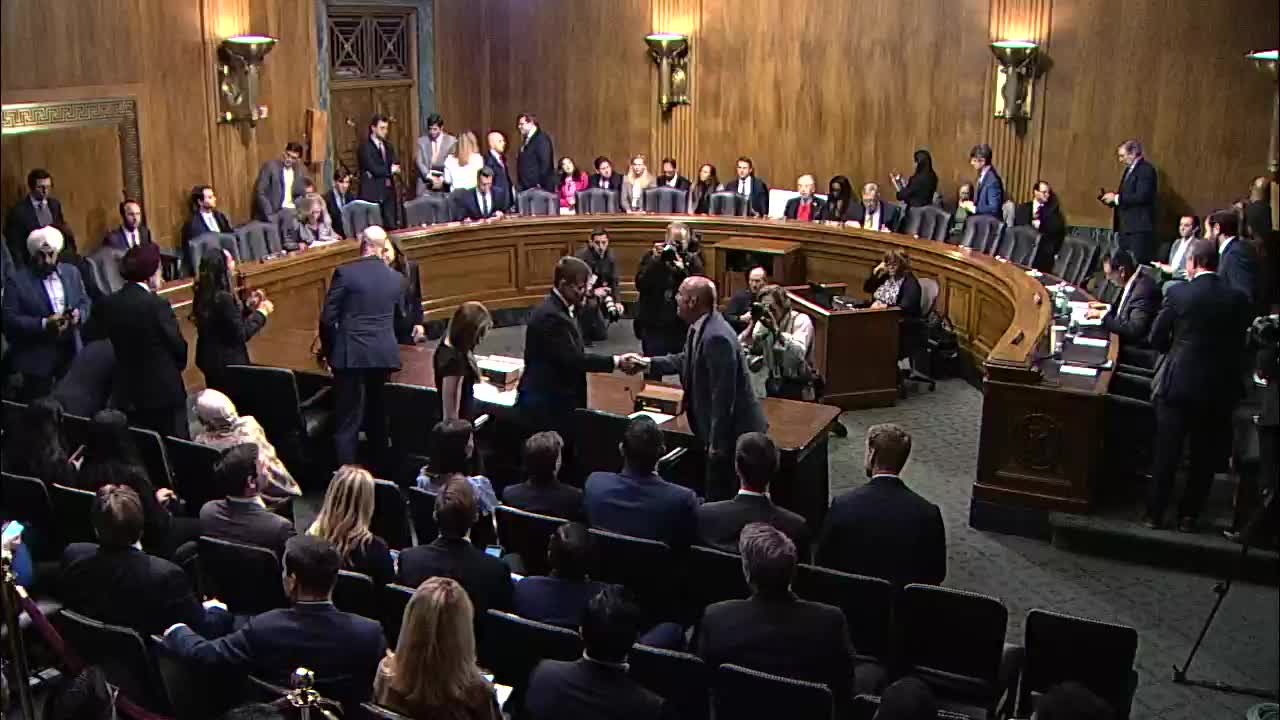
Three nominees for senior Justice Department posts faced sustained questioning at a Senate Judiciary Committee hearing in Washington, D.C., on a range of topics including whether elected officials must follow federal court orders, enforcement of voting- and campus-related civil-rights laws, and conflicts and recusals.

The hearing brought into sharp relief the committee’s concerns about the rule of law, the independence of career prosecutors, and civil-rights enforcement priorities. Committee members questioned John Sauer, nominated to be solicitor general of the United States; Aaron Reitz, nominated to lead the Office of Legal Policy; and Harmeet Dhillon, nominated for assistant attorney general for the Civil Rights Division. Chairman Chuck Grassley said, "Our 3 nominees have been tapped to serve in important roles in the Justice Department."

Why it matters: the solicitor general and the Justice Department’s policy and civil-rights leaders shape litigation strategy, regulatory review and enforcement that affect federal policy and Americans’ rights nationwide. Senators pressed nominees about past statements, litigation positions, and how they would respond if the White House sought actions the nominees believed to be unlawful.

Most contested: whether public officials may refuse to comply with federal-court orders. Multiple senators pressed the nominees to state plainly that they would follow binding court orders. Ranking Member Dick Durbin warned that court defiance would be "a constitutional crisis" and repeatedly sought an unequivocal pledge that administration officials would obey judicial rulings. The nominees gave cautious, case-specific answers: Aaron Reitz (also referred to in the hearing by the surname Wright) said his responses were fact-specific and declined to adopt a blanket rule; John Sauer said generally officials should follow direct court orders but declined to adopt absolute hypotheticals; Harmeet Dhillon said she had not been asked by the president to do anything she found unlawful and described such scenarios as hypothetical.

Voting and election law enforcement. Senators asked Dhillon and the panel how the Civil Rights Division would handle post-Shelby County voting changes and whether the division would bring Title II/Section 2 or National Voter Registration Act (NVRA) actions. Dhillon said she would evaluate facts and meet section heads to assess priorities and that, "the position of the Department of Justice should be 100% in favor of clean voter rolls," while stressing fact-dependent decision-making and enforcement where statutory elements are met.

Religious liberty and campus antisemitism. Dhillon said defending religious liberty would be an immediate priority if confirmed, including enforcement on college campuses under Title VI and Title VII where the facts supported action. She answered senators’ questions on anti‑Semitic incidents and said she would pursue investigations and prosecutions where warranted.

Recusal, ethics and prior representation of the president. Several senators pressed Sauer about having represented the president and whether he would recuse from matters in which he was previously counsel. Sauer said he would consult career ethics officials and follow recusal obligations. Senator Richard Blumenthal and others raised concerns because committee members said career ethics offices have been altered; Sauer replied that he would follow the Department’s recusal processes.

Social media and prior public commentary. Senators cited social media posts by Aaron Reitz and sought explanations for tweets about birthright citizenship and other statements. Reitz acknowledged those posts and said they were from his account; he defended his record of public service and said, if confirmed, he would fulfill the office’s duties.

Nominees’ opening remarks and commitments. Sauer invoked his clerkship for Justice Antonin Scalia and said fidelity to the Constitution would guide his work; Reitz emphasized service in the Marine Corps Reserve and his desire to "earn your support" while promising to advise on legal policy and judicial nominations; Dhillon described decades of civil‑rights and religious‑liberty work and said, "I will start every analysis with the Constitution. I will respect the words of statutes and the teachings of the courts."

Partisan divisions and career‑staff concerns. The hearing reflected sharp partisan divisions. Republican senators repeatedly framed the hearing as restoring "equal justice under law" after what they described as politicization of the department, while Democratic senators urged strong, unequivocal commitments to follow court orders and protect career prosecutors from political pressure. Several senators said they would submit written questions for the record and asked nominees to respond promptly.

Process notes and next steps. Chairman Grassley closed the hearing by noting that written questions for the record were due the next day at 5 p.m. and that the committee would move to schedule votes.

The hearing produced no committee votes; senators instead signaled areas they will probe further in written questions and on the record before the committee acts.