Lifetime Citizen Portal Access — AI Briefings, Alerts & Unlimited Follows
Senate Judiciary advances HALT Fentanyl Act; adopts manager’s amendment and approves test-strip amendment
Loading...
Summary
The Senate Judiciary Committee considered S.331, the HALT (HALT All Lethal Trafficking and Fentanyl) Act, adopted a manager’s amendment to correct language, and approved an amendment to clarify access to fentanyl test strips; a proposed change on section 230 drew extended debate and a later amendment was defeated 12–10.
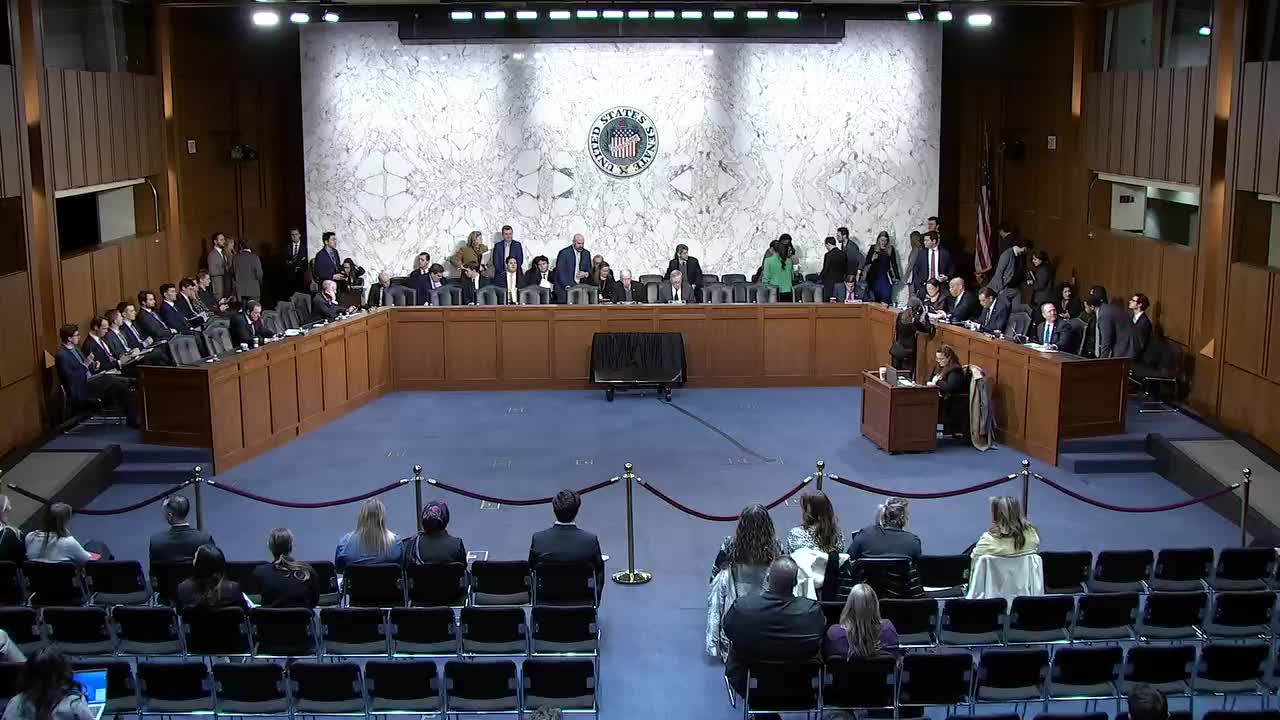
The Senate Judiciary Committee on an unspecified date considered S.331, the HALT (HALT All Lethal Trafficking and Fentanyl) Act, adopting a manager’s amendment and approving an amendment to clarify legal treatment of fentanyl test strips while debate continued over social-media and research-related changes.
Chairman Chuck Grassley opened the markup saying the bill “does 3 things”: it would make permanent class-wide scheduling of fentanyl-related substances, confirm the sentencing framework federal courts have applied for those substances, and relax certain registration requirements for researchers studying Schedule I substances. He moved adoption of a manager’s amendment (No. 25160) to correct a typo in the bill text; the committee approved it by voice vote.
The committee heard emotional video testimony from parents who lost children to fentanyl overdoses. One parent in the recorded remarks said, “Please keep this bill clean. Do not attach any amendments to them. We need action, and we need it now.” Those statements were entered as part of the hearing record and were cited by multiple senators as part of the urgency to act.
Ranking Member Dick Durbin urged a broad response that respects constitutional limits while addressing the overdose crisis, noting the lethality of fentanyl: “All it takes is 2 milligrams, fraction of the size of a penny, to cause an overdose,” he said. Durbin and other Democrats pressed for consideration of measures addressing social media, research exemptions and transparency that they said could reduce deaths without impairing medically valuable research.
Senators debated several amendments. Senator Lindsey Graham proposed linking the bill to reforms of Section 230 of the Communications Decency Act to address social-media distribution; Graham said social platforms must be part of solutions to youth exposure. Senator John Cornyn and others argued securing the border and stopping the supply chain were also essential to reducing fentanyl deaths.
Senator Peter Welch offered an amendment to allow or clarify access to fentanyl test strips and to extend their scope to detect additives such as xylazine. Supporters called the amendment a harm-reduction measure that “saves lives,” citing state programs distributing test strips. Opponents, including the chairman, warned that preempting states with differing policies might complicate House consideration and risk delaying final action before temporary scheduling expires in late March. After a roll-call sequence the chair announced, “Welch amendment is passed.” (Clerk roll-call details recorded in the committee transcript.)
Senators also discussed amendments aimed at preserving research avenues for potentially benign analogs. Senator Cory Booker and Senator Sheldon Whitehouse cautioned that overly broad scheduling could sweep in substances that might later prove useful for treatment; Booker’s amendment would create a process for removing substances shown to be benign. Chairman Grassley and others said the committee could consider off-ramps later if scientific evidence emerges.
A later amendment described in the transcript as offered by Senator Hirono was defeated 12–10, the clerk announced on the record. The transcript records the committee moving to adjourn to the call of the chair after that vote.
Nut graf: The markup moved the underlying HALT bill forward in committee with changes the chairman said were non-substantive (a manager’s amendment) and with committee approval of a test-strip provision supporters describe as a measurable, life-saving harm-reduction step. Lawmakers from both parties pressed competing priorities—speed to enact permanent scheduling before temporary authorities lapse, protections for scientific research, and reforms aimed at social-media distribution—setting up further negotiations as the bill moves toward the Senate floor and back to the House.
Discussion points and next steps included preserving class-wide scheduling, clarifying research exceptions and monitoring the interplay between federal and state policy on test strips. Committee members repeatedly emphasized the urgency of action because temporary scheduling of fentanyl-related substances expires on March 31 (as cited in the hearing).
Ending: The committee approved the manager’s amendment and at least one consequential bipartisan amendment on test strips, rejected at least one other amendment by a 12–10 vote, and left several policy areas—Section 230 reform and research off-ramps—open for additional hearings or future amendment. The transcript shows the committee adjourned to the call of the chair after the final recorded vote.