Get Full Government Meeting Transcripts, Videos, & Alerts Forever!
Get email alerts on the Judicial Conference Process topic
No spam. Unsubscribe anytime.
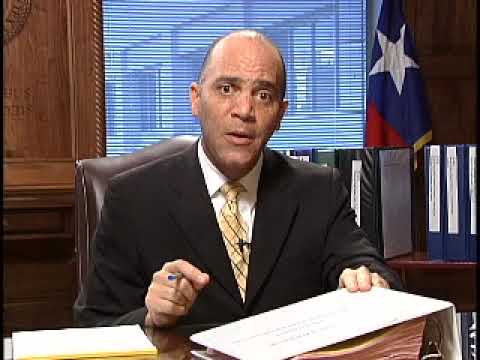
Supreme Court of Texas chief justice outlines conference process for handling petitions and opinions
Summary
Chief Justice Wallace Jefferson described the court's monthly conference procedure, including emergency items, post-submission review, draft-opinion debate, petition voting, briefing rules and administrative steps that lead to published decisions.
Chief Justice Wallace Jefferson of the Supreme Court of Texas described the court’s internal conference process and how the court decides which petitions to take, how draft opinions are debated and how emergency items are handled.
Jefferson said the court meets at least once a month in conference to consider preliminary and emergency matters, post-submission cases that have been argued, draft opinions authored by justices and new petitions seeking review. "We are striving to do justice in each case and we are trying to do it efficiently," he said.
The nut of the process, Jefferson said, is sequential: the court addresses emergency or preliminary items first, then post-submission cases (recently argued matters), then draft opinions, and finally petitions that have been filed but not yet granted. For emergency filings, Jefferson said the court’s attorney for original proceedings typically presents and the court will confer and decide whether immediate action is required.
Jefferson described how draft opinions are discussed. The author of a draft summarizes the proposed disposition, and the justices "go around the table" offering critiques that can range from word choice to the ultimate outcome. If a justice indicates they will not join the majority on a draft opinion, Jefferson said he will assign that justice to write a separate concurrence or dissent.
On petitions, Jefferson said justices cast an electronic preliminary vote before conference (to discuss, deny, or request briefs on the merits). During conference the court reviews a list of petitions (he described printed "pink sheets") and calls cases in order to hear the argument from the justice most interested in a grant, then the others. Jefferson said if at least three justices indicate a willingness to grant a petition, the court will ask for merits briefs, allowing a maximum of 50 pages for each side.
Staff attorneys and law clerks participate directly in conference at the Supreme Court of Texas, Jefferson said. He described a workflow in which a staff attorney will be assigned to review a record and the merits briefs and return to conference with a recommendation. Jefferson noted that a typical staff memo includes the court-of-appeals petition and opinion and the staff analysis of both sides.
Jefferson said conferences usually require a minimum of one full day and often two days to work through preliminary items, post-submission matters, draft opinions and petitions. At the conclusion, administrative assistant Nadine Schneider records the votes taken; she then notifies the clerk’s office to prepare orders. Jefferson said the public will learn which cases were granted or denied and that the court publishes opinions at the end of the week. He also noted the court’s webcasts include oral arguments and are archived back to February.
Throughout his description Jefferson emphasized confidentiality for the conference stage, saying the discussions are kept private because premature disclosure could affect markets or parties' behavior. He described the court’s internal aim to be both careful and as transparent as the process permits.
The description of procedures provided by Chief Justice Jefferson explains the sequence of review that leads from an initial petition through briefing, staff analysis and final conference disposition.