
Tribal health leaders press Appropriations panel for PRC increases, permanent advance funding and mandatory CSC/105(l) payments
Get AI-powered insights, summaries, and transcripts
Sign Up Free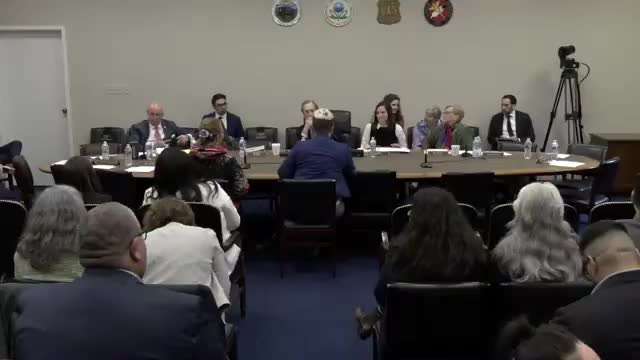
Summary
Tribal health leaders urged the House Appropriations subcommittee to add funds to Purchase and Referred Care (PRC), protect Indian Health Service accounts with advance appropriations, and move contract support costs and 105(l) lease payments to mandatory status.
Tribal health leaders from Alaska, California, the Pacific Northwest and national organizations told the House Appropriations subcommittee that Indian Health Service (IHS) funding remains insufficient and, in some cases, at risk because of recent administrative actions.
Monique Martin, vice president for intergovernmental affairs at the Alaska Native Tribal Health Consortium (ANTHC), described rapidly rising travel and medevac costs in Alaska and asked the committee for "an additional appropriation to the PRC program of at least $75,000,000." She told lawmakers her consortium spent $14,000,000 beyond its PRC allocation to ensure access to urgent care in remote communities.
On behalf of South Central Foundation, Executive Vice President Eileen Sylvester reiterated a long‑standing tribal request for stable funding. "We urge the committee to ensure permanent advance spending for Indian Health Service until mandatory funding can be secured," she told the panel, and urged automatic treatment of Section 105(l) lease appropriations as indefinite and mandatory. Sylvester also asked the committee to "ensure IHS funds are exempt from sequestration."
Multiple witnesses urged Congress to reclassify contract support costs (CSC) and Section 105(l) leases as mandatory to avoid across‑the‑board cuts that would otherwise force program reductions. "These are legally obligatory costs," Lloyd Miller of the National Tribal Contract Support Cost Coalition said, describing CSC reimbursement as "the lifeblood of tribal government operations" when tribes operate federal programs under the Indian Self‑Determination and Education Assistance Act.
Witnesses described program needs beyond headline funding numbers: tribes asked for additional support for behavioral health, advanced appropriations for IHS accounts, funding for workforce and housing to recruit and retain staff, and maintenance and sanitation operations to protect infrastructure investments from the Bipartisan Infrastructure Law. Several witnesses urged changing grant programs to formula or contract distributions so tribal governments could plan long term.
Why it matters: PRC covers specialty care and medevac trips that many tribal communities must purchase from outside providers; insufficiency creates delays and unmet needs. CSC and 105(l) lease payments are payments required when tribes assume operation of federal programs or lease federally owned facilities; failing to reimburse them fully forces tribes either to reduce services or to absorb administrative costs.
What lawmakers can do next: Witnesses asked the committee to (1) add targeted PRC funding, (2) adopt permanent advance appropriations for IHS, and (3) reclassify CSC and 105(l) payments as mandatory obligations to prevent discretionary cuts from eroding tribal program operations.