Get Full Government Meeting Transcripts, Videos, & Alerts Forever!
Get email alerts on the Childcare Regulation topic
No spam. Unsubscribe anytime.
Idaho House approves bill easing childcare rules and preempting local regulations
Summary
The Idaho House passed House Bill 243 (recorded in the transcript as House Bill 2 43) on Feb. 27, 2025, by voice and roll-call, approving changes to childcare licensing that sponsors said will expand capacity and opponents said will reduce safety protections and strip local control.
The Idaho House of Representatives on Feb. 27, 2025, passed House Bill 243 (recorded in the transcript as House Bill 2 43) by a recorded vote of 54–15, approving a measure that removes several local regulatory requirements for child care providers and enables facilities to set and publish their own child-to-staff ratios.
Supporters said the bill is intended to ease barriers to entry for family and in-home providers and increase available child care slots in the state, while opponents warned it eliminates important safety standards and strips cities of authority to set local rules.
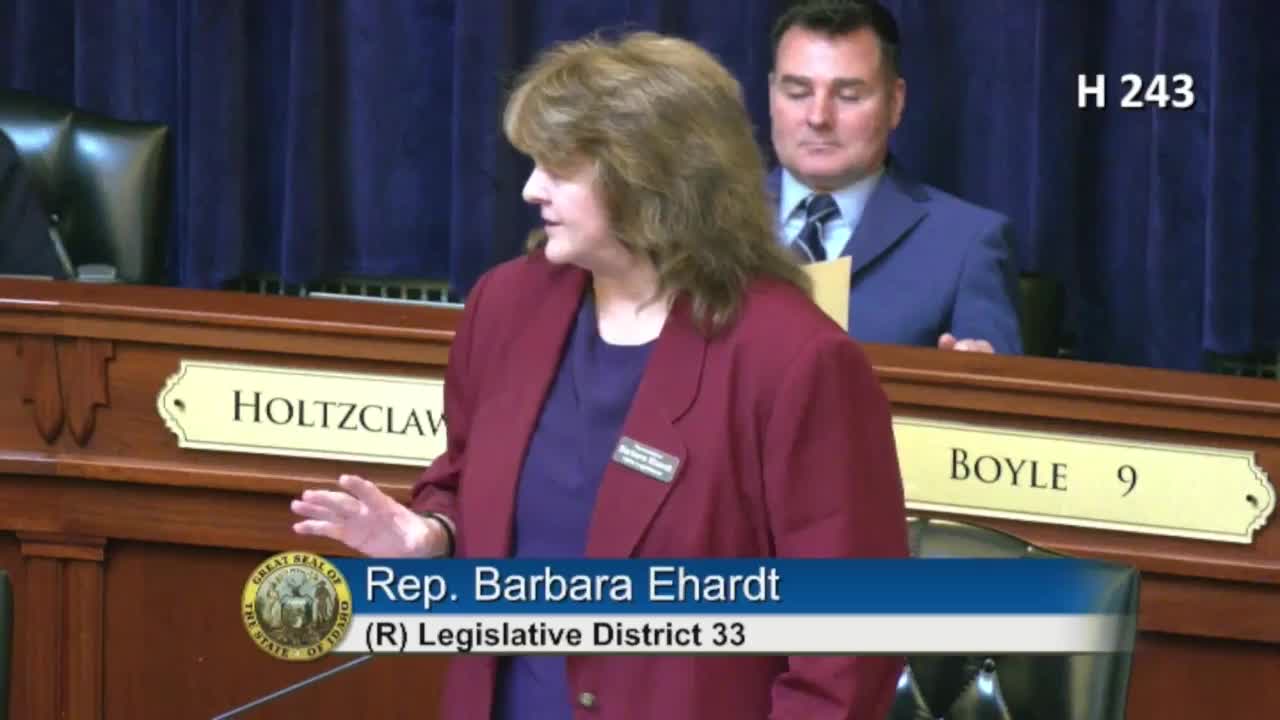
Representative (District 33), the bill’s sponsor, told the House, “We have a childcare crisis, and that child care crisis has a fix.” She said the measure does not “drop the regulations” on safety matters and that existing state and local safety rules — background checks, fire and building codes and other requirements — remain in force. She pointed members to new language in the bill that requires facilities to “establish and maintain a child to staff ratio appropriate to ensure the health, safety, and welfare of all children in attendance,” and said the bill adopts an “active supervision” standard used in Head Start guidance.
Representative (District 31), a co-sponsor, described the bill as a pro–small business deregulatory step and urged members to “Vote green on house bill 2 43.” Other supporters told the House that regulatory relief, rather than additional state spending, was the quickest way to expand capacity; one lawmaker cited statistics read into the record that estimated annual economic losses related to childcare shortfalls.
Opponents said the bill removes baseline protections. Representative (District 18) argued the proposal “is uniquely inappropriate for over deregulation,” saying one-year-olds are a “very easily injured” and “nonverbal” population that needs guaranteed supervision. That member and others said the bill’s preemption language would erase local training, inspection and transportation requirements without replacing them at the state level.
Debate in the House focused on several items sponsors and critics repeatedly discussed: the statutory caps that already distinguish family day care homes (six or fewer children) from group day care facilities (seven to 12 children); the removal of an existing point/score system for local licensing; and the bill’s statement that facilities must post and follow a plan if they change advertised ratios. Supporters emphasized the bill leaves licensing thresholds in law (for example, family day care caps remain), while opponents said optional, facility-determined ratios are a weaker substitute for mandated minimum staff-to-child ratios.
The House clerk recorded the final count as 54 ayes and 15 nays; the roll call included named votes recorded in the transcript (Palmer — aye; Mathias — nay; Roe — aye). After passage the House “corrected title” and ordered the bill transmitted to the Senate.
The bill’s sponsors and several speakers said the Department of Health and Welfare will continue to oversee licensing for most jurisdictions; sponsors said the department told them it could absorb oversight responsibilities where local rules are removed. Opponents said that transfers responsibility without guaranteeing statewide standards that match or exceed current local protections.
The measure now moves to the Idaho Senate, where committees and floor consideration will determine whether the changes become state law.