Get Full Government Meeting Transcripts, Videos, & Alerts Forever!
Get email alerts on the Municipal Budgeting topic
No spam. Unsubscribe anytime.
Clearwater council workshop makes 'ensure needs are addressed' top budget priority; staff asked to refine criteria, reserve targets and revenue tools
Summary
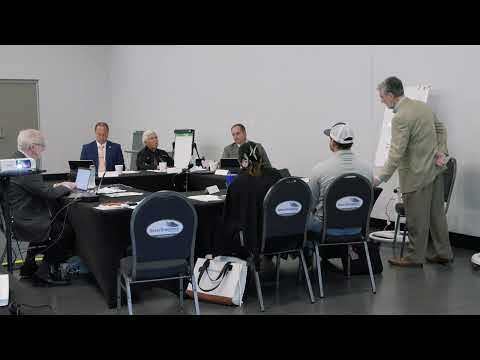
Clearwater City Council and staff met Feb. 25 for a budget workshop in which council members ranked high‑level budgeting principles, debated use of reserves and long‑range millage projections, and asked staff to return with detailed prioritization criteria, reserve‑target scenarios and revenue‑generation options.
Clearwater City Council and staff met Feb. 25 for a budget workshop in which council members ranked high-level budgeting principles, debated use of reserves and long‑range millage projections, and asked staff to return with detailed prioritization criteria, reserve-target scenarios and revenue-generation options.
The council placed “ensuring needs are addressed” at the top of a three‑tier ordering that emerged from a paired‑comparison exercise of seven high‑level principles. Hal Beardall, the workshop facilitator, told the council that the statements on the worksheets were “drawn pretty directly from that, those 2 sets of discussions” held at the prior workshop.
Why it matters: staff told the council the capital improvement program currently includes 47 projects over the next seven years totaling about $541,000,000, and that reserve and revenue policy choices will influence how the city funds that pipeline. Council members expressed concern about both protecting reserves for storms and other shocks and finding recurring or one‑time revenues to avoid future tax pressure.
What the council decided and asked staff to do
- The council’s collective guidance placed “ensuring needs are addressed” above other statements in the exercise; two other items — taking care of existing assets and geographical equity of investment — landed in a lower tier.
- Council asked staff to develop a more detailed set of project‑prioritization criteria and to bring those criteria back for council review. Jennifer (City Manager) said staff already uses a set of criteria and is updating them; she read examples the team uses, including “regulatory compliance, alignment with city strategic plan, public perception, level of service, operating efficiency, maintenance and cost, safety and security, risk, and return on investment.”
- On reserves and forecasts, council members asked for concrete scenarios showing the effects of different reserve targets. Staff said the recommended GFOA benchmark is roughly two months of operating revenues (about 16.7%), that the city’s adopted minimum reserve policy differs from that benchmark, and that the city’s central insurance and enterprise‑fund reserves also affect overall cushion. Beardall summarized the council’s direction: staff should prepare reserve‑level options (percentages/dollar amounts) tied to the capital plan and showing tradeoffs.
- Council authorized staff to treat projected millage increases in far‑out years (discussed as years 8–10 of forecasts) as a paper tool only and asked staff to continue seeking ways to avoid such increases. Several members said the projections are useful for planning but wary of the public message of including a nominal millage increase in long‑range forecasts.
- On revenue tools, council supported further study of targeted fee increases (user fees, event fees, nonresident rates) and asked staff to explore public‑private partnerships and sponsorship/donation strategies. Several council members recommended outsourcing or engaging specialists to pursue naming rights, sponsorships and event recruitment rather than reallocating core staff capacity.
Key details discussed
- Capital project scale: staff reported roughly 47 CIP projects over seven years totaling about $541,000,000 (staff comment during the workshop).
- Reserves: workshop discussion referenced a GFOA benchmark (two months/roughly 16.7%); staff said an adopted minimum exists for some funds and that the city’s central insurance fund supplements general fund reserves. Council members observed the general fund has historically been above the recommended minimum (comments during the workshop).
- Use of reserves: council supported allowing use of reserves for one‑time capital costs to avoid service cuts or short‑term tax increases provided minimum required reserve levels are maintained and that staff present replenishment plans.
- Fees and sponsorships: council members suggested differential pricing for resident vs. nonresident recreation users, market‑rate events fees for high‑profile parks, and further work to identify sellable assets (marina, parks, performance venues). Council members who work with events urged more predictable, multi‑year support mechanisms for long‑standing events (for example, Jazz Holiday) to reduce organizers’ year‑to‑year revenue risk.
Representative quotes
- Councilmember Cotton (council member) said during the paired‑comparison discussion: “taking care of what we have first is of greater importance than considering what we have on the horizon because it’s the investments that will affect us here and now.”
- Hal Beardall (workshop facilitator) explained the approach to staff and council: “The statements that you see up on the screen and that are in your worksheet are drawn pretty directly from that, those 2 sets of discussions.”
- Jennifer (City Manager) described staff’s existing criteria and next steps: “We do have a method to how we rank these… regulatory compliance, alignment with city strategic plan, public perception, level of service, operating efficiency, maintenance and cost, safety and security, risk, and return on investment.”
What the discussion did not produce
- The workshop did not include any formal votes or ordinance actions. Council guidance took the form of ranked preferences, clarifying questions and direction to staff for follow‑up work.
Next steps and timing
Staff said it will return with: (1) a detailed, council‑reviewable project‑prioritization criteria set; (2) reserve‑target scenarios and the fiscal effects of several percentage options; (3) a clearer CIP prioritization tied to the 47 projects list; and (4) options for pursuing sponsorships, public‑private partnerships or outsourcing to capture event and naming‑right revenue. The council scheduled further review of those materials as part of the budget process.
Ending
Council members used the workshop to press for more concrete, quantitative options rather than high‑level philosophy alone. The meeting adjourned after a break; staff will return with the requested analyses during the upcoming budget cycle.