Get Full Government Meeting Transcripts, Videos, & Alerts Forever!
Get email alerts on the Municipal Litigation Transparency topic
No spam. Unsubscribe anytime.
Transparency bill would require municipalities to publish legal cases and related costs; proponents and municipal groups debate scope
Summary
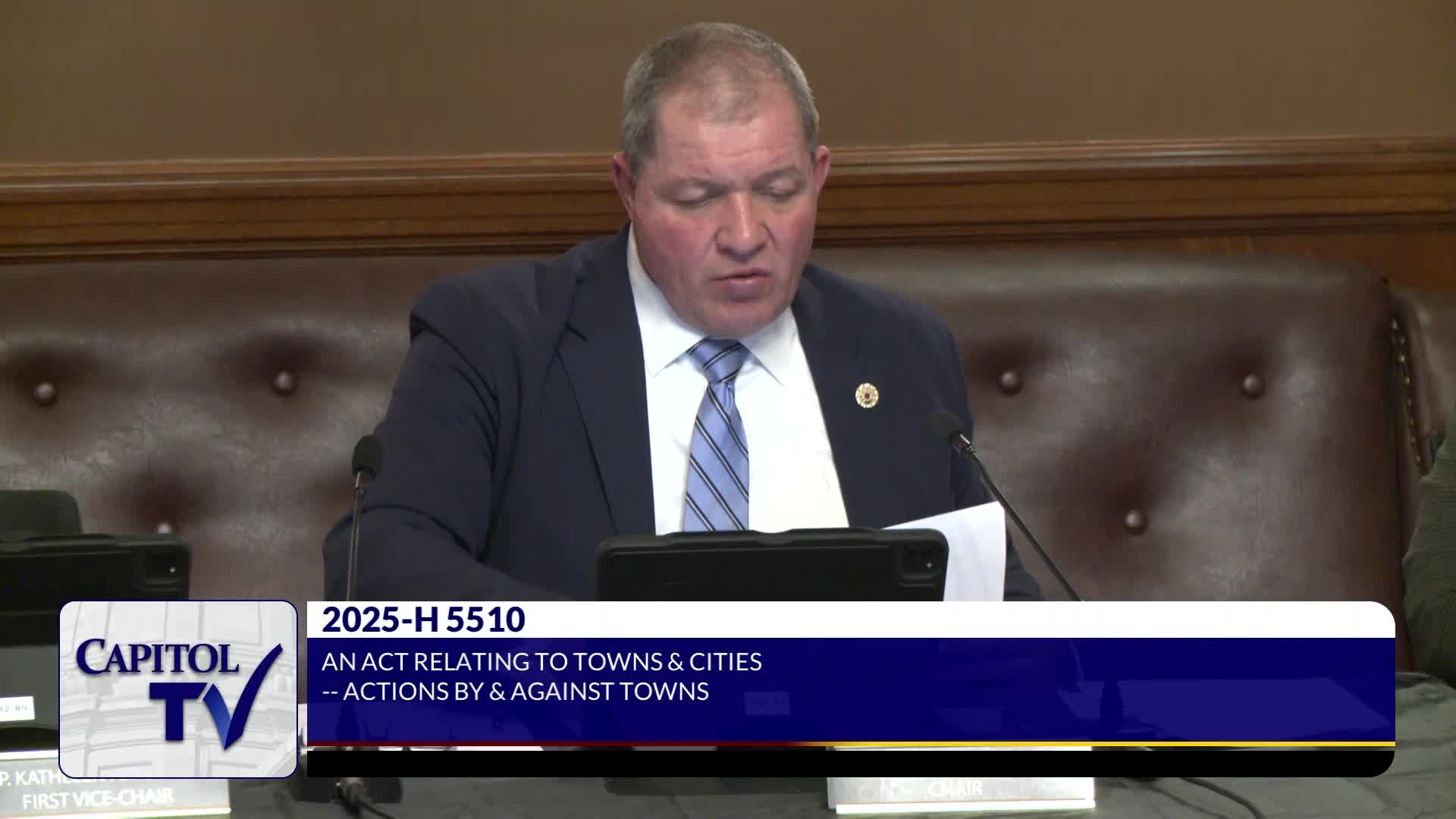
Representative Stewart opened testimony on House Bill 5510, a transparency measure that would require municipalities to publish information about legal actions in which they are named and the related costs and expenses.
Representative Stewart opened testimony on House Bill 5510, a transparency measure that would require municipalities to publish information about legal actions in which they are named and the related costs and expenses.
Nut graf: The bill aims to give residents easier, centralized access to information about the legal actions and related spending of their local governments. Supporters said current access (through annual financial statements or court dockets) is incomplete and difficult for ordinary residents to use; opponents warned the bill’s current language is ambiguous, could expose municipalities to legal or financial risk, and may impose administrative burdens unless narrowed or clarified.
What supporters said Steven Brown of the ACLU of Rhode Island said the legislation advances transparency and complained that existing public sources—financial statement notes and court dockets—do not show what a case is about or how much a municipality has spent on particular litigation. Brown recommended a single, simple change to address municipal concerns: require disclosure of costs and expenses only “upon completion of the lawsuit.” He said that would preserve transparency while reducing the risk of disclosing sensitive information during active litigation.
Representative Stewart described the policy rationale in detail, saying residents should be able to learn whether local officials are making policy choices to litigate—and at what taxpayer cost. Stewart gave a local example from Pawtucket: she said a municipality spent more than $19,000 defending a case she and another candidate brought over an allegedly unconstitutional municipal sign statute, noting that information about such costs was hard to obtain without APRA requests.
What opponents and municipal representatives said Randy Rossi of the Rhode Island League of Cities and Towns and Ian Ridlon of the Rhode Island Interlocal Trust raised concerns about ambiguity and liability. They said: - The bill’s definitions (for example, what counts as a “legal action”) were too broad, and the draft did not distinguish between different fora (court, administrative agency, regulatory proceedings). That ambiguity could make compliance difficult. - Much litigation is handled by insurers or pooled-risk trusts; invoices and legal fees often flow through those mechanisms and are not tracked by solicitors on a per-case basis in a way that’s straightforward to publish. - Disclosing costs during pending litigation could reveal expert hires or defense strategy and disadvantage the municipality; some protections for ongoing cases or a requirement to disclose costs only after a case closes would address that problem.
Committee discussion and suggested fixes Committee members and witnesses repeatedly suggested a narrow fix: add language requiring publication of costs and fees only after the litigation is concluded. Representatives noted existing disclosures in annual financial statements (notes on contingent liabilities and existing litigation) but agreed those notes do not provide an accessible case-level summary for residents.
Next steps No committee vote to advance or reject HB 5510 was recorded at this hearing. Committee members asked bill proponents and municipal representatives to continue working on language that balances public transparency with legitimate concerns about ongoing litigation and administrative practicability.
Quotes - "This legislation would equip the public with details that would make it unnecessary to go through such a complicated process [APRA]," Representative Stewart said in opening remarks. - "If a municipality can't once a year put together a list of the cases they've been involved in and what it entails, I think that raises some very serious questions about how the municipality is being run," Steven Brown of the ACLU said. - "The language in here is incredibly ambiguous," Ian Ridlon said, urging caution and suggesting the bill as written is unworkable.
Ending Witnesses and committee members agreed on the policy goal—greater transparency—but differed on the best statutory design. The committee closed the hearing after receiving testimony and invited further drafting to resolve definition, timing and confidentiality concerns.